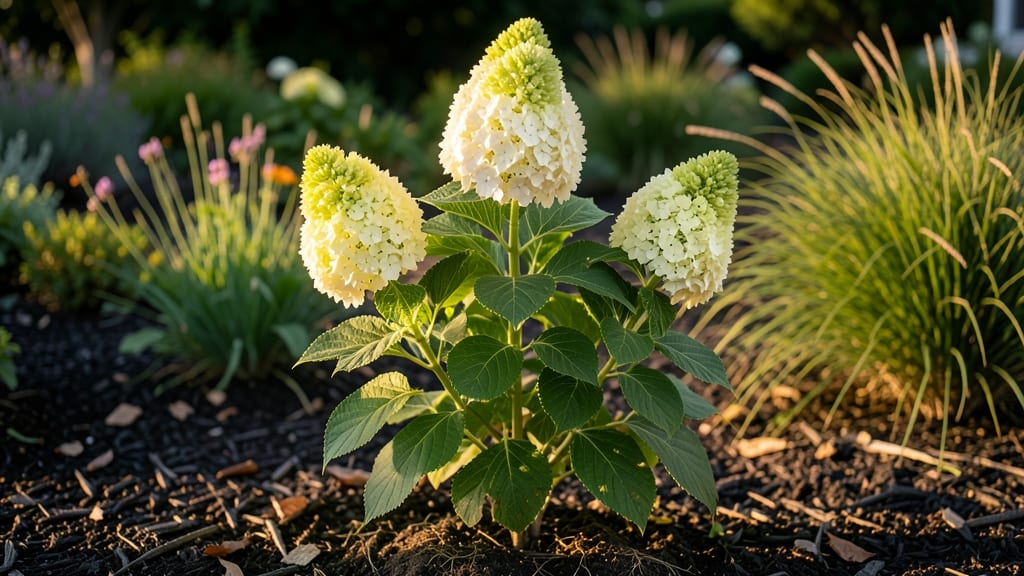
If you’ve ever dreamed of adding a 🌸 hydrangea and wondered, "hydrangea how tall do they grow?" you’re in for a pleasant surprise—these beauties thrive in sizes that can fit everything from tiny containers to sprawling landscapes.
The height of your hydrangea depends entirely on the variety, with some staying as small as 2 feet while others stretch toward the sky at 15 feet or more.
Whether you’re working with a cozy backyard or a grand estate, choosing the right hydrangea means understanding how fast they grow and how to shape them.
Some varieties, like the Hydrangea macrophylla, thrive as compact shrubs, while others, such as Hydrangea paniculata, can become towering statement pieces with the right care.
Pruning plays a game-changer role in controlling height—cutting at the right time can keep your hydrangea lush and manageable, while neglecting it might lead to unruly growth. I’ll show you exactly how to prune for your garden’s needs, so you can enjoy those stunning blooms without sacrificing space.
Ready to pick the perfect hydrangea for your space? Let’s dive into the varieties, growth habits, and pruning secrets that will help you create the garden of your dreams—no matter how big (or small) you’re working with.
Dwarf
2-4 ft
Container friendly
Semi-Dwarf
4-6 ft
Most popular
Standard
6-15 ft
Full orchard size
Hydrangea varieties ranked by height: from dwarf to giant
Hydrangeas aren’t one-size-fits-all—some varieties stay compact enough for container gardens, while others become small trees that need serious space. The difference often comes down to the species: Hydrangea macrophylla (mopheads/lacecaps) typically stay 3–6 feet tall, while Hydrangea paniculata varieties like 'Limelight' can soar to 10+ feet.
Even within the same species, dwarf selections exist—like 'Mini Penny'—that top out at just 2–3 feet. Let’s dive into the specifics so you can pick the perfect fit for your garden.
Your garden’s layout will depend heavily on the mature height of your hydrangea. A 6-foot variety like 'Endless Summer' needs at least 5 feet of clearance overhead, while a 15-foot oakleaf hydrangea ('Grandiflora') acts like a small tree, casting shade over a 10-foot radius.
Always account for growth rate too—some varieties add 2 feet per year in their prime, while others grow just 6 inches annually. Planning ahead saves headaches later.
🌿 Visualizing hydrangea sizes can be tricky, so here’s a quick reference: Imagine a mailbox (3–4 feet) for dwarf types, a lamppost (6–8 feet) for mid-size shrubs, and a small tree (10+ feet) for giants. Oakleaf hydrangeas often grow wider than they are tall, while panicle types ('Firelight') tend to grow taller and more upright. Spacing is key—crowding stunts growth and reduces blooms.
Here’s the comparison table breaking down 12 popular hydrangea varieties by height, spread, and ideal spacing. Use this as your cheat sheet before buying:
| Variety |
Type |
Height (ft) |
Spread (ft) |
Spacing (ft) |
Growth Rate |
| Mini Penny |
Mophead |
2–3 |
2–3 |
3–4 |
Slow |
| Little Lime |
Panicle |
3–4 |
3–4 |
4–5 |
Moderate |
| Endless Summer |
Mophead/Lacecap |
4–6 |
4–5 |
5–6 |
Moderate |
| Limelight |
Panicle |
8–10 |
6–8 |
8–10 |
Fast |
| Annabelle |
Panicle |
3–5 |
3–5 |
How pruning affects hydrangea height: when & how to trim for control
Pruning is the single most powerful tool for controlling hydrangea height—but timing and technique matter more than you might think. A single wrong cut can turn your 3-foot dwarf into a 6-foot monster overnight.
The key lies in understanding whether your hydrangea blooms on old wood (last year’s growth) or new wood (current season’s stems). Get this wrong, and you’ll end up with no flowers—or a shrub that’s twice as tall as you planned.
For old-wood bloomers like Hydrangea macrophylla (mopheads and lacecaps), prune immediately after flowering to avoid cutting off next year’s blooms. These varieties naturally stay 3-6 feet tall with minimal pruning, but aggressive cuts can send them skyrocketing to 8 feet or more.
Always remove dead or crossing branches first, then trim back only the oldest stems by about one-third to encourage bushier growth.
✂️ Step-by-Step Pruning Guide
- Step 1: Identify your hydrangea type (old wood vs. new wood bloomer).
- Step 2: Prune old-wood types after flowering (late summer/early fall).
- Step 3: Prune new-wood types in late winter/early spring before new growth starts.
- Step 4: Remove dead, diseased, or crossing branches first—regardless of type.
- Step 5: For height control, cut back 1/3 of the oldest stems (old wood) or 1/2 of current season’s growth (new wood).
- Step 6: Shape with clean cuts at 45° angles just above a leaf node or bud.
New-wood bloomers like Hydrangea paniculata (e.g., 'Limelight' or 'Little Lime') are far more forgiving. These varieties reach 6-15 feet without pruning, but you can keep them compact by cutting back hard in late winter to just a few inches above ground level.
This radical pruning encourages thicker, bushier growth and prevents them from becoming unruly. Just be patient—it may take 2-3 years to see the full effect.
One common mistake is pruning at the wrong time. Cutting back old-wood bloomers in spring removes next year’s flower buds entirely, leaving you with no blooms for a full season.
Similarly, over-pruning new-wood types can stunt growth and reduce flower production. Always prune after flowering for old wood or before bud break for new wood to avoid these pitfalls.
For height reduction, focus on selective thinning rather than indiscriminate cutting. Remove the tallest stems first to lower the plant’s overall profile, then shape the remaining branches to fill in gaps.
Use hand pruners for small stems and loppers for thicker branches, always making cuts just above a bud to encourage new growth in the right direction. A well-pruned hydrangea not only stays at your desired height but also blooms more abundantly.
Finally, don’t forget about seasonal maintenance. Light pruning throughout the growing season to remove spent blooms (deadheading) keeps your hydrangea looking tidy and encourages continuous flowering.
For container-grown hydrangeas, prune 10-20% more aggressively to prevent root-bound stress, which can lead to stunted growth or height spikes as the plant compensates.
★★★★★4.6(10 reviews)
|