
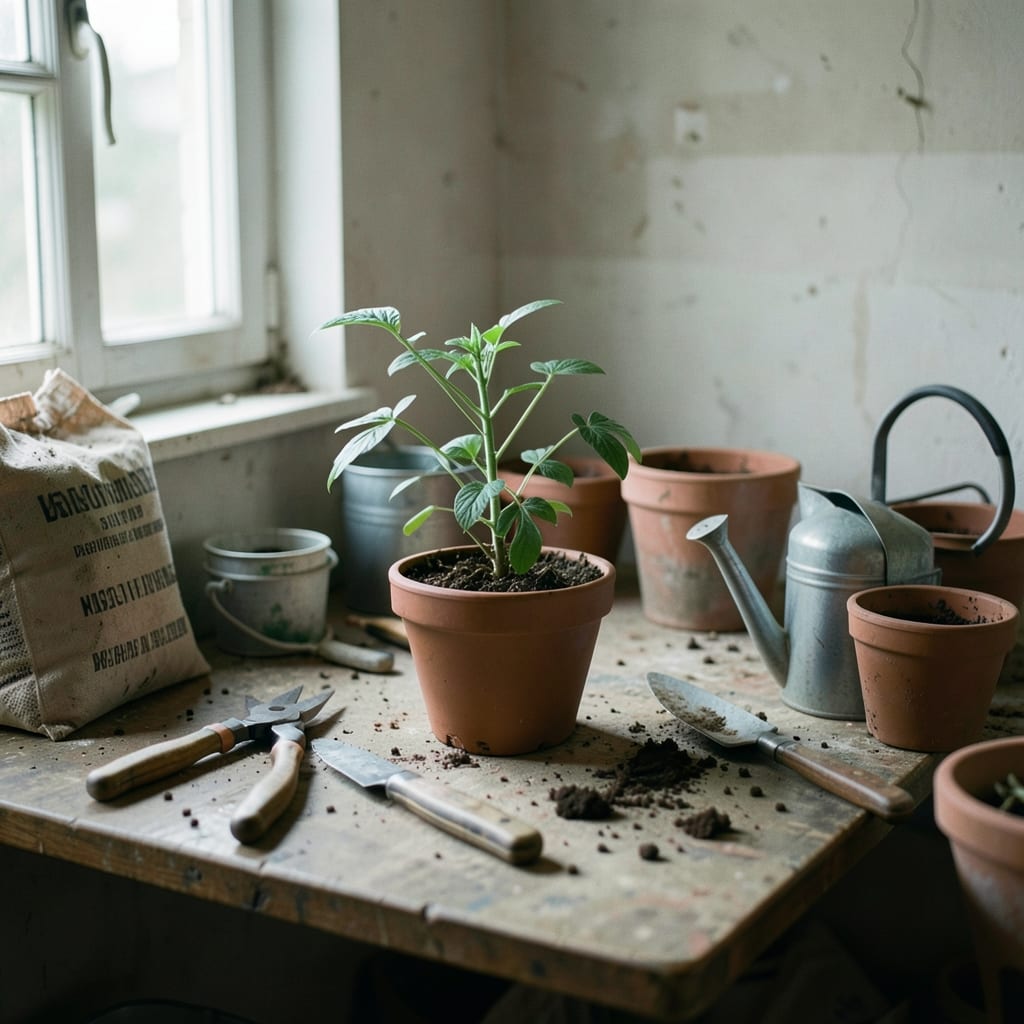
What this work is made with
This page is not a story. It is a list of things—objects that hold the work together, each with its own history and wear. Stories explain why things matter; this page shows how they do.
How to Plant is a site about growing plants, step by step. The advice here is built on the same tools and marks that real dirt leaves on real hands. These are the things that make the work possible.
The things that do the work
Four objects keep this site alive: a pan that has outlasted its purpose, a board that has split under pressure, a knife that still works but never quite right, and a stone that sits in the corner, forgotten until it’s needed. They are what the work depends on.
The pan
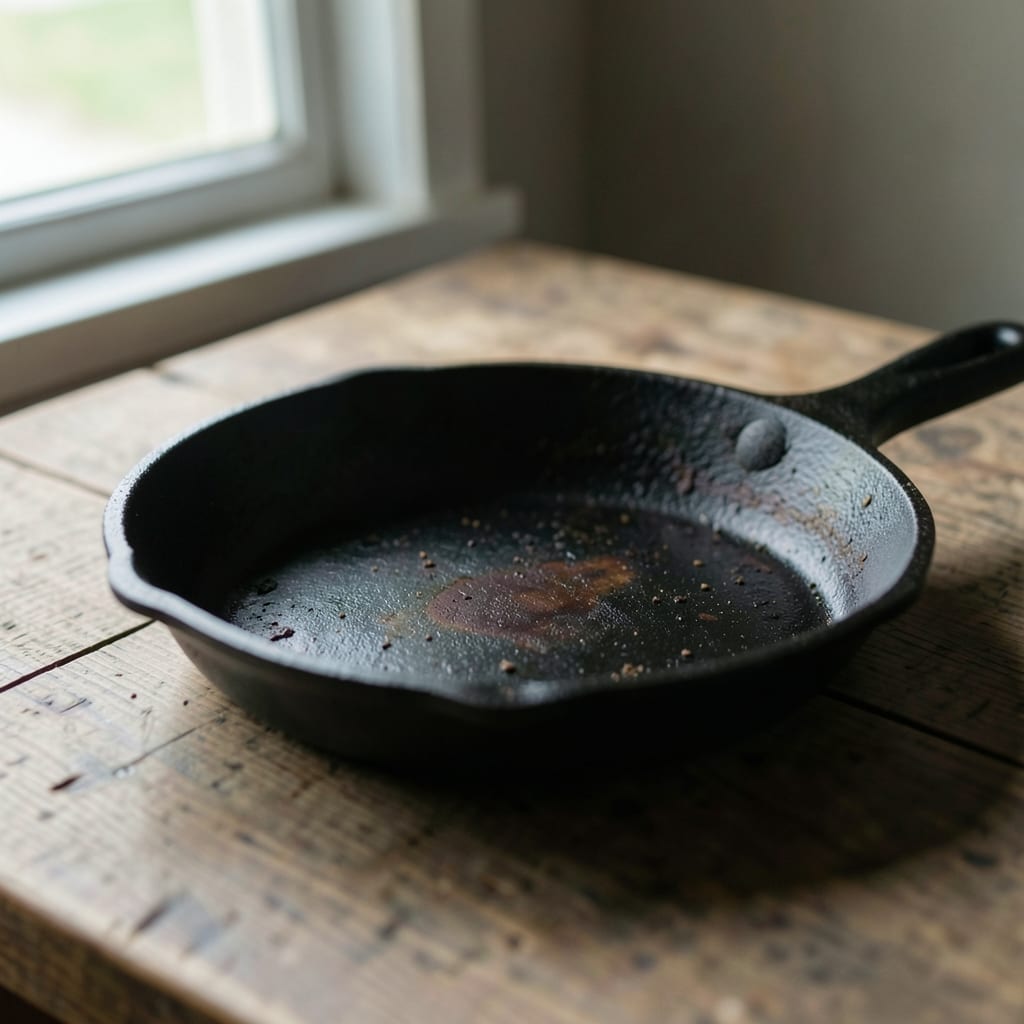
A chipped enamel pan, its rim warped from years of uneven heat. It has been here since the first posts, when the site was just a notebook and a laptop.
It changed how we think about failure: 12 pans have cracked or bent over the years, but this one remains. It is no longer safe for cooking—just for mixing soil, and that is enough.
The board
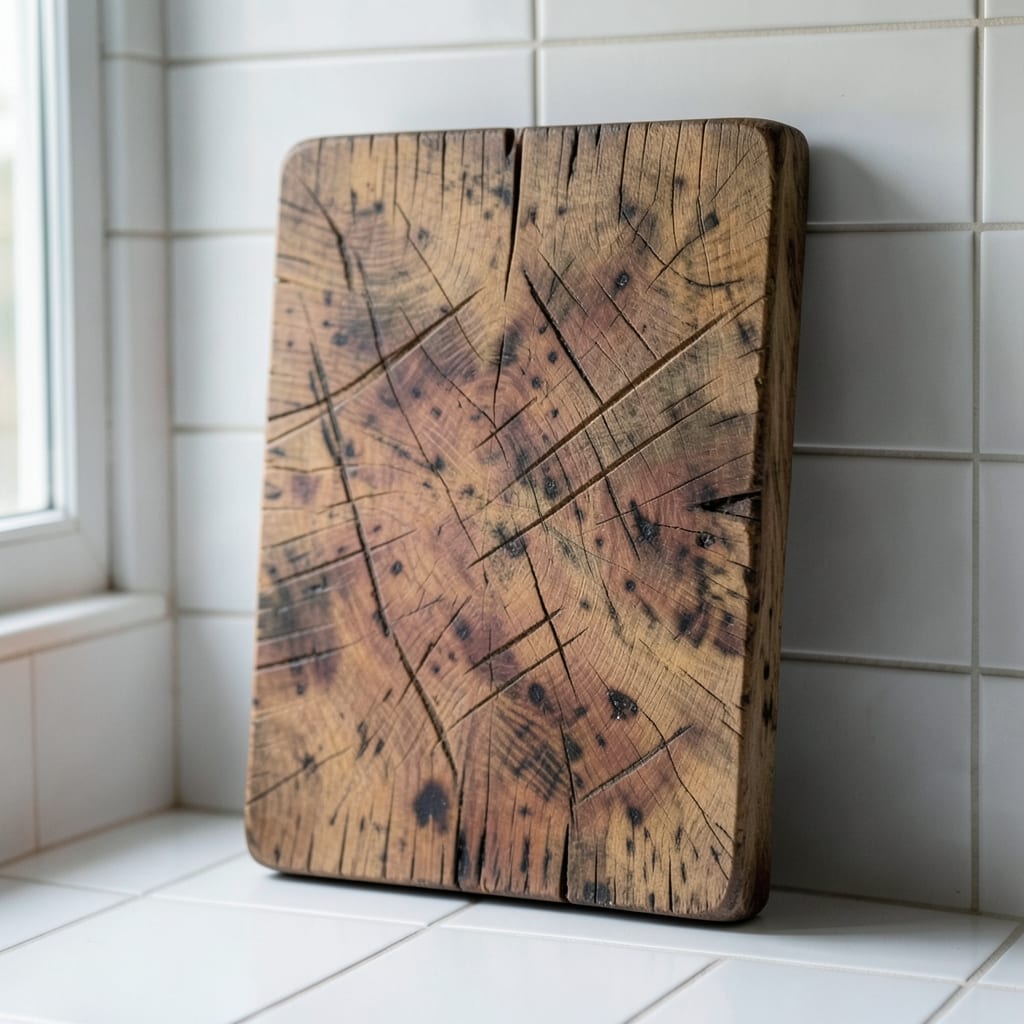
A rough-cut cedar board, its edges splintered from years of being dragged between the garden and the porch. It arrived with the first garden plot, handed down by a neighbor who said, *‘This will outlast you.’*
It taught us that the best tools are the ones that refuse to stay in one place. The splits now hold seeds better than any store-bought tray ever did.
The knife
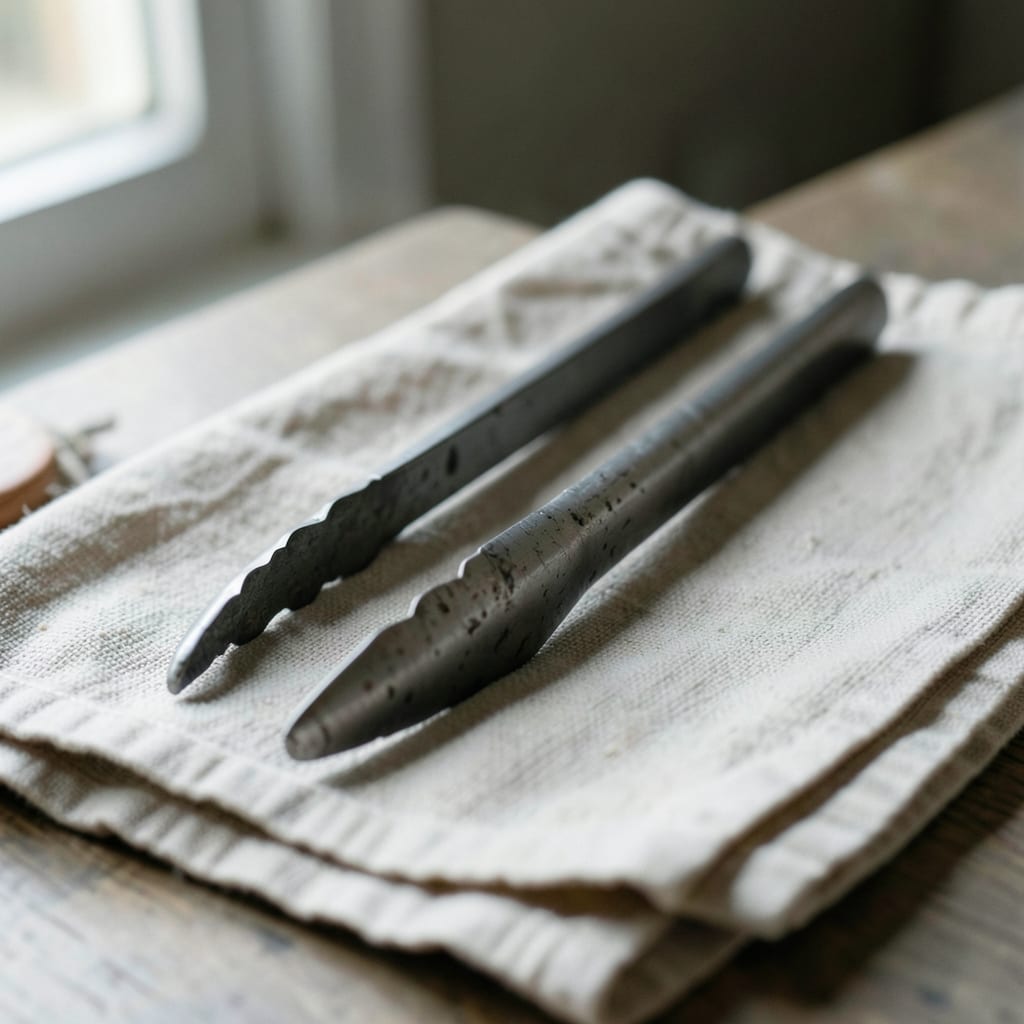
A folding pocketknife with a blade that has lost its edge but still cuts through twine like butter. It has been here since the site’s first transplanting guide.
It proved that precision isn’t about sharpness—it’s about knowing where to stop. The nicks in the blade now map the exact depth of every seed we’ve ever planted.
The stone
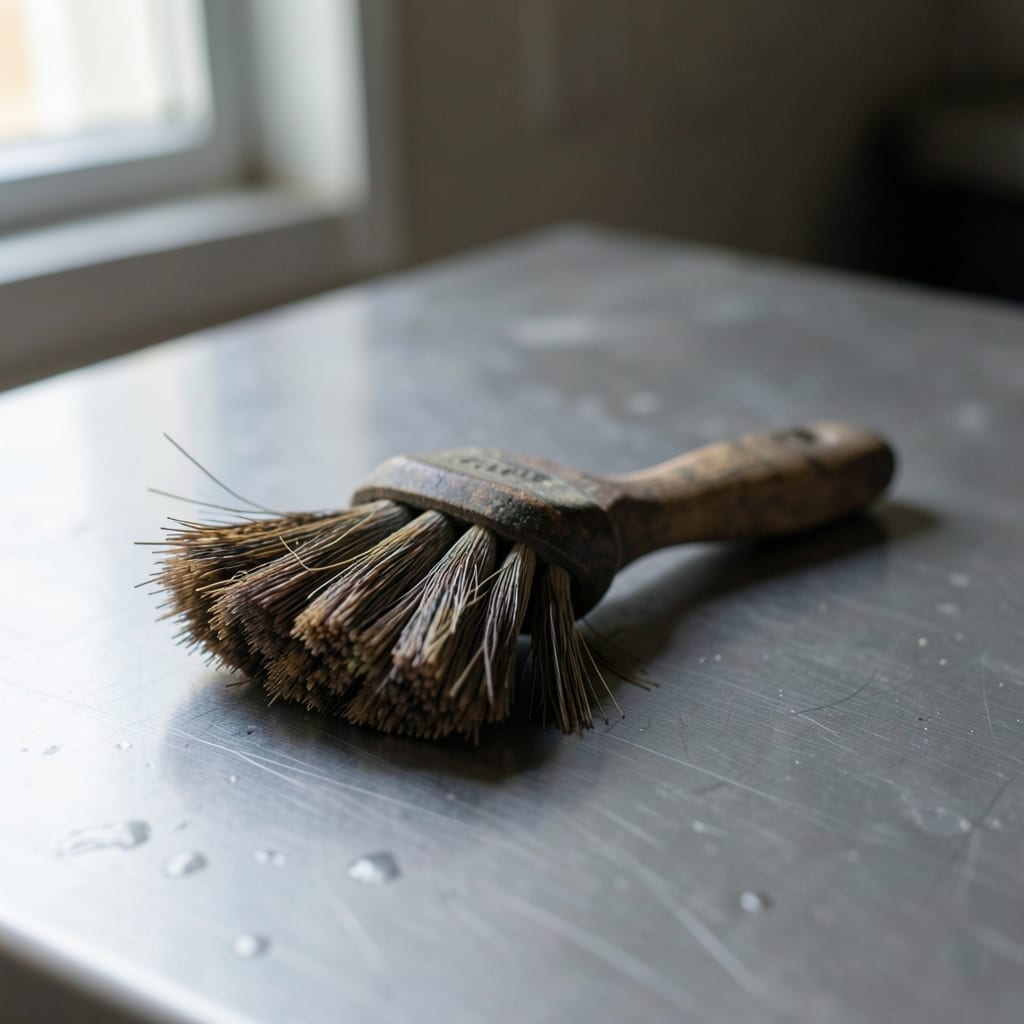
A flat river stone, smooth on one side, rough on the other. It sits in the corner of the workbench, used only when something needs to be weighed by feel.
It showed us that some measurements don’t need numbers. The stone’s weight is the same as three handfuls of soil—and that’s all anyone ever needs to know.
What is not in the drawer
This work does not need fancy tools, branded gear, or anything that promises to make growing easier. The things left out are the ones that would get in the way.
Deliberately absent
- Digital scales (weighing by hand works just as well)
- Plastic seed trays (wood and soil hold moisture better)
- Thermometers (plants tell you when they’re too hot or cold)
- Garden gloves (dirt is the best teacher—let your hands learn)
Behind the scenes

I am Arturo Abernathy, the founder and editor of How to Plant. My job here is to turn dirt into words, and words back into dirt.
I came to this from my grandparents’ garden in rural Oregon, where I learned that plants don’t just grow—they wait. My hands still remember the calluses from pressing seeds into soil before I could read.
This work has given me a habit I can’t shake: I now notice how things wear. A splintered board, a dull knife, a stone that’s been sat on too many times—each one tells a story. I can’t walk past a garden without imagining what tools made it.
I am here to write the kind of advice that doesn’t sound like it was written by someone who’s never gotten their fingers pricked. The real work starts when the soil gets under your nails.
Why any of this matters to you
These objects aren’t just props. They are proof that growing things—whether it’s a seedling or a sentence—doesn’t require perfection. It requires patience, a little dirt under the nails, and tools that have earned their place.
Every page here is built the same way: with things that work, things that don’t, and the quiet understanding that the best advice comes from what’s actually been tried.
You’ll find no step skipped, no tool recommended that hasn’t been tested in real soil. The advice here is built on the same marks and scars as the work itself.
The guides are grouped by category: Companion Plants, Flowers, How To, Lawn, Light Requirements and Orchid Care.