
Plants
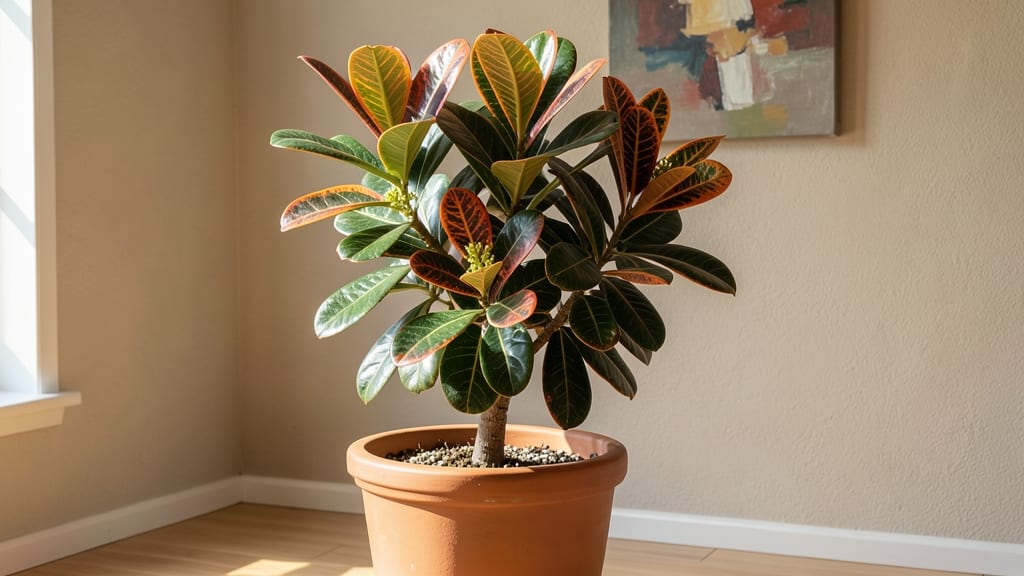
If you're wondering "how tall does croton grow", the answer might surprise you—this vibrant 🌺 plant can range from a compact tabletop size to a towering indoor statement piece, depending on its variety and care.
Whether you're dreaming of a lush green accent wall or a manageable houseplant, understanding your croton's growth potential helps you plan its perfect spot in your home.
Some crotons stay petite, like the 'Petite' variety, which tops out around 2 feet, making them ideal for shelves or desks. Others, like the 'Mammoth', can stretch up to 6 feet or more, rivaling small trees.
The key difference? Variety, pruning, and whether you're growing it indoors or outdoors in USDA Zone 6a.
Curious how to keep your croton from becoming a vertical jungle? I’ll break down the size secrets of popular varieties, plus pruning tips to control height and encourage bushiness.
Whether you're a first-time plant parent or a seasoned gardener, these insights will help you nurture a croton that fits your space—and your style.
Let’s dive into the height ranges you can expect, common growth mistakes to avoid, and how to give your croton the best shot at thriving at the perfect size for your home. Ready to transform your green thumb into a croton whisperer?


Croton plant mature height by variety: size comparison chart
Crotons (Codiaeum variegatum) are famous for their vibrant foliage and adaptability, but their mature height can vary dramatically depending on the variety. Some stay compact enough for windowsills, while others reach tropical tree proportions.
Knowing your croton’s potential size helps you choose the right spot and care routine. Let’s explore the most popular types and their growth habits.
Most crotons fall into three height categories: dwarf (1-3 ft), medium (3-5 ft), and giant (5-8 ft). The key difference? Genetics, pruning habits, and growing conditions.
For example, the 'Petite' series stays under 2 feet tall, while 'Mammoth' varieties can dwarf even large rooms. Let’s break down the specifics.
🌿 Visual Comparison: Imagine a 'Petite' croton fitting neatly on a desk beside a 'Mammoth' croton towering over a 6-foot ceiling. The difference isn’t just height—it’s also foliage density and growth rate. Some varieties grow 1-2 feet per year, while others add 3+ feet annually under ideal conditions.
| Variety | Mature Height (ft) | Spread (ft) | Growth Rate (ft/year) | Best For |
|---|---|---|---|---|
| 'Petite' (e.g., 'Petite Goldfinger') | 1-2 | 1-1.5 | 0.5-1 | Desks, shelves |
| 'Gold Dust' (e.g., 'Gold Dust Delight') | 2-3 | 2-2.5 | 1-1.5 | Tables, countertops |
| 'Mammoth' (e.g., 'Mammoth Red') | 5-8 | 3-5 | 2-3 | Large rooms, outdoor beds |
| 'Black Prince' | 3-5 | 2-3 | 1-2 | Indoor statement plants |
| 'Exotica' | 4-6 | 3-4 | 1.5-2.5 | Outdoor containers, patios |
| 'Fireworks' | 2-4 | 2-3 | 1-1.5 | Bright indoor spaces |
| 'Spencer's Gold' | 3-5 | 2-3 | 1-2 | Sunny windowsills |
If you’re growing crotons indoors, height is often easier to control with pruning and container size. For example, a 'Mammoth' croton in a 10-gallon pot will stay shorter than one planted in the ground. Outdoors, however, these plants can double in size with proper sunlight and nutrients.
Light exposure is the #1 factor affecting height. Crotons in full sun (6+ hours daily) grow taller and bushier, while those in low light become leggy and sparse. Place your croton near a south-facing window or under grow lights to encourage balanced growth.
Another pro tip: Rotate your plant every few weeks so all sides get even light. This prevents lopsided growth and ensures your croton stays compact and symmetrical. For outdoor crotons, mulch around the base to retain moisture and encourage root expansion, which supports healthier top growth.
For fast-growing varieties like 'Mammoth' or 'Exotica', plan for regular pruning to maintain your desired height. Without pruning, these can become unmanageable quickly. Even dwarf varieties benefit from occasional trims to encourage fuller foliage instead of long, bare stems.
Curious about how your croton’s height compares? Measure its current height and check it against the mature size chart above. If it’s already surpassing expectations, it might need more light or pruning. If it’s lagging, consider fertilizing or repotting to stimulate growth.
Remember: croton height isn’t set in stone. With the right care, even a 'Mammoth' croton can be kept as a bushy 3-foot shrub, while a 'Petite' variety can stretch taller with extra sunlight. The key is observation and adjustment—just like any great gardener!
How to control croton growth: pruning tips for height & bushiness
Pruning isn’t just about keeping your croton from becoming a vertical jungle—it’s the secret to shaping its growth and encouraging that lush, bushy look you love. When done right, pruning can reduce height by up to 50% while promoting thicker foliage.
The key is timing: prune in spring or early summer when your croton is actively growing. This is when it can bounce back fastest and fill out beautifully.
Start by inspecting your plant for leggy stems or branches that are growing too tall. These are your first targets—cutting them back just above a leaf node (where leaves grow) encourages new shoots to sprout there.
For a neater shape, trim back the tallest stems first. If you’re aiming for a bushier croton, focus on pruning the top third of the plant to trigger branching lower down.
🌿
🌱 Step-by-Step Pruning Guide for Crotons
-
Step 1: Gather Tools
Use sterilized pruning shears (or clean scissors) and rubbing alcohol to wipe blades before and after pruning. This prevents spreading diseases between cuts. -
Step 2: Identify Target Branches
Look for overly tall stems or branches with few leaves. These are ideal candidates for pruning to encourage bushiness. -
Step 3: Make the Cut
Cut just above a leaf node at a 45-degree angle. This helps water run off and reduces rot risk. -
Step 4: Encourage New Growth
After pruning, place your croton in bright, indirect light and increase water slightly to support new shoots. -
Step 5: Propagate Cuttings (Optional)
Place cuttings in water or moist potting mix to root. In 2-4 weeks, you’ll have free baby crotons for your collection!
For indoor crotons, pruning also helps manage height in small spaces. If your plant is growing too tall for its spot, prune it back by one-third in spring. This will slow vertical growth and redirect energy to side branches, creating a fuller, more compact shape.
Just avoid heavy pruning in fall or winter, as your croton needs all its energy to survive dormancy.
Outdoor crotons, especially in USDA Zone 6a, can benefit from light pruning in late summer to prepare for winter. Trim back any damaged or weak growth and shape the plant to avoid wind damage.
In spring, give it a light haircut to encourage fresh, vibrant growth before the warmer months.
Remember, pruning is a conversation with your croton. Pay attention to how it responds—if it grows back quickly and bushy, you’re on the right track. If it struggles, ease up on pruning and focus on light, water, and nutrients first.
With practice, you’ll master the art of keeping your croton at the perfect height for your space.
✂️