
Flowers
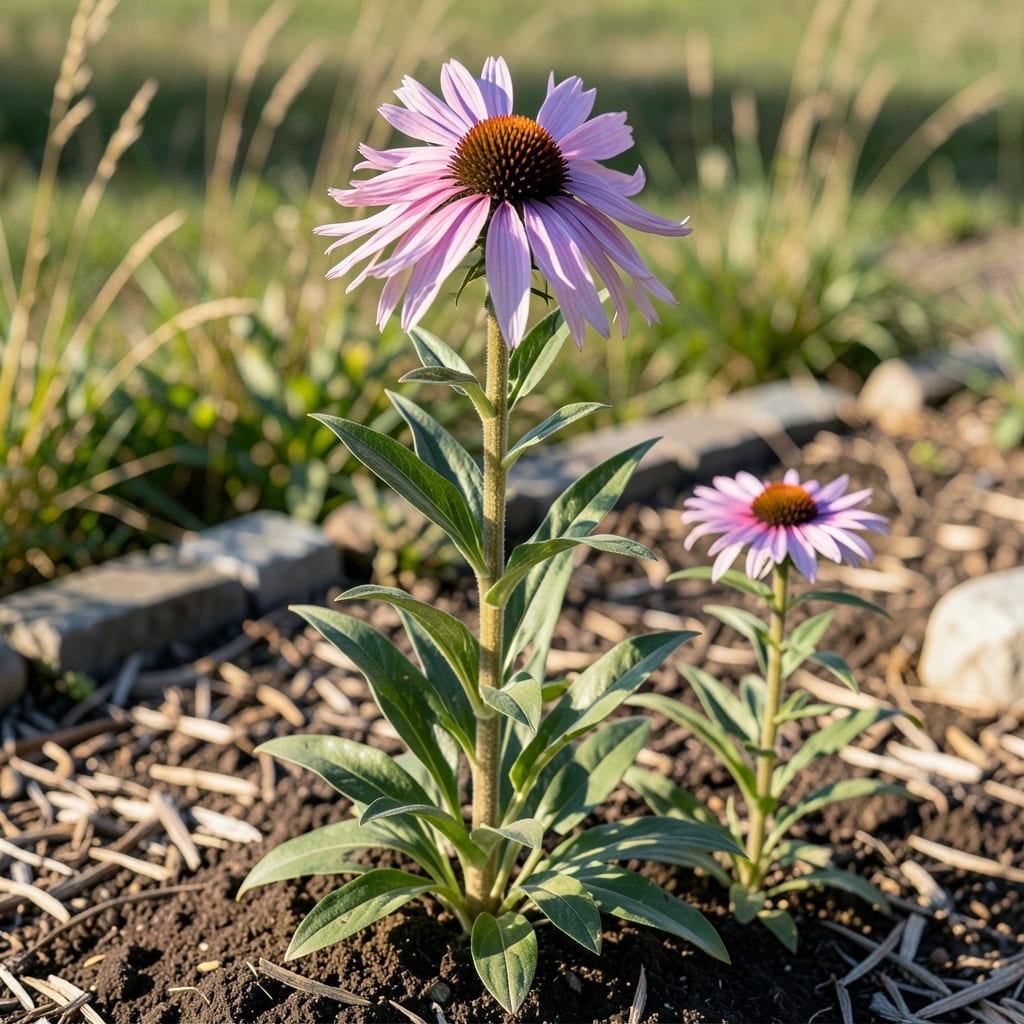
If you’ve ever planted echinacea and wondered how tall they grow, knowing its mature height is the first step to perfect garden spacing—and avoiding a floral traffic jam. These hardy perennials can vary wildly in size, from 1-foot dwarf varieties to towering 5-foot giants, depending on their type and growing conditions.
The key to getting the right height lies in choosing the right variety for your space. Standard echinacea like Echinacea purpurea typically reach 3-5 feet at maturity, making them perfect for the back of borders, while dwarf varieties stay under 2 feet, ideal for containers or front-of-bed planting. Sunlight and soil quality play a huge role too—more sun and rich soil often mean taller, more vigorous growth.
For gardeners in USDA Zone 6a, where echinacea thrives, spacing is everything. Planting 2-3 feet apart for standard varieties ensures they won’t crowd each other, while dwarf types can snuggle in just 1 foot apart. Whether you’re designing a pollinator-friendly meadow or a tidy cottage garden, understanding these height ranges helps you create a perfectly balanced floral display.
Ready to plan your echinacea layout? Let’s break down the exact height ranges by variety and how to maximize their beauty without overcrowding your garden beds.


Echinacea mature height by variety: a complete size guide for garden planning
Choosing the right echinacea variety isn’t just about color—it’s about height control. Purple coneflower (Echinacea purpurea) is the most common type, but its mature size can vary dramatically. Standard varieties like 'Magnus' or 'White Swan' typically reach 3-5 feet, while dwarf cultivars like 'Green Envy' stay compact at 1-2 feet. This range makes echinacea versatile for any garden space, from containers to borders.
For gardeners in USDA Zone 6a, where echinacea thrives, understanding these height differences is crucial. A 5-foot variety like 'Hot Papaya' needs 3 feet of space to avoid shading smaller plants, while a 1-foot dwarf like 'Sombrero Salsa' can fit neatly into a window box or rock garden. Let’s explore the exact height ranges for popular varieties and how they impact your garden layout.
🌼
Beyond variety, growing conditions like sunlight and soil quality influence height. Echinacea thrives in full sun (6+ hours daily), where it grows 20-30% taller than in partial shade. Poor soil or overcrowding can stunt growth, while rich, well-draining soil encourages vibrant, tall blooms. For example, 'Magnus' might only reach 3 feet in shade but 5 feet in full sun.
If you’re designing a pollinator garden, taller varieties like 'Hot Papaya' or 'White Swan' create a stunning backdrop for butterflies and bees, while dwarf types like 'Green Envy' add texture to foreground plantings. Mixing heights also adds visual interest—pair a 4-foot echinacea with 1-foot sedum or 2-foot black-eyed Susans for layered beauty.
For container gardening, stick to dwarf varieties like 'Green Envy' or 'Sombrero Salsa', which thrive in 10-12 inch pots. Larger varieties need gallon-sized containers to support their roots and stems. Always use well-draining soil to prevent root rot, which can weaken stems and reduce height.
🌿
Proper spacing is non-negotiable for healthy growth. Plant standard echinacea 2-3 feet apart to prevent competition for nutrients and sunlight. In USDA Zone 6a, where winters can be harsh, mulching around the base helps insulate roots and promotes stronger spring growth, often resulting in taller, more robust plants the following year.
One common mistake is assuming all echinacea are the same height. Misjudging spacing leads to overcrowded beds where plants compete for resources, resulting in shorter, leggy stems
How echinacea height affects garden design: spacing tips for optimal growth
Understanding how echinacea height impacts your garden design is the secret to creating a balanced, thriving floral display. Taller varieties like 'Magnus' (4-5 feet) need ample space to avoid shading smaller plants, while dwarf types like 'Green Envy' (1-2 feet) thrive in tight clusters. Proper spacing ensures strong stems, vibrant blooms, and minimal competition for nutrients.
For pollinator gardens, taller echinacea (3-5 feet) act as backdrop plants, attracting butterflies and bees to the center of your beds. Pair them with 1-2 foot companions like black-eyed Susans or salvia to create a layered effect. In USDA Zone 6a, where winters can be harsh, this layering also protects smaller plants from late-season frost.
🌿
- Tall varieties (3-5 ft): Plant 2-3 feet apart in the back of borders to avoid overcrowding. Ideal for cut flower gardens or wildflower meadows.
- Medium varieties (2-3 ft): Space 1.5-2 feet apart for prairie-style gardens or pollinator patches. Perfect for mixed borders with sedum or coreopsis.
- Dwarf varieties (1-2 ft): Cluster 1 foot apart in containers, rock gardens, or front-of-bed plantings. Great for small spaces or balcony gardens.
- Sunlight impact: Full sun (6+ hours) boosts height by 20-30%. In partial shade, expect 1-2 feet shorter stems. Use south-facing beds for maximum growth.
- Soil quality: Well-draining, nutrient-rich soil encourages taller, stronger stems. Amend clay soil with compost to prevent root rot, which weakens growth.
In container gardening, height becomes even more critical. Dwarf varieties like 'Green Envy' thrive in 10-12 inch pots, while semi-dwarf types (2-3 feet) need gallon-sized containers to support their roots. Always use well-draining potting mix to prevent stem weakness, which can cause plants to flop or bend under their own weight.
Another pro tip: Mulch around the base of echinacea in USDA Zone 6a to insulate roots during winter. This practice promotes stronger spring regrowth, often resulting in taller, more vigorous plants by mid-summer. Avoid over-mulching, though—too much can suffocate roots and stunt height.
When designing your garden, think vertically! Use tall echinacea as focal points behind medium-height perennials, with ground covers like heuchera or ajuga filling the front. This creates a dynamic, eye-catching display while ensuring each plant gets the sunlight and space it needs to reach its full height potential.
✂️