
Shrubs
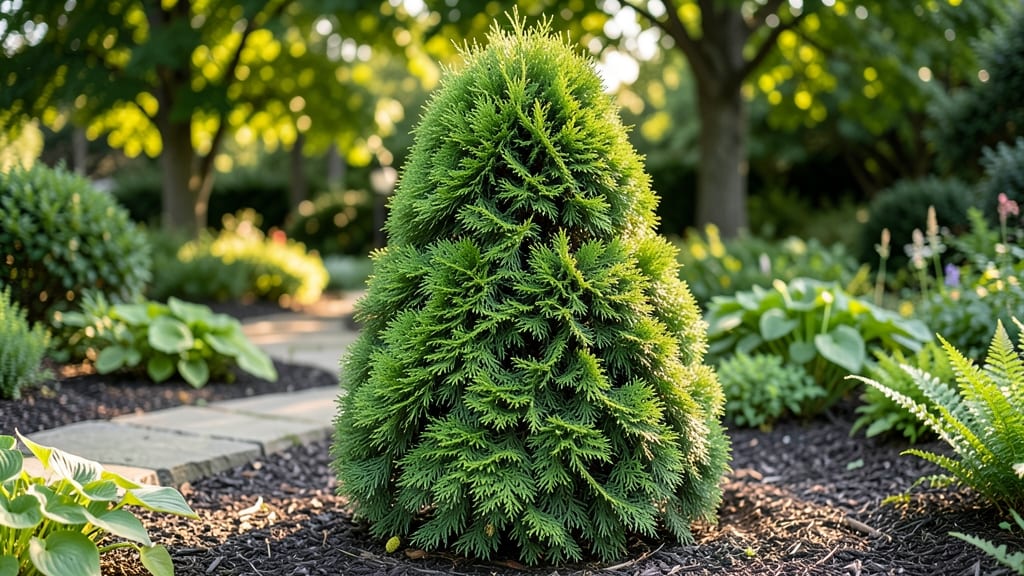
If you're wondering how tall do North Pole Arborvitae grow, you're in the right place—this compact evergreen is a game-changer for small spaces without sacrificing beauty.
Unlike towering trees, 🌲 the North Pole Arborvitae stays neatly between 10 to 15 feet at maturity, making it perfect for privacy screens, hedges, or even as a standalone focal point.
What makes this shrub so special is its predictable growth rate of 12 to 24 inches per year, so you can plan your garden layout with confidence.
Whether you're working with limited space or just love low-maintenance plants, this variety grows steadily without becoming unruly—ideal for gardeners who want structure without the upkeep.
But here's the best part: with the right spacing and occasional pruning, you can easily control its height to fit your vision.
In this guide, I'll break down everything you need to know—from growth expectations to pruning tips—to keep your North Pole Arborvitae thriving at just the right size for your space.
Ready to transform your yard with this versatile evergreen? Let's dive into how to nurture it for years of lush, green beauty—without the guesswork.


North Pole Arborvitae height: growth expectations by age and variety
The North Pole Arborvitae (Thuja occidentalis 'North Pole') is a compact evergreen that grows into a neat, pyramid-shaped shrub, making it ideal for small gardens, foundation plantings, or privacy screens.
Unlike its towering cousins, this variety stays well-behaved—typically reaching 10 to 15 feet tall at maturity, with a spread of 3 to 5 feet. That’s perfect for tight spaces where you want year-round greenery without the bulk of a full-sized tree.
One of the biggest misconceptions about this shrub is that it’s a dwarf variety. While it’s smaller than standard arborvitae like Green Giant, it’s not a true dwarf—so don’t expect it to stay under 3 feet tall like a procumbens type.
Instead, think of it as a semi-dwarf with controlled growth habits, making it versatile for hedges, borders, or even container gardening with proper care.
Here’s what you can expect in terms of height progression over the years:
- Year 1: 1 to 2 feet (focuses on root establishment)
- Year 2-3: 3 to 5 feet (rapid vertical growth phase)
- Year 4-5: 7 to 10 feet (slows as it approaches maturity)
- Mature (5+ years): 10 to 15 feet (growth rate tapers significantly)
If you’re planning a privacy screen, spacing 3 to 5 feet apart between plants ensures they’ll fill in beautifully without overcrowding. For container growing, expect slightly slower growth—2 to 3 feet taller than in-ground specimens by maturity.
The key to managing its height lies in pruning timing, soil conditions, and sunlight exposure, which we’ll cover in the next section.
| Growth Stage | Height Range | Growth Rate | Best For |
|---|---|---|---|
| Year 1 | 1–2 ft | Slow (root focus) | Foundation planting |
| Years 2–3 | 3–5 ft | 12–24 in/year | Hedges, borders |
| Years 4–5 | 7–10 ft | 6–12 in/year | Privacy screens |
| Mature (5+ years) | 10–15 ft | 2–6 in/year | Container gardening |
The growth rate of your North Pole Arborvitae depends on three critical factors: sunlight, soil drainage, and water consistency. In full sun (6+ hours daily), you’ll see the fastest growth—up to 24 inches per year in ideal conditions.
However, if planted in partial shade, expect slower growth (12 inches or less per year) and a slightly less dense appearance.
Soil drainage is non-negotiable—this shrub hates soggy roots, which can lead to root rot and stunted growth. Amend heavy clay soil with compost or sand to improve aeration. As for watering, deep soaks once a week (more in summer) are ideal. Overwatering or underwatering can halve your shrub’s growth potential, so consistency is key.
If you’re wondering whether to prune for height control, the answer is yes—but strategically. Pruning in late winter or early spring (before new growth starts) helps maintain shape and encourages bushier growth rather than tall, leggy stems.
Avoid heavy pruning in fall, as it can stress the plant before winter dormancy. For containers, prune annually to keep height in check, but never cut back more than one-third of the foliage at a time.
One common question is whether North Pole Arborvitae stays true to its compact size in all climates. The short answer? Yes, but with caveats. In USDA Zones 3–7 (where it thrives), it maintains its 10–15 foot height.
However, in warmer zones (8–9), growth can be slightly faster (up to 18 feet in extreme cases), while in colder zones (below 3), growth may slow significantly due to shorter growing seasons.
For those in small urban spaces, consider topiary training to shape the shrub into a tight pyramid or spiral. This not only controls height but also adds architectural interest to your landscape.
Just remember: patience is key—it takes 3–5 years to reach its full potential height, but the wait is worth it for that lush, evergreen beauty year-round.
🌿
North Pole Arborvitae height: growth expectations by age and variety
The North Pole Arborvitae (Thuja occidentalis 'North Pole') is a compact evergreen designed for smaller spaces, but its mature height can still vary based on growing conditions and care.
On average, this variety reaches 10 to 15 feet tall at maturity, making it an excellent choice for privacy screens or foundation plantings in tight landscapes. Unlike its towering cousins like the Green Giant, this shrub stays proportionate without overwhelming your yard.
In its first year, expect minimal growth—typically 1 to 2 feet. By year two, you’ll see a noticeable jump to 3 to 4 feet, and by year three, it often hits 5 to 7 feet.
The key to predicting its final height lies in soil quality, sunlight exposure, and pruning habits. Well-drained soil and full sun accelerate growth, while poor soil or shade can stunt it.
| Stage | Height Range | Growth Rate |
|---|---|---|
| Year 1 | 1–2 ft | Slow |
| Year 2 | 3–4 ft | Moderate (12–18 in/year) |
| Year 3–5 | 5–10 ft | Fastest (18–24 in/year) |
| Mature (5+ years) | 10–15 ft | Slows (3–6 in/year) |
While the North Pole Arborvitae isn’t a dwarf variety, it’s far more manageable than standard arborvitae.
For example, the Emerald Green arborvitae tops out at 12 to 15 feet but grows much narrower (only 3 to 4 feet wide), while the North Pole spreads 4 to 6 feet wide, creating a fuller, denser look.
This makes it ideal for hedges or windbreaks where you need both height and width without the bulk.
One common misconception is that all arborvitae grow at the same rate. The North Pole actually matures faster than dwarf varieties like the Teddy Bear (which maxes out at 3 to 4 feet) but slower than the Green Giant (which can hit 30 to 40 feet).
Its growth rate of 12 to 24 inches per year means you’ll see noticeable changes annually, especially in the first 5 years.
To ensure your North Pole Arborvitae reaches its full potential height, plant it in well-draining soil with 6+ hours of sunlight daily. Amend clay soil with compost or sand to prevent root rot, and mulch around the base to retain moisture.
Avoid over-fertilizing, as this can lead to weak, leggy growth—stick to a balanced 10-10-10 fertilizer applied in early spring.
If you’re working with limited space, don’t worry—this variety is highly adaptable. With proper pruning (which we’ll cover in the next section), you can easily keep it under 10 feet if needed.
Just remember: the healthier the plant, the fuller and denser it grows, so prioritize watering and soil health above all else. 🌲