
How To
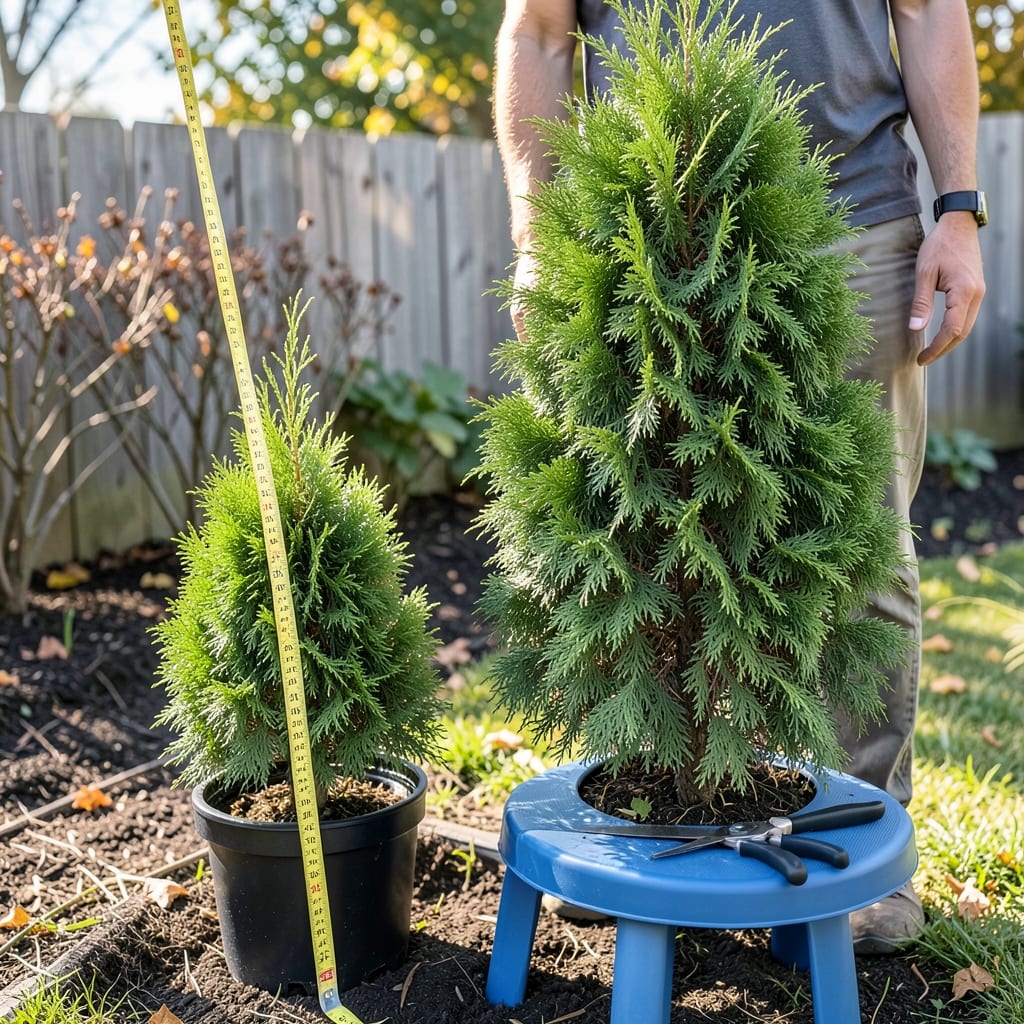
If you're wondering how tall do arborvitaes grow, the answer depends entirely on the variety you choose—because these evergreen trees can range from a modest 3 feet to towering heights of 40 feet or more. Whether you're planning a cozy backyard hedge or a towering privacy screen, picking the right type makes all the difference.
For small spaces, dwarf arborvitaes like 'Emerald Green' stay under 10 feet, while standard varieties like 'Green Giant' can reach heights of 30-40 feet over time. The key to managing their size lies in understanding growth rates, pruning techniques, and the right planting conditions for your climate in USDA Zone 6a.
In this guide, I’ll break down the height differences between popular arborvitae species, share tips for keeping them compact, and help you choose the perfect fit for your landscape. Whether you're working with limited space or dreaming of a lush, green backdrop, you’ll find the perfect 🌲 arborvitae solution here.
Ready to transform your yard without sacrificing space? Let’s dive into the varieties that will give you the height—and look—you want, without the overwhelming growth.


Arborvitae height ranges: from dwarf to giant varieties explained
When planning your landscape, knowing how tall arborvitaes grow is critical—because the wrong choice can turn your dream hedge into an unmanageable giant. Arborvitaes belong to the Thuja genus, and their mature heights vary dramatically from species to species. For example, the American arborvitae (Thuja occidentalis) typically matures between 3-12 feet, while the Western redcedar (Thuja plicata) can soar to 60-70 feet in ideal conditions.
Even within the same species, cultivars can differ by 30 feet or more. A dwarf variety like 'Teddy Bear' stays under 4 feet, while a standard variety like 'Green Giant' reaches 30-40 feet. Understanding these differences helps you avoid overcrowding or planting a tree that outgrows its space in just a few years.
Growth rates also depend on your USDA Zone 6a climate. In cooler regions, arborvitaes grow slower but may live longer, while warmer zones can accelerate growth. For instance, a 'Emerald Green' arborvitae might take 5-7 years to reach 10 feet in Zone 6a, but could grow faster in Zone 7.
Here’s a quick breakdown of the three main height categories you’ll encounter:
| Variety Type | Mature Height | Growth Rate (Per Year) | Best For |
|---|---|---|---|
| Dwarf | 3–8 ft | 6–12 in | Containers, small hedges, urban gardens |
| Semi-Dwarf | 8–15 ft | 12–18 in | Medium hedges, privacy screens, foundation plantings |
| Standard | 15–40+ ft | 18–24 in | Large privacy screens, windbreaks, focal points |
Popular dwarf arborvitaes like 'Little Giant' or 'Golden Globe' are perfect for small spaces, while 'American Plum' and 'American Arborvitae' varieties offer a balance between height and manageability. If you’re aiming for a privacy screen, standard varieties like 'Green Giant' or 'Brabant' deliver the height you need—just be prepared for regular pruning to maintain shape.
One common mistake is assuming all arborvitaes grow at the same rate. In reality, soil quality, sunlight exposure, and watering habits can influence growth by up to 30%. For example, planting in full sun with well-draining soil can accelerate growth, while shade or poor soil slows it down. Always check the specific care requirements for your chosen variety.
For container gardening, stick to dwarf or semi-dwarf varieties like 'Teddy Bear' or 'Mound Select'. These thrive in 5-gallon pots and can be moved seasonally. Just remember: even compact varieties need proper drainage and regular pruning to prevent root-bound stress.
If you’re unsure which variety fits your space, start with 'Emerald Green'—it’s a versatile semi-dwarf that works well in both hedges and standalone plantings. For a bold statement, consider 'Green Giant', but plan for its eventual height and pruning needs.
Next, we’ll dive into the top 5 space-saving arborvitae varieties under 10 feet, perfect for small yards and urban gardens. You’ll learn how to maximize their curb appeal without sacrificing space!
Arborvitae height ranges: from dwarf to giant varieties explained
Arborvitaes come in stunning diversity, with mature heights ranging from 3 feet for dwarf varieties to over 40 feet for towering giants. The species Thuja occidentalis (American arborvitae) typically stays between 30-40 feet, while Thuja plicata (Western redcedar) can reach 60 feet or more in ideal conditions.
Most homeowners choose arborvitaes for their privacy screening or landscaping appeal, so understanding growth patterns helps you plan spacing and maintenance. For example, the Green Giant variety grows 3-4 feet per year and can reach 30-40 feet at maturity, while Emerald Green stays compact at 12-15 feet.
Growth rates also depend on soil quality, sunlight exposure, and climate conditions. In USDA Zone 6a, where winters can be harsh, arborvitaes grow slower but develop stronger root systems. Proper watering and mulching can accelerate growth in younger plants.
| Variety | Mature Height | Growth Rate | Best For |
|---|---|---|---|
| Emerald Green | 12-15 ft | 1-2 ft/year | Hedges, small yards |
| Green Giant | 30-40 ft | 3-4 ft/year | Privacy screens |
| American Plum | 8-12 ft | 1-2 ft/year | Containers, small spaces |
| Thuja plicata | 60+ ft | 2-3 ft/year | Large landscapes |
| Teddy | 3-5 ft | 6-12 in/year | Borders, containers |
If you're working with limited space, dwarf varieties like 'Teddy' or 'Witch's Broom' are perfect for containers or small gardens. These stay under 5 feet and grow slowly, making them ideal for urban landscapes where space is at a premium.
For larger properties, standard varieties like 'Green Giant' or 'Brabant' offer rapid growth and impressive height. These are best planted along property lines or as focal points in larger yards. Always check the spacing guidelines for your chosen variety to avoid overcrowding as they mature.
Proper pruning can also control height—regular trimming in late winter or early spring encourages bushier growth and prevents overgrowth. Just remember, arborvitaes grow best with well-drained soil and consistent moisture, especially during their first few years.