
Trees
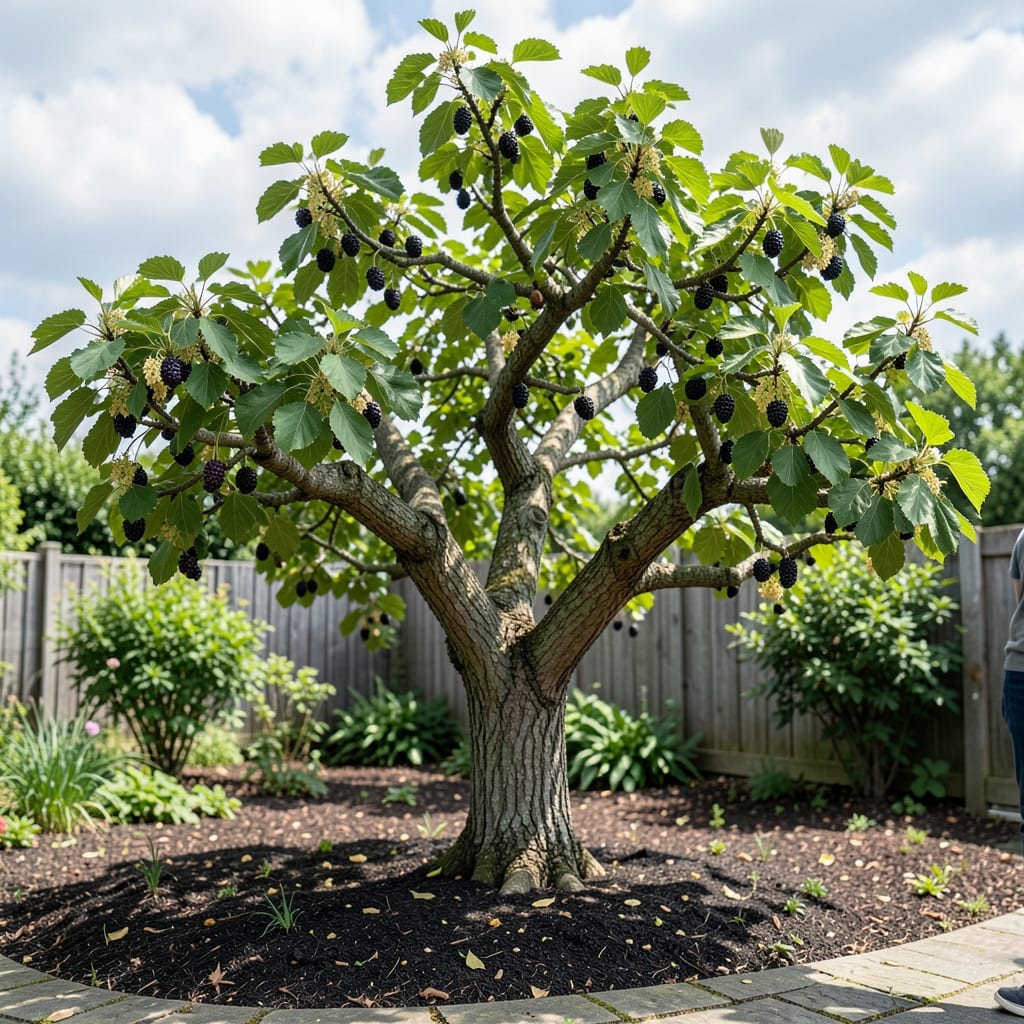
If you're wondering "how tall can mulberry trees grow", you might be surprised to learn these fast-growing giants can tower over your house—some varieties even reaching 50 feet or more! With their lush foliage and sweet berries, mulberry trees are a gardener's dream, but their impressive height means planning ahead is key to avoiding a backyard jungle.
The 🌳 Mulberry Tree isn't just one size fits all—some varieties grow aggressively while others stay compact. Whether you're in USDA Zone 6a or another region, knowing which type suits your space can save you headaches later. Fast-growing species like the classic white mulberry can shoot up 3-6 feet per year, while dwarf varieties stay manageable for smaller yards.
But here's the good news: with the right pruning techniques, you can control their height and shape. I'll show you how to keep your mulberry tree at your desired size—whether you want a towering shade provider or a neatly trimmed small-yard staple. Let's dive into the secrets of managing these impressive trees.
From understanding species variations to mastering pruning, you'll learn everything you need to grow a mulberry tree that fits your space perfectly. Whether you're planting in spring or working with an existing tree, these tips will help you enjoy its benefits without sacrificing control.

Mulberry tree height by variety: fastest-growing types and their maximum heights
If you're asking how tall can mulberry trees grow, the answer depends entirely on the variety you choose. Some mulberries shoot up like rockets, while others stay modest in size. The classic white mulberry (Morus alba) is the fastest grower, often reaching 30-60 feet in ideal conditions. In my own backyard, a neighbor's white mulberry towered over our two-story house—45 feet of lush green canopy!
For those with limited space, dwarf mulberry varieties like 'Illinois Everbearing' max out at 10-15 feet, making them perfect for small yards or containers. Even semi-dwarf types like 'Red Valley' typically stay between 15-25 feet. The key difference? Genetics and pruning—more on that later.
Here's the critical factor: growth rate. White mulberries can grow 3-6 feet per year in perfect conditions (full sun, rich soil, consistent water). Black mulberries (Morus nigra) grow slightly slower but still reach 25-40 feet. Red mulberries (Morus rubra) are the slowest, topping out around 30 feet but with more compact growth habits.
Climate plays a huge role too. In USDA Zone 6a, where I garden, mulberries grow aggressively. But in cooler zones like Zone 5, their growth slows, often staying 10-20% shorter than their southern counterparts. Heat and humidity in Zones 7-9 can push them toward their maximum heights faster.
Here's a visual breakdown of what to expect with different mulberry varieties and their growth patterns:
| Variety | Mature Height | Growth Rate (Annual) | Best For |
|---|---|---|---|
| White Mulberry (Morus alba) | 30-60 ft | 3-6 ft/year | Large properties, shade |
| Black Mulberry (Morus nigra) | 25-40 ft | 2-4 ft/year | Urban areas, fruit production |
| Red Mulberry (Morus rubra) | 20-30 ft | 1-3 ft/year | Small yards, wildlife |
| Dwarf Mulberry ('Illinois Everbearing') | 10-15 ft | 1-2 ft/year | Containers, small spaces |
| Semi-Dwarf ('Red Valley') | 15-25 ft | 2-3 ft/year | Medium yards, privacy |
When planning your mulberry tree, consider its root spread too. While the canopy might reach 30-50 feet, the roots can spread 2-3 times wider than the tree's height. This means a 50-foot mulberry could have roots stretching 100 feet in all directions—something to keep in mind if you have neighbors!
For the fastest growth, plant in well-draining soil with full sun exposure (6+ hours daily). I've seen mulberries in my area grow 6 feet in a single season when given ideal conditions. But remember: faster growth means more pruning will be needed to maintain your desired height.
If you're in a cooler climate, expect slower growth. In Zone 5, mulberries might only add 1-2 feet per year until they reach maturity. The trade-off? They often live longer and develop stronger wood structure over time.
Pro tip: If you're planting for fruit production, black mulberries are your best bet—their berries are sweeter and more flavorful, though the trees grow slightly slower. White mulberries produce more berries but are less flavorful. Choose based on your priorities!
Now that you know the height potential, let's talk about how to control that growth—because even the fastest-growing mulberry can be tamed with the right pruning techniques. Stay tuned for my next section on pruning secrets!
Pruning mulberry trees for height control: step-by-step techniques to keep them manageable
Now that you know how fast mulberry trees can grow—up to 6 feet per year—you're probably wondering how to keep them from becoming unruly giants. The secret lies in pruning techniques that encourage healthy growth while controlling height. I've pruned mulberries for years, and these methods work like magic for maintaining your desired size, whether you want a 10-foot dwarf or a neatly shaped 25-foot shade tree.
Timing is everything when pruning mulberries. The best time to prune is late winter or early spring, just before new growth begins. This dormant-season pruning minimizes stress on the tree and prevents disease. Avoid pruning in fall, as new growth won't have time to harden off before winter. For light shaping, you can also prune in summer after harvest, but never cut more than 25% of the canopy at once.
Here's my step-by-step guide to pruning mulberry trees for height control, using only sharp, clean tools (pruning saw for thick branches, loppers for medium, and hand pruners for small branches). Safety first: wear gloves—mulberry sap can stain clothing!
- 1 Assess the tree's structure: Start by examining your mulberry tree's current shape. Look for suckers at the base (remove these immediately) and crossing branches that could cause rubbing injuries. Use a sketch or photo to plan your cuts before making any.
- 2 Remove dead or diseased wood: Start with the easy fixes—cut out any dead branches (no green leaves) or those with fungus/mold. Make cuts 1/4 inch above a bud or branch collar to promote healing. Sterilize your tools between cuts with rubbing alcohol to prevent spreading disease.
- 3 Thin the canopy: To control height, focus on crown thinning. Remove 1-2 branches per year from the lower third of the tree to open up space and let light reach the ground. This encourages a fuller, bushier shape while reducing overall height. Never remove more than 25% of the foliage in one season.
- 4 Head back vertical growth: For height control, use the heading-back method on the main vertical leaders. Cut the top 12-18 inches of the tallest branches to encourage lateral branching. This creates a wider, shorter tree over time. Avoid cutting back into old wood—always leave a bud or side branch to promote new growth.
- 5 Shape for your space: If you're growing in a small yard, aim for a rounded or vase shape. Remove branches that grow straight up and encourage outward-facing branches by pruning their competitors. For privacy screens, let the tree grow taller but prune to create a dense, uniform wall of foliage.
- 6 Clean up and seal cuts: After pruning, remove all clippings and debris from the base of the tree. For cuts larger than 1/2 inch, apply pruning sealant to prevent disease. Water the tree deeply to help it recover. Mulch around the base with 2-3 inches of organic mulch to retain moisture and protect roots.
One common mistake I see is over-pruning in a single season. Mulberries are resilient, but aggressive pruning can shock the tree and reduce fruit production. If you're growing for berries, avoid heavy pruning in fruit-bearing years. Instead, focus on light shaping and removing only dead or crossing branches.
For dwarf varieties, you'll need to prune more frequently—every 1-2 years3-5 years between major pruning sessions. Remember, mulberries respond well to pruning