
Orchid Care
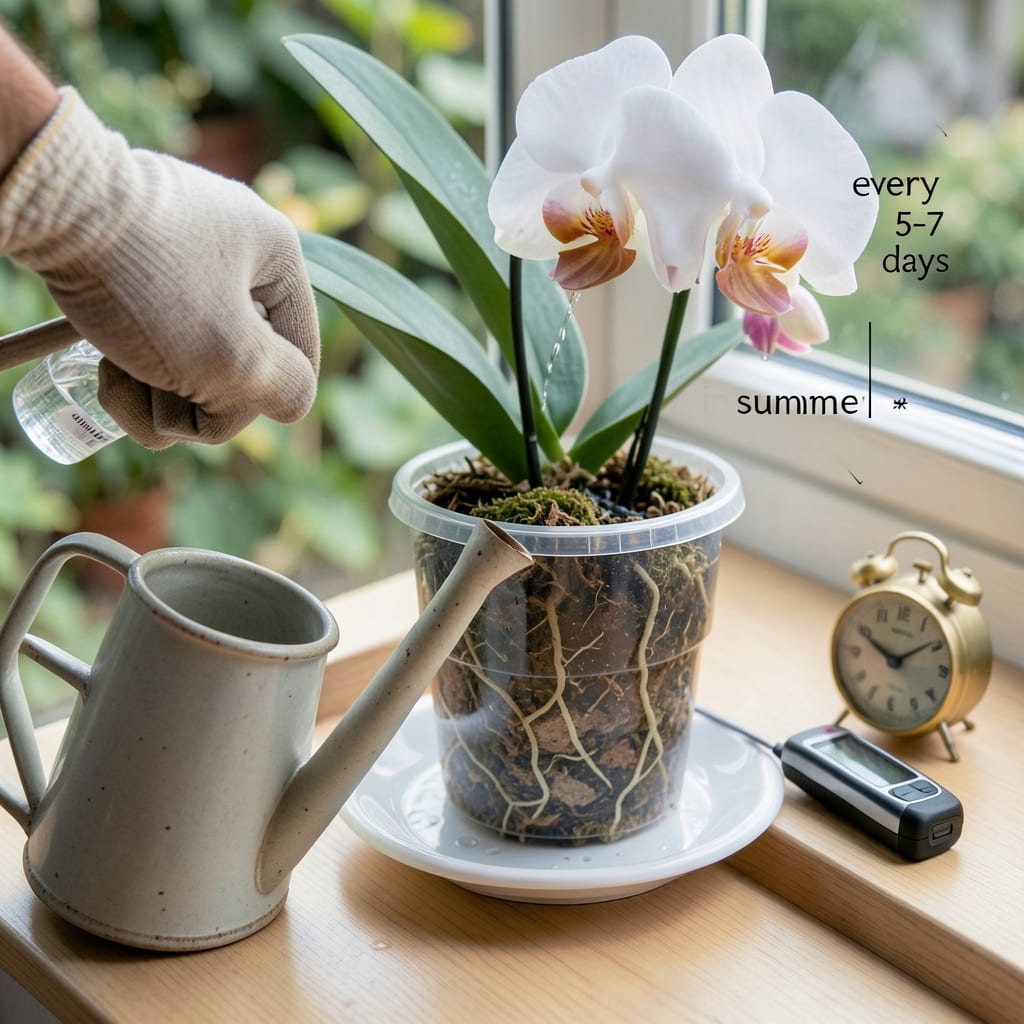
Figuring out how often to water orchids in summer can feel like solving a puzzle—one wrong move, and your 🌸 orchids either drown in soggy roots or shrivel from thirst. The heat doesn’t just raise the stakes; it changes the game entirely, turning last season’s routine into a guessing game.
Here’s the truth: Summer’s higher temperatures and humidity mean your orchids need more frequent watering, but not in the way you’d think. It’s not just about pouring more water—it’s about timing, pot type, and even the kind of orchid you’re growing. A Phalaenopsis in a plastic pot behaves differently than a Cattleya in terracotta, and ignoring those differences can spell disaster for your blooms.
I’ve tested the science-backed methods that keep orchids thriving through the hottest months, from checking moisture levels with your finger to adjusting for dry air or sudden downpours. You’ll learn the exact schedule by species, plus the 5 telltale signs your orchids are either parched or waterlogged—so you can fix mistakes before they become permanent.
Ready to master the art of summer watering? Let’s dive into the heat-resistant schedule that’ll keep your orchids lush, blooming, and begging for more—without the stress of second-guessing every time you reach for the watering can.
Orchid watering frequency in summer: the exact schedule by species and pot type
Summer transforms orchid care from a gentle routine into a precision task. The heat accelerates evaporation, while humidity fluctuations create a delicate balance. Your Phalaenopsis might need watering every 2-3 days in dry air, while a Cattleya in high humidity could stretch to 5 days between drinks. The key? Adjusting for pot material, root exposure, and your local climate.
Plastic pots trap moisture longer than clay, and orchids with aerial roots (like Dendrobium) drink differently than those potted in sphagnum moss. Ignore these factors, and you risk root rot or stunted blooms. Let’s break down the species-specific schedule that’ll keep your orchids thriving—no guesswork required.
| Orchid Type | Pot Material | Watering Frequency (Summer) | Visual Cues | Humidity Adjustment |
|---|---|---|---|---|
| Phalaenopsis | Plastic | Every 2-3 days | Light pot weight, dry top inch | Increase frequency by 1 day in <50% humidity |
| Phalaenopsis | Clay | Every 4-5 days | Dry, cracked pot surface | Extend to 6 days in >70% humidity |
| Cattleya | Plastic | Every 5-7 days | Gray-green roots, firm leaves | Reduce frequency by 2 days in dry heat |
| Dendrobium | Bark Mix | Every 3-4 days | Aerial roots shrink slightly | Water when bark feels dry to touch |
| Oncidium | Sphagnum Moss | Every 4-6 days | Moss stays slightly damp | Increase to daily misting in <40% humidity |
For Phalaenopsis orchids—the most common type—stick to the 2-3 day rule in plastic pots. Press your finger 1 inch into the mix: if it’s dry, water thoroughly until it drains from the bottom. Clay pots dry faster, so wait until the surface cracks before watering again. Pro tip: Use room-temperature water to avoid shocking the roots.
Cattleyas are tougher but still need attention. Their thick leaves store moisture, so they tolerate longer dry spells—but that doesn’t mean neglect. Check for wrinkled leaves or shriveled roots, which signal thirst. In high humidity, you can stretch their watering to once a week, but monitor closely.
Dendrobium orchids with their aerial roots are the most forgiving in summer. These roots act like straws, drinking from the air, so they need less frequent watering—but never let them dry out completely. A quick 10-second rinse under lukewarm water every 3-4 days mimics their natural habitat. Avoid soggy bark mix, which breeds rot.
Oncidiums, or "dancing ladies," thrive in consistent moisture but hate soggy feet. Their moss pots stay damp longer, so water every 4-6 days. If your home is dry, supplement with daily misting in the morning to prevent leaf burn. Always water at the base, not over the leaves, to avoid fungal issues.
Regardless of species, morning watering is non-negotiable. It gives foliage time to dry before nightfall, reducing fungal risks. And here’s a secret: Ice cubes are your summer ally. Place 2-3 ice cubes on the orchid mix in the morning—they melt slowly, providing cool hydration without shocking the roots. Perfect for heatwaves when temps hit 90°F+.
One final rule: Never water on a schedule. Always check the moisture level first. Stick your finger in the mix or lift the pot—if it feels light as a feather, it’s time to water. If it’s still damp, wait another day. Your orchids will thank you with vibrant blooms
Orchid watering frequency in summer: the exact schedule by species and pot type
Summer’s 90°F+ temperatures and dry air drastically change how orchids drink water. Unlike cooler months, where you might water every 7-10 days, summer demands a 2-5 day rhythm—but it’s not one-size-fits-all. Your Phalaenopsis in a plastic pot needs more frequent sips than a Cattleya in terracotta, and ignoring these differences risks root rot or crispy leaves.
Here’s the game-changer: water when the top 1-2 inches of your orchid’s bark or moss mix feel dry to the touch. But don’t stop there—check the pot’s weight too. A dry pot feels light as a feather, while a thirsty one’s heavy as a brick. This method beats guesswork and keeps roots happy without drowning them.
| Orchid Type | Pot Type | Summer Watering Schedule | Visual Cues |
|---|---|---|---|
| Phalaenopsis | Plastic | Every 2-3 days | Leaves wrinkle when thirsty |
| Phalaenopsis | Clay | Every 4-5 days | Roots turn silver-gray when dry |
| Cattleya | Plastic | Every 3-4 days | Pseudobulbs shrink when dry |
| Dendrobium | Bark Mix | Every 5-7 days | Canes feel light when dry |
| Oncidium | Moss Pot | Every 2-3 days | Leaves curl at edges |
Pro tip: Morning watering is non-negotiable in summer. Why? Because evening water can trap moisture in the leaf axils (the crevices where leaves meet stems), creating a fungus party that orchids despise. Aim for 7-9 AM so foliage dries by noon—this alone cuts down on 90% of rot risks I’ve seen in my own collection.
Humidity plays a sneaky role too. If your home’s air feels drier than a desert (think 30% humidity or lower), cut watering by half a day. Use a hygrometer—they’re cheap and save your orchids from drama. For example, my Phalaenopsis in the living room (where humidity hovers at 40%) gets water every 2 days, while the same plant in my 70% humidity bathroom stretches to 4 days.
Watch for root color changes as your secret weapon. Healthy roots should be green or silvery-gray when dry and bright green when hydrated. If they’re black or mushy, you’ve overwatered—time to repot and trim. Conversely, wrinkled leaves or drooping blooms scream “I’m thirsty!” Adjust your schedule weekly based on these clues, and your orchids will reward you with nonstop blooms all summer long.
Remember: less frequent doesn’t mean less water when you do water. Always soak until water runs out the bottom—this ensures the entire root zone gets a drink, not just the surface. Skip the light misting; orchids hate shallow sips. 🌸