
Orchid Care
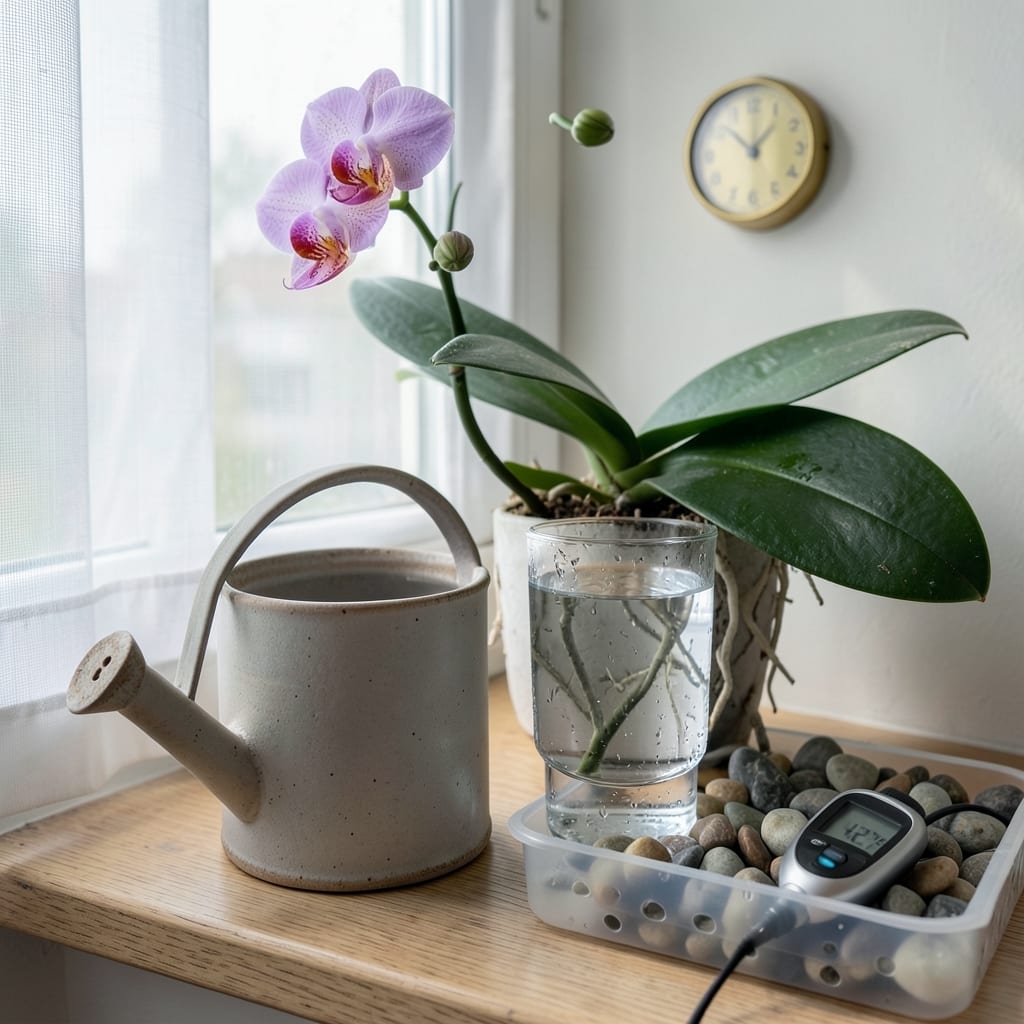
Mastering how often to water orchids in a dry environment isn’t just about sticking to a schedule—it’s about reading your plant’s signals. That delicate balance between too little and too much can mean the difference between a thriving 🌸 and one that struggles to survive.
In dry climates, orchids don’t follow the same rules as their tropical cousins. Low humidity and arid air speed up moisture loss, so your watering routine needs to adapt. What works in a lush greenhouse might kill your orchid indoors—unless you know the key adjustments to make.
I’ve learned the hard way that skipping a watering check or overcompensating can lead to root rot or dehydration. The good news? With a few simple tricks—like the finger test or observing root color—you can fine-tune your approach to match your orchid’s exact needs.
Ready to transform your watering game? Let’s break down the science-backed methods that keep your orchids blooming year-round, even when the air feels like sandpaper.
Orchid watering frequency by root color: green vs. silver roots in dry climates
Your orchid’s root color is the most reliable moisture meter—no fancy tools needed. In dry environments, green roots signal active growth, while silver roots indicate dormancy. The key is adjusting your watering schedule based on what you see, not just a rigid calendar.
For orchids with green roots, aim for watering every 7-10 days in dry climates. These roots absorb moisture efficiently but need consistent hydration to prevent dehydration. The challenge? Dry air evaporates moisture faster, so check your orchid’s pot weight—if it feels lighter than a can of soda, it’s time to water.
When roots turn silver or gray, your orchid is entering dormancy, a natural response to dry conditions. Cut back to every 10-14 days, even if the roots look plump. Overwatering dormant orchids leads to root rot, which spreads faster in low-humidity air due to poor air circulation.
| Root Color | Watering Frequency | Humidity Adjustment | Seasonal Note |
|---|---|---|---|
| Green | Every 7-10 days | Increase humidity to 40-50% | Active growth (spring/summer) |
| Silver/Gray | Every 10-14 days | Reduce humidity to 30-40% | Dormancy (fall/winter) |
| Mixed (some green, some silver) | Every 8-12 days | Balance humidity at 35-45% | Transition phase |
Pro tip: Use a humidity tray with pebbles and water beneath the pot to mimic tropical conditions without overwatering. This adds 5-10% humidity instantly, helping dry air do less damage. Just ensure the pot isn’t sitting in standing water—orchid roots need oxygen too!
Pot material matters in dry climates. Clay pots dry out faster, so water them every 5-7 days if the roots are green. Plastic pots retain moisture longer, extending the gap to 10-14 days between waterings. Always let excess water drain completely to avoid soggy roots.
Watch for wrinkled leaves or roots pulling away from the pot—these are cries for water. Conversely, yellowing leaves or a foul smell mean you’ve overdone it. In dry air, overwatering is just as deadly as underwatering because fungal spores thrive in stagnant moisture.
Adjust your schedule based on indoor vs. outdoor placement. Outdoor orchids in dry climates may need watering every 5-7 days due to wind and sun exposure, while indoor orchids near heaters or AC units might only need water every 10-14 days. Always err on the side of underwatering—you can revive an orchid faster than you can fix root rot.
For a foolproof check, stick your finger 1 inch into the substrate. If it feels dry, water thoroughly until water runs out the bottom. If it’s still damp, wait another 3-5 days. This method beats guesswork every time, especially in dry environments where moisture evaporates in hours.
Remember: Orchids in dry climates are resilient but not drought-proof. A consistent routine beats sporadic deep waterings. Stick to these guidelines, and your orchids will reward you with longer blooms and healthier roots—even when the air feels like a desert.
🌱💧Seasonal watering adjustments for orchids in arid environments: winter vs. summer schedules
When the thermometer rises in summer, your orchid’s watering needs shift dramatically. In dry environments, evaporation rates can double, forcing you to water every 5-7 days instead of the usual 10. I’ve seen orchids wilt within days when left on a sunny windowsill without adjustment—so check the substrate with your finger before watering.
Start by testing moisture levels early in the week. If the top 1 inch of mix feels bone-dry, it’s time to water. But here’s the catch: overwatering in heat leads to root rot faster than you’d think. Always let excess water drain completely from the pot’s bottom to prevent soggy roots.
Summer vs. Winter Watering: Pros & Cons
✅ Pros: Prevents wilting in high evaporation conditions
❌ Cons: Risk of root rot if overdone; needs morning watering to avoid fungal growth
✅ Pros: Matches reduced growth phase; lowers fungal risk
❌ Cons: Underwatering can cause bud blast (dropped blooms); requires humidity tray in dry air
Winter slows everything down, including your orchid’s metabolism. Cut watering to every 10-14 days and reduce fertilizer to half-strength or skip it entirely. I’ve noticed my Phalaenopsis orchids hold moisture longer in winter, so I rely on the weight test: Lift the pot—if it feels light as a feather, it’s time to water.
Watch for emergency signs like yellowing leaves or wrinkled pseudobulbs. These mean your orchid is thirsty or drowning, respectively. In summer, wrinkled roots signal dehydration, while mushy, black roots mean rot. Act fast: Adjust your schedule and repot if needed, using fresh bark mix to improve drainage.
Pro tip: Place a humidity tray under pots in winter to combat dry indoor air. Fill it with pebbles and water, ensuring the pot sits above the waterline to avoid root rot. This simple trick can double humidity around your orchid without overwatering.
Remember, orchids in dry climates are not one-size-fits-all. Your Cattleya might need more frequent watering than your Dendrobium—always observe and adjust. With these seasonal tweaks, you’ll keep your orchids blooming beautifully, no matter the weather outside.