Plants
Knowing when to plant grapes in Zone 8 is the difference between thriving vines and struggling plants in your backyard. The scorching summers and mild winters here demand precise timing—plant too early, and your 🍇 could face heat stress; too late, and frost might catch them off guard.
Most gardeners in Zone 8 swear by late winter or early spring planting, but fall can also work if you choose the right heat-tolerant varieties. The key is understanding soil temperatures, frost risks, and how your local microclimate plays a role.
Let me walk you through the exact windows that’ll give your grapes the best shot at success.
You’ll learn which months align with ideal soil conditions, how to prep your soil for maximum growth, and which grape types handle Zone 8’s heat like champions. Avoiding these common mistakes could mean the difference between a modest harvest and a lush, productive vineyard.
Ready to plant with confidence? I’ll break down everything you need to know—from rootstock selection to post-planting care—to ensure your grapes take root strong and flourish all season long.
Best planting months for grapes in Zone 8: exact timing for success
Zone 8’s mild winters and intense summers demand precise timing for grape planting. The best windows are late winter (February-March) or early fall (September-October), when soil temperatures are ideal and extreme heat hasn’t arrived yet. Planting outside these windows risks heat stress or frost damage during vulnerable stages.
For bare-root vines, aim for February-March when dormancy ends but buds haven’t yet broken. This gives roots time to establish before summer’s peak. If you prefer container planting, early spring is safer—containers heat up faster and can scorch tender roots in Zone 8’s 100°F+ afternoons.
Fall planting (September-October) works too, but only in cooler microclimates like coastal areas. Inland regions should avoid late fall planting—November’s first frost (avg. Nov 15) can damage new growth. Always check your local last frost date—Southern California’s is later than Texas Hill Country’s.
Soil temperature is critical: grape roots thrive at 60-70°F. Use a soil thermometer to confirm—planting when temps drop below 55°F stunts root growth. In Zone 8, this usually means avoiding April-May unless you’re in a high-elevation area with cooler soils.
Regional adjustments matter: In Arizona’s desert climates, plant in late winter to escape the 110°F+ summers. In Texas’ Gulf Coast, early fall (September) lets vines establish before hurricane season’s heavy rains. Southern California’s Mediterranean climate allows both spring and fall planting with proper irrigation.
🌱Pro Tip: If you miss the ideal window, potted grapes can be planted in early summer (June) with daily shade cloth and deep watering. Just expect slower initial growth.
📋 Zone 8 Grape Planting Summary
| Planting Window | Soil Temp | Best For | Risk Level |
|---|---|---|---|
| Late Winter (Feb-Mar) | 55-65°F | Bare-root vines | Low |
| Early Fall (Sep-Oct) | 60-70°F | Coastal areas | Moderate |
| Early Summer (Jun) | 65-75°F | Containers only | High |
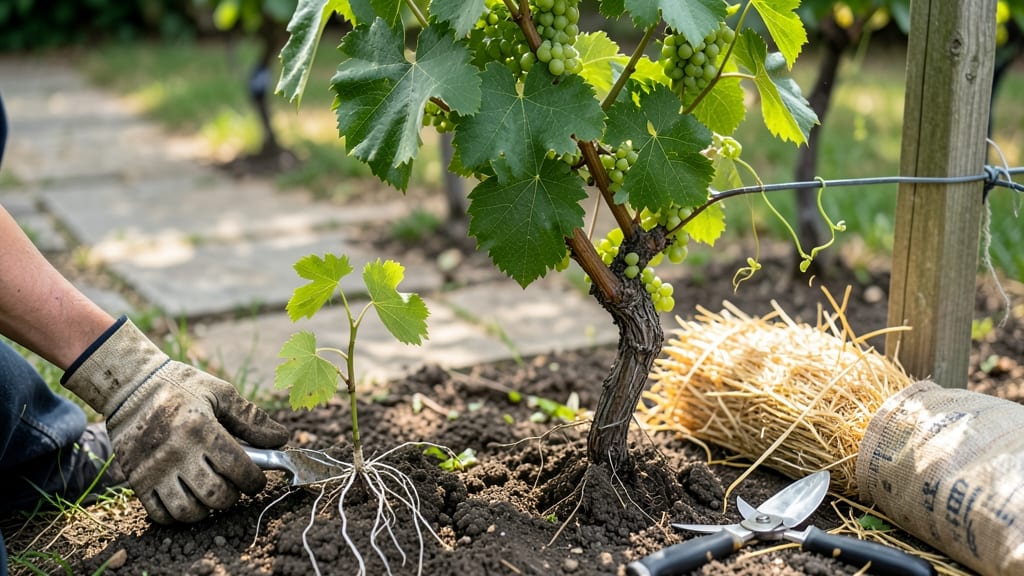
Avoid planting in May-July—Zone 8’s triple-digit heat stresses young vines. If you plant in summer, mulch heavily (4-6 inches of straw) to retain moisture and water at the base (not overhead) to prevent fungal diseases like powdery mildew. Drip irrigation is ideal for summer plantings.
Post-planting care differs by season: Spring plantings need regular watering as buds break, while fall plantings should be watered lightly until dormancy sets in. In both cases, avoid fertilizing for the first 6-8 weeks—focus on root establishment before pushing new growth.
Microclimates change everything: A north-facing slope in Phoenix might support summer planting, while a south-facing yard in Houston will need shade cloth for June plantings. Use windbreaks in exposed areas to protect young vines from Zone 8’s dry winds, which dry out soil faster.
💡Key Takeaway: Zone 8’s best planting windows are February-March or September-October, but soil temperature and microclimate override calendar dates. Always test your soil and monitor weather forecasts before digging—this is how pros maximize survival rates in extreme heat.
Best planting months for grapes in Zone 8: exact timing for success
Zone 8’s mild winters and scorching summers create a unique challenge for grape growers. The perfect planting window balances cool soil temperatures and avoids summer heat stress.
For most of Zone 8, late winter to early spring (February-March) is ideal, but fall planting (September-October) works too—especially in regions like Southern California with extended growing seasons.
Timing matters because grapes need 6-8 months to establish roots before summer’s intensity. Planting too early risks frost damage (common before February 15), while planting too late exposes young vines to heat stress and poor root development.
Let’s break down the optimal months and what to watch for in your specific microclimate.
| Planting Window | Soil Temp | Key Considerations |
|---|---|---|
| Late Winter (Feb-March) | 45-55°F | Best for bare-root vines; avoid frost risk |
| Early Spring (April) | 55-65°F | Risk of heat stress; use shade cloth |
| Fall (Sept-Oct) | 60-70°F | Ideal for container grapes; extends growing season |
In Southern California, where winters are nearly frost-free, you can plant as late as April—but prioritize afternoon shade to protect young vines. Meanwhile, Arizona and Texas growers should aim for September-October to avoid the brutal summer heat.
Always check your last frost date (typically mid-February in Zone 8) and plant 4-6 weeks before to give roots time to establish.
Pro tip: Use a soil thermometer to confirm temperatures are above 45°F before planting. Cold soil slows root growth, leaving vines vulnerable to summer drought stress. If your soil runs cooler (common in clay-heavy areas), amend with compost or sand to improve warmth retention.
For container grapes, fall planting (September) gives vines a head start before winter dormancy. Place containers near south-facing walls to maximize warmth and protect from chilly night temperatures.
In-ground vines benefit from mulching with straw to regulate soil temperature and retain moisture during the critical first 60 days after planting.
Remember: Heat tolerance starts with timing. Planting at the right moment ensures your grapes thrive through Zone 8’s 100°F+ summers and deliver sweet, flavorful harvests by late summer or fall. 🌱