
Plants
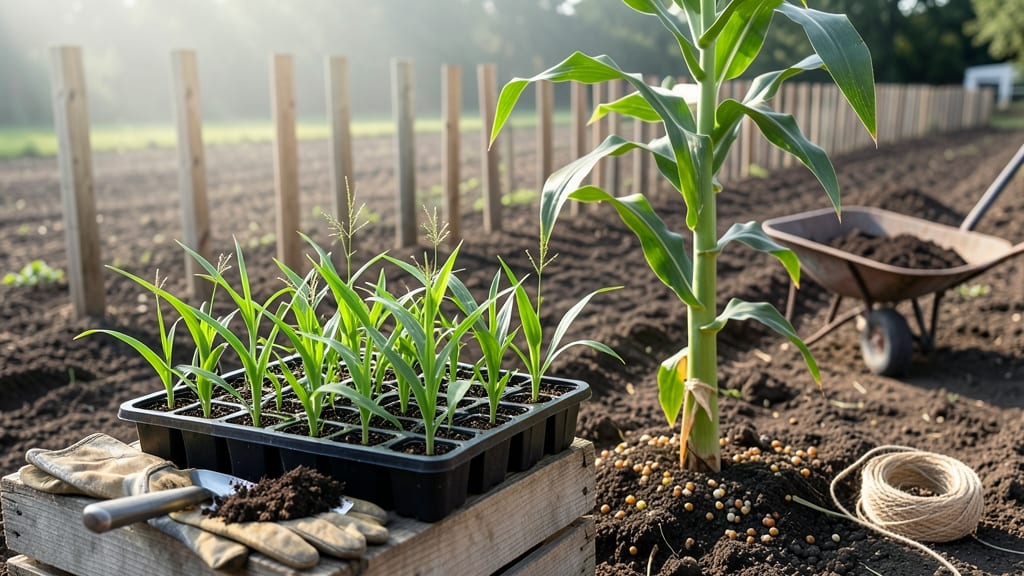
Timing your 🌽 corn planting in New Hampshire isn't just about following a calendar—it's about outsmarting the state's famously fickle spring weather. Plant too early, and a late frost will turn your tender seedlings into sad, wilted memories.
Wait too long, and you might miss the short growing season that zones 5b-6b demand.
This year, the sweet spot for planting corn in New Hampshire is mid-April to early May, once the soil warms to at least 60°F and all danger of frost has passed.
But here's the catch: even the most experienced gardeners in the Granite State need to adjust for microclimates—whether you're in the coastal plains or the White Mountains.
What if you want to maximize your harvest? The key is choosing the right varieties and using succession planting to stretch your growing season. I'll show you exactly how to time it right, avoid common mistakes, and ensure your corn thrives from seed to silks.
Let's dive into the 2024 frost-free timeline and the practical tips that will turn your corn patch into a productive, bountiful garden—no matter what Mother Nature throws your way this spring.
New Hampshire’s 2024 corn planting timeline: frost dates & soil temperature guide
New Hampshire’s frost-free window is short—just 165 days—so timing your corn planting correctly is everything. The average last frost hits mid-May, but coastal areas like Portsmouth often warm up 1-2 weeks earlier than the White Mountains.
Plan ahead: early varieties need to be in the ground by late April, while late-season stalwarts can wait until early June.
Soil temperature matters more than air temperature for corn. Seeds won’t sprout reliably until the soil hits 50°F, but roots grow best at 60°F+. Use a soil thermometer to check—if it’s cooler than 50°F in May, wait.
Pro tip: Black plastic mulch can warm soil by 5-10°F, giving you a head start in chilly zones like USDA Zone 5b.
Here’s your NH planting timeline by region, plus soil temp targets to avoid stunted growth:
| Region | Last Frost (Avg.) | Planting Window | Soil Temp Goal | Microclimate Tip |
|---|---|---|---|---|
| Coastal (Portsmouth, Dover) | Mid-April | Late April–early May | 55°F+ | Warmest zone—plant early sweet corn first. |
| Lakes Region (Laconia, Meredith) | Early May | Late April–mid-May | 60°F+ | Use row covers for early starts. |
| White Mountains (North Conway, Jackson) | Mid-May | Early–mid-May | 65°F+ | Choose short-season varieties (60-day maturing). |
If your soil is still cold in May, try seed-starting indoors under grow lights for 2-3 weeks before transplanting. Use biodegradable pots to avoid root disturbance. For field corn (like Pioneer 39F53), wait until soil hits 65°F—it’s less frost-sensitive but needs warmth to thrive.
NH’s short growing season demands smart planning. Space succession plantings 2 weeks apart to stretch your harvest from late July to September. For example, plant ‘Bodacious’ sweet corn (70-day variety) in late April, then ‘Ambrosia’ (85 days) in early May. This ensures continuous ears before the first frost.
Watch for false springs—those warm spells in March that trick you into planting early. Corn seeds won’t survive 32°F frosts, so always check the NH Agricultural Experiment Station’s frost maps or use frost-free date calculators. A 5-day forecast of stable temps above 50°F is your green light.
Pro move: Test your soil pH in early spring. Corn prefers 6.0–6.8, and NH’s clay-heavy soils often need lime or sulfur to adjust. Amend beds with compost or aged manure 2–4 weeks before planting to boost fertility without burning tender roots.
Once your soil is ready, plant seeds 1 inch deep and 4–6 inches apart in rows 30–36 inches wide. Thin seedlings to 12 inches apart when they’re 6 inches tall—this prevents crowding and improves air circulation, reducing fungal risks like corn smut.
🌱
Sweet corn vs. field corn planting: NH-specific varieties & spacing tips
New Hampshire gardeners know that not all corn is created equal—sweet corn and field corn have dramatically different needs.
Sweet corn, like 'Bodacious' or 'Ambrosia', thrives in NH’s short season with 60–70 days to maturity, while field corn varieties like 'Pioneer 39F53' take 90–110 days and need warmer soils. Choosing the right type ensures you avoid disappointment when frost strikes early.
For sweet corn, I recommend early-maturing varieties (60–75 days) to beat NH’s mid-October first frost. Plant 'Silver Queen' or 'Peaches and Cream' for classic flavor, or 'Ambrosia' for extra sweetness.
Field corn, on the other hand, is better suited for gardeners with longer growing seasons or those saving seeds for next year.
| Type | Best Varieties | Days to Maturity | Spacing (inches) | NH Planting Window |
|---|---|---|---|---|
| Sweet Corn | 'Bodacious', 'Ambrosia', 'Silver Queen' | 60–75 days | 12" rows, 4" plants | Mid-April to early May |
| Field Corn | 'Pioneer 39F53', 'Country Gentleman' | 90–110 days | 18" rows, 6" plants | Late May to early June |
Spacing is critical—crowded corn leads to poor ear development and disease risk. For sweet corn, plant seeds 1 inch deep in rows 30–36 inches apart, with 4–6 inches between plants. Field corn needs more room: 6–8 inches between plants and 36–48 inches between rows. Use a stake or marker to track rows, especially in NH’s windy conditions.
To extend your harvest in NH’s short season, try succession planting. Sow sweet corn every 2 weeks from mid-April to early June. This staggered approach ensures a continuous supply of fresh ears from late July through September.
For field corn, a single late planting in early June works best—just be prepared for potential frost risks if the season runs late.
One NH-specific tip: If your soil stays cold longer than usual, consider black plastic mulch to warm the soil faster. This trick buys you 1–2 extra weeks of growing time, which can mean the difference between a bountiful harvest and a frosted disappointment.
Always test soil temps with a soil thermometer—corn needs at least 50°F to germinate reliably.
Finally, pollination is key for corn. Plant in blocks (not rows) to ensure cross-pollination between plants. A 4x4 foot patch is the minimum for reliable ear production. If you’re growing field corn for seed, increase the block to 8x8 feet for better genetic diversity.