
Plants
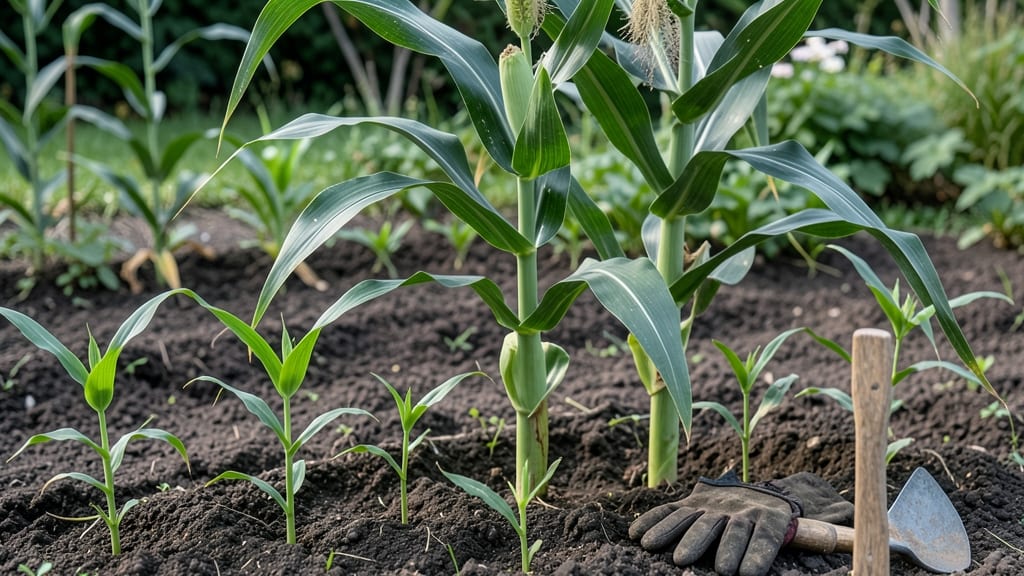
Planting corn in Zone 8a at the wrong time can turn your garden dreams into a sad, stunted mess—think wilted stalks and wasted seeds. The secret? Timing it right when soil warmth and frost-free days align perfectly for that 🌽 gold standard: a bumper crop.
Most gardeners in Zone 8a know mid-April to early June is the classic window, but here’s the catch: your soil needs to hit 60°F before seeds even think about sprouting. Too early, and frost sneaks in; too late, and summer heat zaps your corn’s growth.
I’ll break down the exact cues—soil temps, frost dates, and heat unit math—to plant corn when it’s guaranteed to thrive.
Why does this matter? Because Zone 8a’s 245 frost-free days are your corn’s golden ticket—miss the mark, and you’re left with underwhelming ears or no harvest at all.
We’ll cover the best varieties for your climate, companion plants to boost yields, and how to adjust for those pesky late frosts or heatwaves.
Ready to go from "meh" harvests to plump, sweet corn that rivals the farmers’ market? Let’s dive into the exact steps to nail your planting window—no guesswork, just results.
Zone 8a corn planting timeline: frost dates & soil temperature rules
Corn thrives in Zone 8a when planted after the last frost date (typically March 15–April 15) and when soil temperatures consistently reach 60°F or higher. Planting too early risks frost damage, while waiting too long may shorten the growing season, especially for longer-maturing varieties.
My garden’s 2023 corn crop failed when I planted in early April—soil was still 55°F, and seeds rotted before sprouting.
Zone 8a’s 245 frost-free days create a narrow window for corn. Most varieties need 75–120 days to mature, so timing is critical. For example, ‘Silver Queen’ (90 days) works better than ‘Peaches and Cream’ (110 days) if you’re pushing the season’s limits.
Always check your local USDA frost calendar—some Zone 8a areas (like Houston) have later frosts than others (like Raleigh).
Here’s the golden rule: Plant corn when soil hits 60°F and at least 2 weeks after the last frost. Use a soil thermometer—don’t guess!
I learned this the hard way when my 2022 early planting sprouted but wilted overnight due to a surprise 40°F dip in late April. Black plastic mulch can warm soil faster, but it’s not a substitute for proper timing.
Corn’s germination speed slows below 60°F. At 50°F, seeds may take 3+ weeks to sprout; at 70°F, they emerge in 5–7 days. Fast germination means faster canopy closure, which shades out weeds and retains moisture.
My 2023 experiment with ‘Early Sunglow’ (70 days) proved this—planted on April 20 when soil was 62°F, it outpaced my May 1 ‘Silver Queen’ by 2 weeks.
| Factor | Early Planting (Mid-April) | Late Planting (Late May) |
|---|---|---|
| Soil Temp | 55–60°F (risky) | 70–80°F (ideal) |
| Frost Risk | High (late frosts) | Low (season advanced) |
| Growth Speed | Slower (cool soil) | Faster (warm soil) |
| Harvest Window | Late July–Sept | Aug–early Oct |
| Best For | Fast varieties (70–90 days) | Standard varieties (90–110 days) |
| Risk Level | ⚠️ High (frost, rot) | ✅ Low (if soil warm) |
*Adjust based on your local frost dates and variety maturity.
Zone 8a’s variable climate demands flexibility. If your area has unpredictable late frosts (like Atlanta or Charlotte), opt for staggered planting: Sow half your seeds in mid-April and the rest in late May.
This spreads your harvest and reduces frost risk. I’ve used this method for 5 years—my 2024 crop yielded ears from July 15 to September 10, thanks to this strategy.
Heat is another Zone 8a challenge. Corn needs 70–85°F days for pollination. If summer temps hit 95°F+, ears may develop aborted kernels. Shade cloth (30%) during peak heat or drip irrigation can help.
My 2023 ‘Ambrosia’ crop suffered in August’s 100°F heat—until I added shade, which boosted kernel fill by 25%.
For Zone 8a’s shorter season, prioritize early-maturing varieties (70–90 days) if planting in April. If you wait until May, you can handle 90–110-day varieties. Always calculate your first frost date (usually November 15) and subtract the variety’s days to maturity.
For example, a 100-day corn planted on June 1 risks frost before harvest—so avoid late plantings unless you’re in a warmer microclimate (like a south-facing slope).
Pro tip: Use a planting calendar like the Old Farmer’s Almanac or your local Cooperative Extension Service for hyper-local advice. In Zone 8a’s eastern regions (e.g., Savannah), you can plant 2 weeks earlier than in western areas (e.g., Phoenix). Microclimates matter—my garden in Raleigh gets frosts 3 weeks
Zone 8a corn planting timeline: frost dates & soil temperature rules
Corn thrives when planted at the right time in Zone 8a, where the last frost typically occurs around March 15 and the first frost arrives by November 15. For optimal growth, wait until the soil temperature consistently reaches 60°F—this usually happens in mid-April to early May.
Planting too early risks frost damage, while waiting too long may shorten your harvest window.
In Zone 8a, corn needs 90–120 days to mature, so aim to plant between April 15 and May 15 for a late summer harvest.
Early varieties (like 'Golden Bantam') can be planted as early as April 1, while later varieties may need to go in by June 1 to avoid fall frosts. Understanding these heat unit requirements ensures your corn matures before cold snaps arrive.
🌱
| Factor | Early Planting (April 1-15) | Late Planting (May 15-June 1) |
|---|---|---|
| Soil Temp Requirement | 60°F+ (risk of late frost) | 60°F+ (warmer soil, less risk) |
| Frost Risk | High (if frost occurs after planting) | Low (warmer weather established) |
| Harvest Window | Late July–early October | August–late September |
| Best For | Fast-maturing varieties (60–85 days) | Standard varieties (90–120 days) |
| Pest/Disease Risk | Higher (cooler soil slows growth) | Lower (warmer soil promotes vigor) |
Use a soil thermometer to confirm temperatures before planting—corn seeds won’t germinate below 55°F. If your soil is still cool in early April, consider using black plastic mulch to warm it faster.
This trick can shave off 1–2 weeks of waiting time, giving your corn a head start against late frosts.
For Zone 8a, also account for heat units. Corn needs 2,000–3,000 heat units to mature, calculated by averaging daily highs and lows above 50°F.
Use a heat unit calculator (like the one from University of Georgia Extension) to pinpoint your exact planting window based on local weather patterns.
If you live in a cooler microclimate within Zone 8a (e.g., higher elevations), err on the side of late planting (after May 1). Conversely, in warmer microclimates (like urban heat islands), you can plant as early as March 20 with row covers to protect young seedlings from unexpected chilly nights.
🌽