
Watering
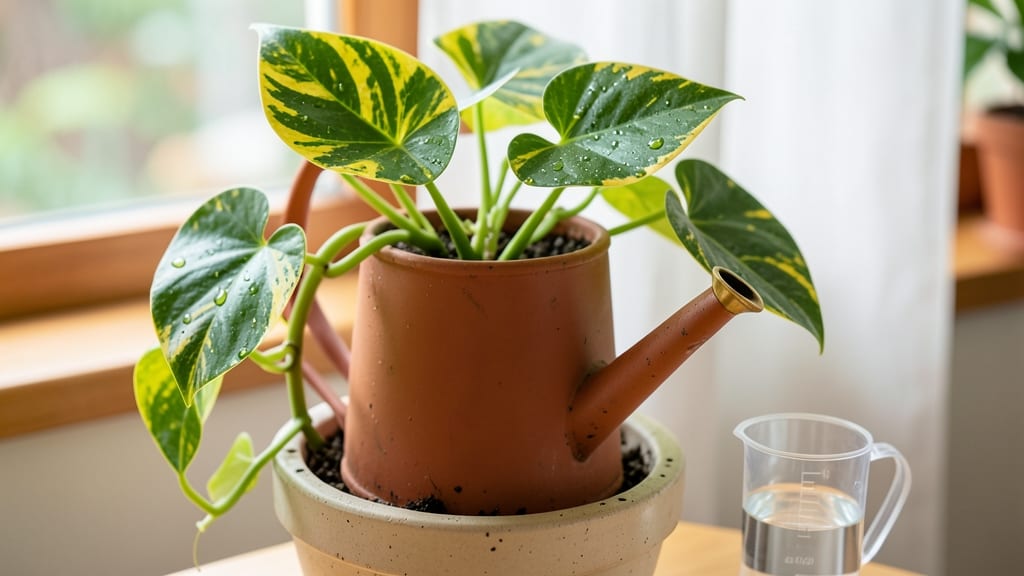
If your money plant 💵 is telling you it’s thirsty but you’re not sure how much water to give it, you’re not alone—even experienced plant parents get this wrong. The difference between a thriving Money Plant and one that’s struggling often comes down to one simple factor: water.
Too much, and you’ll drown its roots; too little, and those lush leaves will start to droop.
Here’s the truth: Money Plants are surprisingly forgiving, but they do have preferences. Whether you’re growing yours indoors year-round or bringing it outside in spring, understanding the right balance of moisture is key.
I’ll walk you through exactly how often to water, what signs to watch for, and the easy tricks to keep your plant happy without the guesswork.
Most people make one of two mistakes—overwatering or underwatering—and both can be disastrous. Yellow leaves? Brown edges? Wilting? These are your plant’s way of saying, “I need help!” But don’t worry, because I’ll show you how to spot these warning signs early and fix them before they become permanent damage.
By the end of this guide, you’ll know exactly how much water your Money Plant needs, when to adjust for seasonal changes, and how to create the perfect environment for it to thrive. Let’s get started—your plant’s future depends on it!

How much water does a money plant need (and when to adjust)
Your money plant (Pachira aquatica) thrives on consistency, but its water needs shift with seasons, pot size, and even your home’s humidity. Unlike succulents, this tropical beauty prefers slightly moist soil—not soggy. The golden rule?
Let the top 1-2 inches of soil dry out between waterings. For me, this means checking with my finger every 7-10 days in summer and stretching it to 2-3 weeks in winter.
Indoor plants in small pots dry faster than those in large containers or outdoor gardens. A 6-inch pot might need water weekly, while a 12-inch pot could go 2 weeks. Outdoor money plants in well-draining soil handle slightly longer dry spells, especially in bright indirect light.
The key is observing your plant’s leaves and soil—not sticking to a rigid schedule.
Here’s the seasonal watering breakdown most gardeners swear by: Spring and Fall (active growth) call for weekly watering, while Summer (heat stress) may require every 5-7 days.
In Winter, when growth slows, monthly watering is often enough. Pro tip: Morning watering prevents fungal issues by letting foliage dry overnight.
💧 Visual cue: If your money plant’s leaves start drooping by evening, it’s thirsty. If they feel slimy or mushy, you’ve overdone it. The finger test is foolproof—stick your index finger into the soil. If it comes out clean, water. If it’s damp, wait.
| Season | Watering Frequency | Soil Test | Signs of Overwatering |
|---|---|---|---|
| Spring | Every 5-7 days | Top 1-2" dry | Yellow leaves, mold |
| Summer | Every 3-5 days | Top 1" dry | Brown leaf tips |
| Fall | Every 7-10 days | Top 2" dry | Wilting leaves |
| Winter | Every 3-4 weeks | Top 3" dry | Drooping stems |
Pot size matters—a small pot (under 4 inches) needs water every 5-7 days, while a large pot (10+ inches) can stretch to 10-14 days. I learned this the hard way when my money plant in a tiny ceramic pot developed root rot from weekly waterings. Always use pots with drainage holes and a well-draining mix of peat moss, perlite, and potting soil (60/20/20 ratio).
Adjust for your environment: Low humidity (like winter heating) means more frequent watering, while high humidity (bathroom or kitchen) lets you space out waterings. My money plant in the bathroom thrives on bi-weekly watering, while the one by the wood stove needs water every 10 days.
A hygrometer ($10 tool) helps track humidity levels for precision.
Outdoor money plants (if grown in USDA Zone 10+) need 10-15% more water than indoor plants. Water deeply at the base to encourage root growth, avoiding wetting leaves to prevent fungal spores. In containers, I top off the soil with gravel to improve drainage—this trick saved my plant during a heatwave last summer.
Mistake alert: Overwatering is the #1 killer of money plants. If your soil stays soggy for more than 2 days, your plant is at risk. Yellow leaves with mushy stems? That’s root rot calling. The fix? Repot in fresh soil and reduce watering to every 2 weeks while it recovers. Patience is key—healthy roots take 4-6 weeks to rebound.
For new money plant owners, start with a watering schedule and adjust based on your plant’s response. If leaves curl slightly in the afternoon, it’s thirsty. If they droop permanently, it’s underwatered. Brown edges?
Too much fluoride in tap water—switch to filtered or distilled water to avoid buildup. Your money plant’s health is a balance game, but once you nail it, those lucky green leaves will reward you for years.
How much water does a money plant need (and when to adjust)
Money plants 💵 are famously low-maintenance, but their water needs depend on more than just your schedule. The key is consistency—they prefer slightly moist soil that never stays soggy.
Most indoor Money Plants need water every 1-2 weeks, but this shifts with seasons, pot size, and your home’s humidity. For example, my 6-inch pot version drinks up a ½ cup every 10 days in winter, while my larger outdoor plant gulps down 1.5 cups weekly in summer.
Don’t rely on memory—check soil moisture before watering. Stick your finger 1-2 inches deep into the soil. If it feels dry, it’s time; if damp, wait another week. This simple finger test saves more plants than you’d think!
I’ve seen beginners drown their Money Plants by watering on a strict schedule without checking—root rot is a silent killer.
Seasonal changes matter more than you’d expect. In spring and summer, when growth speeds up, your Money Plant will need more frequent watering—sometimes as often as every 5-7 days.
But in fall and winter, when it’s dormant, reduce to every 3-4 weeks. Even indoor plants slow down in winter, so adjust accordingly.
| Season | Watering Frequency | Soil Check | Water Amount (Per Pot) |
|---|---|---|---|
| Spring | Every 7-10 days | Top 1-2 inches dry | ½–1 cup |
| Summer | Every 5-7 days | Top 1 inch dry | 1–1.5 cups |
| Fall | Every 10-14 days | Top 2 inches dry | ½ cup |
| Winter | Every 3-4 weeks | Top 3 inches dry | ¼–½ cup |
Pot size plays a surprisingly big role. A small 4-inch pot dries out faster than a large 12-inch container because less soil holds moisture.
My 12-inch Money Plant in a terracotta pot (which breathes better) needs water every 2 weeks, while my 4-inch pot in plastic needs it weekly. Always match your watering to your container—clay pots dry faster than plastic ones.
Location matters too. Indoor plants near heaters or AC vents dry out quicker, while those in bathrooms or kitchens (with higher humidity) stay moist longer. If your Money Plant’s leaves start curling or drooping, it’s often a sign of underwatering in dry air.
Move it to a humidity-friendly spot or mist the leaves lightly—just don’t soak them.
Finally, never let your Money Plant sit in standing water. Empty the saucer 10 minutes after watering to prevent root rot. I’ve seen even experienced gardeners kill their plants this way—drainage is non-negotiable.
If you’re unsure, stick to the finger test and adjust based on your plant’s response. Your Money Plant will thank you with lush, vibrant growth for years to come! 🌿