Plants
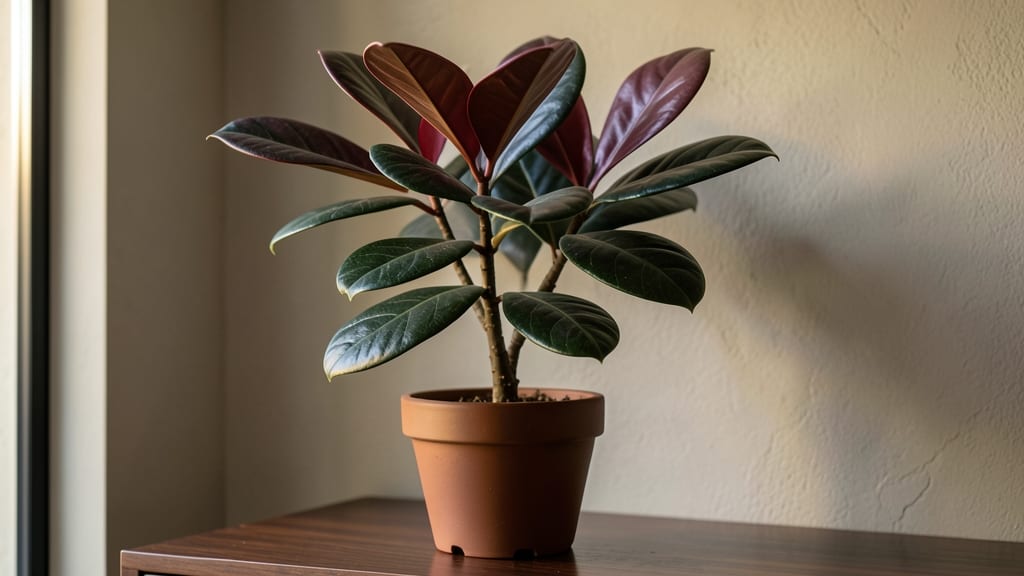
If you’ve ever wondered "how tall rubber plant grow" and whether your leafy friend will soon outgrow your ceiling, the answer lies in how you care for it. This glossy 🌿 can stretch from a compact tabletop plant to a towering indoor statement piece—depending entirely on your approach.
Rubber plants (Ficus elastica) are natural growers, but their height isn’t set in stone. With the right balance of light, pruning, and container size, you can keep them at a manageable 3-4 feet or let them soar to 10 feet indoors.
The key? Understanding their growth habits and making small adjustments that make a big difference over time.
Think your rubber plant is destined to become a jungle giant? Think again. I’ll show you how to control its height—whether you want a bushy, compact centerpiece or a dramatic vertical accent.
From pruning techniques to light placement hacks, these strategies will help you shape your plant’s future, one leaf at a time.
Ready to take the guesswork out of rubber plant care? Let’s dive into the science (and secrets) behind managing their height so you can enjoy a plant that fits your space—exactly how you want it.


Natural height range of rubber plants: what to expect indoors
If you’ve ever wondered how tall your rubber plant (Ficus elastica) can grow indoors, the answer depends on its variety and care routine. Standard types like 'Decora' or 'Robusta' typically reach 6–10 feet tall with proper conditions, while dwarf varieties like 'Black Prince' stay between 3–5 feet.
The key factor? Light exposure—more sun means faster vertical growth.
Under bright indirect light, a rubber plant can grow 1–2 feet per year if well-cared-for. In low-light conditions, growth slows dramatically, often resulting in leggy, stretched stems rather than compact height.
My 10-year-old Robusta now towers over my ceiling fan, proving how much height is influenced by time and care.
Here’s the surprising part: rubber plants don’t have a fixed height limit. With ideal conditions—moderate watering, balanced fertilizer, and pruning—they can keep growing for decades. Some tropical nurseries even cultivate outdoor specimens exceeding 10 feet, but indoors, 6–10 feet is the typical mature range.
🌿
Rubber Plant Height Guide
| Variety | Mature Height (Indoors) | Growth Rate (Per Year) | Light Needs |
|---|---|---|---|
| Standard (Robusta, Decora) | 6–10 ft | 1–2 ft | Bright Indirect |
| Dwarf (Black Prince, Burgundy) | 3–5 ft | 6–12 in | Moderate Light |
| Variegated (Tineke, Snow Queen) | 5–8 ft | 8–12 in | Bright Indirect |
| Outdoor (Tropical Nursery) | 10–15 ft+ | 2–3 ft | Full Sun |
Note: Height varies with pruning, pot size, and care consistency.
Light isn’t the only game-changer—pot size plays a huge role. Rubber plants grown in smaller containers stay shorter because their roots can’t expand, limiting nutrient uptake and vertical growth.
My 3-year-old Decora in a 10-inch pot maxed out at 4 feet, while the same variety in a 16-inch pot hit 6 feet in the same time.
Another misconception: age determines height. While older plants can grow taller, their growth rate slows after 5–7 years. Focus instead on pruning to maintain shape—cutting back leggy stems encourages bushier growth and prevents top-heavy toppling.
For compact growth, place your rubber plant near an east-facing window (gentle morning light) and avoid direct afternoon sun, which can scorch leaves and spur rapid, weak growth. I’ve seen Black Prince varieties stay under 3 feet for years with this setup.
🌱
If you’re aiming for a tall statement plant, embrace full-spectrum grow lights (12–14 hours daily) and regular fertilizing during spring/summer. My Robusta grew 2 feet in 6 months under these conditions—proof that height is entirely manageable with the right approach.
Pro tip: Rotate your plant every few weeks to ensure even growth. Uneven light exposure causes lopsided height, with stems leaning toward the light source. A well-rotated rubber plant grows straight and sturdy, reducing the risk of snapping under its own weight.
✂️
5 Proven techniques to control rubber plant height for small spaces
If your rubber plant is shooting up like a skyscraper, don’t worry—you’re not stuck with a towering giant. With the right techniques, you can keep it at a manageable height of 3-4 feet even in small apartments.
The key is understanding how to slow vertical growth while encouraging bushier foliage.
First, let’s tackle pruning, the most effective way to control height. By cutting back leggy stems, you signal the plant to focus on lateral growth instead of reaching upward. Just
🌿 5 Proven Techniques for Compact Rubber Plants
- Prune at the node: Cut stems just above a leaf node to encourage new growth from that spot.
- Rotate weekly: Turn your plant 90° every week to ensure even light exposure and prevent lopsided growth.
- Use dwarf varieties: Choose Ficus elastica 'Robusta Compacta' or 'Tineke' for naturally shorter growth.
- Limit fertilizer: Reduce feeding to half-strength in spring/summer to slow rapid vertical growth.
- Repot strategically: Keep roots slightly root-bound to restrict upward growth until you’re ready for a larger pot.
Another game-changer is light management. Rubber plants stretch toward light, so if yours is reaching skyward, it’s likely not getting enough. Move it to a bright, indirect spot within 3-5 feet of an east or west window. Avoid south-facing windows unless you have sheer curtains to diffuse harsh light.
For root-bound plants, consider this counterintuitive trick: delay repotting. When roots circle the pot, they signal the plant to grow upward. Only repot when you see roots emerging from drainage holes, and choose a pot just 1-2 inches larger in diameter to maintain compact growth.
Finally, don’t overlook the power of watering habits. Overwatering can lead to leggy growth as the plant stretches for more light. Let the top 1-2 inches of soil dry out between waterings, and always use a pot with drainage holes to prevent soggy roots.
With these techniques, your rubber plant can stay at a manageable height while still thriving. The secret is consistency—prune regularly, monitor light, and adjust care based on your plant’s response. Before you know it, you’ll have a lush, compact houseplant centerpiece that fits perfectly in your space. 🪴