
Trees
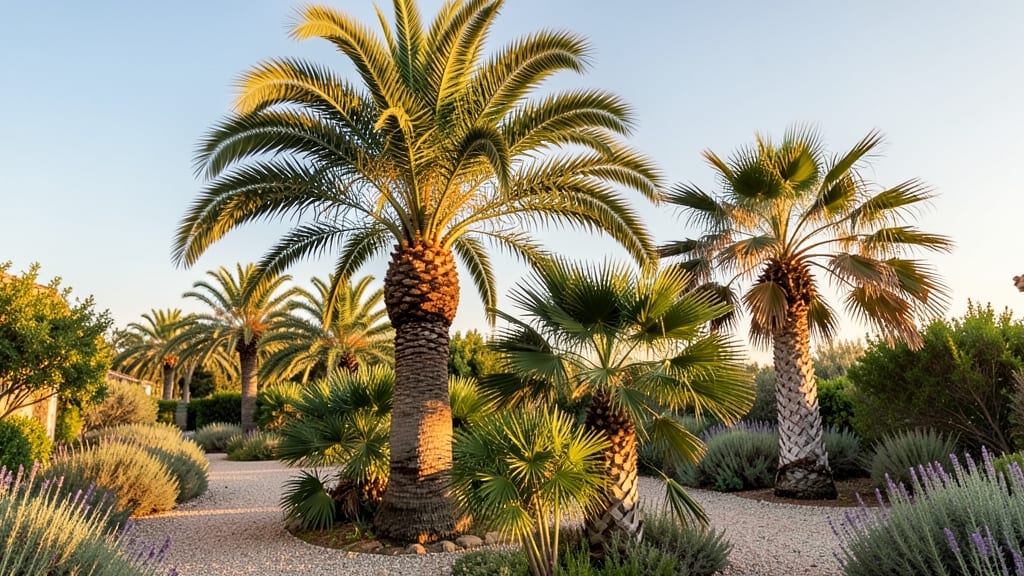
If you’ve ever wondered just how tall does a palm tree grow—whether you’re planning a backyard oasis or cringing at the thought of a towering tropical giant—you’re not alone.
Some palm trees stay humble enough for a patio, while others shoot up like skyscrapers, reaching heights that’ll make your neighbors green with envy (or jealousy).
The truth is, your palm tree’s future height depends entirely on its species. Fast-growing varieties like the Mexican Fan Palm 🌴 can hit 30–50 feet in just 10–15 years, while slower growers like the Canary Island Date Palm take decades to reach 60 feet or more.
For gardeners with limited space, dwarf palms stay under 10 feet, making them perfect for containers or small yards.
But here’s the kicker: climate plays a huge role. In USDA Zones 10–11, where frost is a distant memory, palms thrive year-round, growing faster and taller. Even in marginal zones like Zone 9b, cold-hardy varieties can still reach impressive heights with the right care.
The key is choosing the right species for your space and conditions.
In this guide, I’ll break down the fastest-growing palm trees by height, share tips for estimating growth based on age and location, and help you pick the perfect palm—whether you want a quick tropical statement or a manageable patio plant. Let’s get started!


Fastest-growing palm tree species and their maximum height ranges
Palm trees aren’t just tropical eye-candy—they grow at astonishing speeds, especially in ideal climates. Some species can add 3–5 feet per year during their prime growth phase. If you’re planning a quick privacy screen or a statement landscape feature, choosing the right species matters.
The fastest-growing palms reach their maximum height in just 10–15 years, while slower varieties take decades. Let’s break down the top contenders and their skyward potential.
Not all palm trees are created equal when it comes to height.
For example, the Mexican Fan Palm (Washingtonia robusta) can shoot up to 70–100 feet in 15–20 years, while the Pygmy Date Palm (Phoenix roebelenii) maxes out at a modest 6–10 feet—perfect for patios.
Your choice depends on whether you want a towering giant or a compact accent plant. Below, we’ll compare the fastest-growing species and their mature heights, so you can pick the perfect fit for your space.
📊 Height Comparison Table