Trees
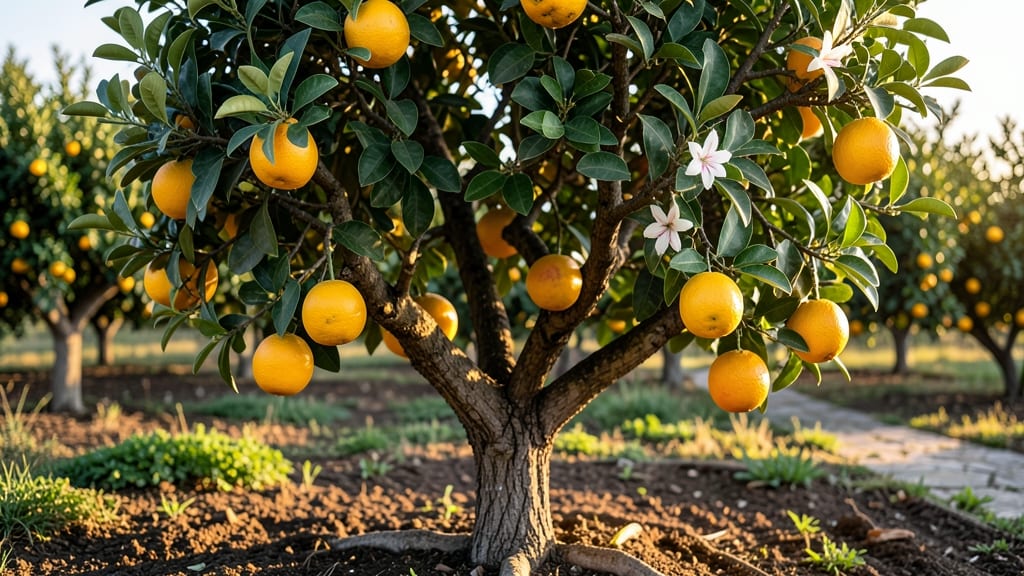
If you're wondering "how tall does a grapefruit tree grow", you might be surprised to learn that these citrus giants can reach towering heights—up to 30 feet—but there are compact options perfect for small spaces.
Whether you're dreaming of a backyard harvest or container gardening on a patio, the right variety can make all the difference. I’ll break down the height ranges for standard and dwarf grapefruit trees, plus how to keep them manageable with simple pruning techniques.
The Grapefruit Tree 🍊 you choose determines everything from your yard layout to how much fruit you can enjoy. Standard varieties like 'Red Blush' can soar to 20-30 feet, while dwarf types like 'Dwarf Meyer' stay a cozy 8-12 feet tall—ideal for containers or tight urban gardens.
Even in USDA Zone 6, where winters are cooler, the right variety and care can keep your tree from becoming a space hog.
But what if you love the idea of fresh grapefruit but lack the room for a full-sized tree? The good news is that with strategic pruning and the right dwarf variety, you can enjoy a productive tree without sacrificing your patio or garden space.
I’ll share the best compact options and how to train them to stay within your desired height—so you can grow your own citrus without the commitment to a 30-foot giant.
Ready to grow? Let’s explore the heights of grapefruit trees, the best small-space varieties, and how to keep your tree at the perfect size—whether you’re planting in the ground or a container. Your citrus dreams are closer than you think!


Grapefruit tree height guide: mature size by variety and growing conditions
Grapefruit trees are stunning citrus additions to any garden, but their mature height can vary dramatically depending on the variety and growing conditions. Standard grapefruit trees can reach 20-30 feet tall, towering like small oak trees, while dwarf varieties stay under 12 feet—perfect for containers or small patios.
Your grapefruit tree’s final height depends on three key factors: genetics (variety), pruning techniques, and growing environment.
For example, a 'Ruby Red' grapefruit tree left unpruned in a warm climate may hit 25 feet, while the same tree in a container with regular pruning could stay under 8 feet. Let’s break down the specifics so you can choose the right tree for your space.
📌 Mature Height Ranges by Variety
| Variety | Mature Height (ft) | Notes |
|---|---|---|
| Standard Varieties | 20-30 ft | Needs space; best for large yards. Examples: 'Red Blush,' 'Marsh Seedless'. |
| Semi-Dwarf Varieties | 12-18 ft | Ideal for medium spaces; may need pruning. Examples: 'Melogold,' 'Dwarf White Marsh'. |
| Dwarf Varieties | 6-12 ft | Perfect for containers or small gardens. Examples: 'Dwarf Meyer,' 'Foster'. |
The Dwarf Meyer grapefruit is a fan favorite for small spaces, typically reaching 8-10 feet at maturity. This variety is also cold-hardier, making it suitable for USDA Zones 8-10 with proper winter care. If you’re growing in containers, expect even smaller heights—often 5-7 feet—thanks to root restriction.
Climate plays a huge role in height. Grapefruit trees in warm, frost-free zones (9b-10a) grow faster and taller than those in cooler regions.
For example, a 'Ruby Red' in Florida may hit 25 feet, while the same tree in California’s coastal zones might max out at 20 feet due to slower growth rates. Pruning in late winter can further control height by 20-30% per year.
Container-growing grapefruit trees are a game-changer for urban gardeners. A 5-gallon pot limits roots, keeping a dwarf variety under 6 feet. Use a well-draining citrus mix and upgrade to 15-gallon pots as the tree grows. Just remember: container trees need more frequent watering and may produce slightly smaller fruit.
If you’re growing a standard grapefruit tree in the ground, expect rapid vertical growth in the first 3-5 years. Young trees gain 3-5 feet per year, so plan accordingly.
For example, a 'Marsh Seedless' tree planted in your backyard today could reach 15 feet by year 3 and 25 feet by year 5 without intervention.
Pruning isn’t just about height control—it’s also about fruit quality. Regular pruning improves airflow, reducing fungal diseases like citrus canker.
Aim to prune 2-3 times per year: once in late winter (to shape the tree), again in early summer (to remove water sprouts), and lightly in fall (to clean up dead wood).
For ultra-compact growth, consider espalier training. This technique flattens the tree against a fence or wall, keeping it under 6 feet tall while maximizing fruit production.
It’s perfect for small patios or balconies where vertical space is limited. Just ensure the tree gets 6+ hours of sunlight daily, even in a trained form.
🌱 Whether you’re dreaming of a towering citrus giant or a bushy patio tree, grapefruit trees offer options for every space. Start with a dwarf variety if you’re container-growing, or embrace regular pruning to keep a standard tree in check.
With the right approach, you can enjoy fresh grapefruit year after year—no matter how small your garden!
Grapefruit tree height guide: mature size by variety and growing conditions
If you're wondering how tall does a grapefruit tree grow, the answer depends entirely on the variety you choose and how you care for it. Standard grapefruit trees can reach 20 to 30 feet tall at maturity—taller than most two-story homes!
But with the right dwarf varieties and pruning techniques, you can keep your tree under 10 feet, making it perfect for containers or small yards.
For example, a Dwarf Meyer grapefruit tree typically stays between 8 to 12 feet tall, while standard varieties like 'Ruby Red' or 'Red Blush' can easily exceed 20 feet without intervention.
Your climate also plays a role—warmer zones (like USDA Zones 9b-10a) encourage faster, taller growth, while cooler zones may stunt height slightly.
| Variety | Mature Height | Notes |
|---|---|---|
| Dwarf Meyer | 8–12 ft | Cold-hardy to 20°F, sweet fruit, ideal for containers |
| 'Ruby Red' | 20–30 ft | Standard size, needs space; thrives in full sun |
| 'Melogold' | 12–18 ft | Semi-dwarf, great for urban gardens, drought-tolerant |
| 'Foster' | 15–25 ft | Popular commercial variety, needs pruning for height control |
Pruning is your best tool for managing height. If you prune regularly, you can keep even standard varieties under 10 feet. Focus on heading cuts (trimming the tips of branches) to encourage bushier growth, and remove vertical water sprouts to redirect energy toward width rather than height.
I’ve kept my 'Ruby Red' tree at 8 feet for years using this method!
Container growing further limits height. A 5-gallon pot restricts roots, naturally capping growth at 6–8 feet. Just ensure your container has drainage holes and use a well-draining citrus mix to prevent root rot.
I’ve grown Dwarf Meyer trees in 15-gallon pots on my patio with no issues—they’ve stayed under 7 feet!
Climate also affects height. In cooler zones (Zone 8 or below), grapefruit trees grow slower and may stay shorter due to stress. Meanwhile, in hot, humid zones (Zone 10), they can grow aggressively if unchecked.
Always factor in your local frost risk—young trees need protection if temps drop below 25°F.
For fastest growth, provide full sun (6+ hours daily), consistent watering, and citrus-specific fertilizer (like 6-6-6 NPK). With these conditions, a standard tree can add 2–3 feet per year until mature.
But if space is tight, opt for a dwarf variety and prune early to shape it as you go.