
Shrubs
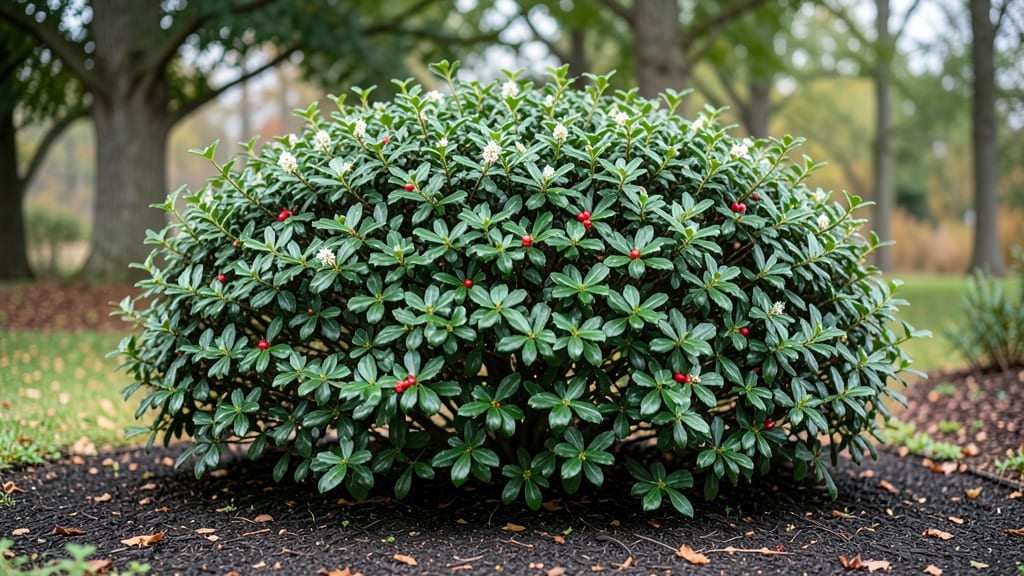
Wondering how tall do Japanese holly grow before it becomes a maintenance headache? This evergreen shrub 🌿 can surprise you—some varieties stay neatly contained at just a few feet, while others stretch toward the sky like a small tree.
If you're planning your garden layout, knowing these height ranges is key. Japanese holly thrives in USDA Zone 6a, and its mature size depends heavily on the cultivar you choose.
Planting in spring (April-May) gives it the best start, but growth habits vary wildly between 'Sky Pencil' (a slender, upright type) and 'Green Lustre' (a broader, bushier option).
proper pruning can keep even the tallest varieties in check, while sunlight exposure and soil quality play supporting roles. We'll break down exactly how to manage growth for your space—whether you want a tidy border or a statement shrub.Let's explore the height ranges by variety and the care secrets that keep Japanese holly at your desired size, so you can enjoy its glossy foliage without the overgrowth headaches.


Japanese holly mature height ranges by variety (with fastest-growing options)
Japanese holly (Ilex crenata) is a versatile shrub that can range from compact 2-foot varieties to tall 15-foot specimens, depending on the cultivar. The key to predicting your plant's height lies in selecting the right variety and understanding how light exposure and pruning practices influence growth.
Some varieties grow vertically like trees, while others spread horizontally, creating dense hedges.
For example, the 'Sky Pencil' variety is one of the fastest-growing Japanese hollies, reaching 6-10 feet tall in just 3-5 years under ideal conditions. Meanwhile, 'Green Lustre' typically stays between 6-12 feet but can be pruned to maintain a more compact form.
These differences make it essential to match your space and design goals with the right cultivar.
Most Japanese hollies grow 1-2 feet per year when young, with growth slowing as they mature. In full sun, they may grow slightly taller but can become leggy, while partial shade encourages denser, bushier growth.
The variety you choose will determine whether your Japanese holly becomes a privacy screen, a foundation plant, or a container specimen.
Full sun can push some varieties to their upper height limits, while partial shade (their preferred condition) often results in a more manageable, bushier form. For instance, 'Blue Princess' thrives in partial shade and rarely exceeds 6 feet, making it ideal for small gardens.🌿 Japanese Holly Height Comparison by Variety
| Variety | Mature Height | Growth Rate (Per Year) | Best For |
|---|---|---|---|
| 'Sky Pencil' | 6-10 ft | 12-18 in | Privacy screens, tall hedges |
| 'Green Lustre' | 6-12 ft | 8-12 in | Foundation planting, borders |
| 'Blue Princess' | 4-6 ft | 6-10 in | Small gardens, containers |
| 'Soft Touch' | 3-5 ft | 4-8 in | Hedges, low borders |
| 'Convexa' | 10-15 ft | 12-24 in | Large landscapes, specimen plants |
Note: Heights can vary based on pruning, soil quality, and climate conditions.
If you're planting Japanese holly in containers, expect their growth to be 30-50% slower than in-ground specimens. For example, a 'Sky Pencil' in a large container might only reach 4-6 feet after 5 years, while the same variety in the ground could hit 8-10 feet.
Container-grown hollies also benefit from annual root pruning to encourage bushier growth.
Soil quality plays a surprising role in height. Japanese hollies thrive in well-draining, slightly acidic soil (pH 5.0-6.5). Poor soil can stunt growth by up to 30%, while rich, organic soil can accelerate height gains.
Amending your soil with compost or peat moss before planting ensures your holly reaches its full potential height.
For fastest growth, focus on these three factors: full sun exposure, regular watering (especially in the first year), and annual pruning to remove dead or overcrowded branches. With these conditions met, varieties like 'Sky Pencil' can add 2 feet per year in their early years.
Remember, Japanese hollies are slow to establish but long-lived, often thriving for decades with minimal care. Choosing the right variety for your space isn’t just about height—it’s about creating a low-maintenance, year-round interest feature in your garden.
Whether you need a tall privacy screen or a compact accent plant, there’s a Japanese holly cultivar perfect for your needs.
How to control Japanese holly growth for compact shrubs (pruning & care tips)
Japanese holly (Ilex crenata) thrives when you guide its growth early. Without proper care, even dwarf varieties can outgrow their space, while standard shrubs may become unruly. The key lies in strategic pruning techniques and understanding how sunlight and soil affect height.
Let’s explore how to keep your holly at your desired size—whether that’s a 2-foot border plant or a 6-foot privacy screen.
Most gardeners make one critical mistake: waiting until the plant is too large to prune. Japanese holly responds best to light, regular pruning rather than drastic cuts later. Start shaping your plant in its first or second year to establish the framework for future growth.
This approach prevents the need for heavy pruning, which can stress the shrub and reduce flowering.
⚠️ Common Pruning Mistakes That Cause Overgrowth
- Pruning too late in the season (after mid-summer) encourages new, fast but weak growth.
- Using dull or dirty shears can damage stems, leading to disease entry points.
- Removing more than 1/3 of the foliage in one session can shock the plant.
- Ignoring dead or crossing branches allows overcrowding, which stunts growth.
Pro Tip: Always prune just above a leaf node to encourage bushier growth.
For height control, focus on pruning the topmost branches in early spring. This encourages lateral growth, widening the shrub instead of letting it shoot upward. If you’re growing a tall variety like 'Green Lustre', aim to remove no more than 15% of the height annually.
For dwarf varieties like 'Soft Touch', you can be more aggressive with shaping to maintain their 2-3 foot stature.
Location matters just as much as pruning. Plant your Japanese holly in partial shade (3-6 hours of sunlight) to slow vertical growth. Full sun exposure can push some varieties to grow 20-30% taller than expected.
If your garden has limited shade, choose a compact cultivar like 'Blue Princess', which naturally stays under 4 feet even in full sun.
Soil quality also plays a role in height management. Japanese holly prefers well-draining, slightly acidic soil (pH 5.0-6.5). Amending heavy clay with compost or sand prevents root stress, which can lead to stunted or erratic growth.
Over-fertilizing with nitrogen-rich feeds can cause leafy but leggy growth—stick to a balanced 10-10-10 fertilizer applied in early spring.
Finally, don’t overlook the power of seasonal adjustments. In winter, protect young plants with a light mulch layer (2-3 inches) to shield roots from temperature swings. In summer, monitor for powdery mildew (common in humid climates), which can weaken the plant and affect its growth pattern.
A weekly spray of neem oil keeps foliage healthy and vigorous.