
Size
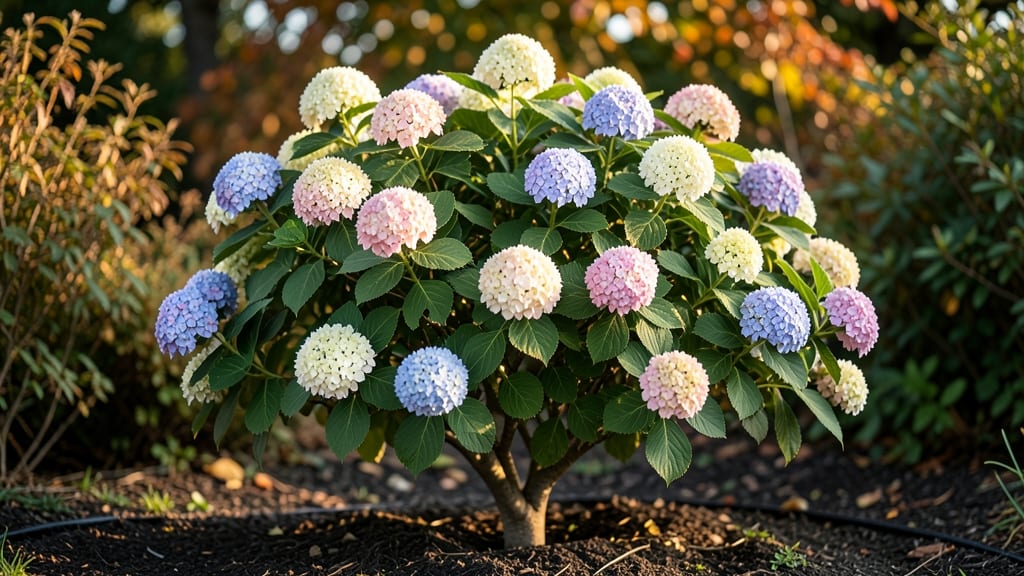
If you're planning your garden layout and wondering "how tall do hydrangea trees grow", you’re not alone—this is one of the first questions I ask myself before planting.
These stunning 🌸 Hydrangea Trees can range from compact shrubs to towering specimens, depending on the variety, and knowing their mature heights helps you decide where they’ll thrive best in your space.
Some hydrangeas, like the panicle types, can grow as tall as 12 to 20 feet, making them perfect for large gardens or as striking focal points. Others, such as dwarf varieties, stay between 3 to 6 feet, ideal for smaller yards or container gardening.
The key to managing their size lies in understanding their growth habits and how pruning can shape them over time.
Whether you’re dreaming of a lush hedge or a single showstopping plant, this guide will break down the height ranges of popular hydrangea varieties and share practical tips to control their growth.
You’ll also discover how soil, sunlight, and pruning techniques play a role in keeping your hydrangeas at your desired height—without sacrificing those breathtaking blooms.
Let’s dive into the specifics so you can confidently choose the perfect hydrangea for your garden, no matter how much space you have to work with.


Hydrangea tree height by variety: small to large growth habits
Choosing the right hydrangea variety is crucial if you’re planning your garden layout, especially when space is limited. Some varieties grow as compact shrubs perfect for containers, while others develop into small trees reaching heights that require thoughtful placement.
Let’s explore the height ranges of popular hydrangeas so you can make an informed decision.
Hydrangeas typically fall into three main categories based on their mature height: dwarf varieties (3–6 feet), semi-dwarf varieties (6–12 feet), and standard varieties (10–20 feet). The variety you choose will determine whether your hydrangea becomes a focal point or a subtle accent in your landscape design.
For example, the Limelight hydrangea (a panicle type) can grow up to 12 feet tall, making it ideal for creating a natural privacy screen. On the other hand, the Little Lime hydrangea stays under 3 feet, perfect for small gardens or container gardening.
Here’s a quick comparison to help you visualize how these heights translate into real-world garden scenarios:
| Variety | Type | Mature Height | Best For |
|---|---|---|---|
| Little Lime | Panicle | 3–4 ft | Containers, small gardens |
| Endless Summer | Bigleaf | 4–6 ft | Borders, foundation planting |
| Limelight | Panicle | 8–12 ft | Privacy screens, hedges |
| Oakleaf Hydrangea | Oakleaf | 6–10 ft | Specimen plants, woodland gardens |
| Grandiflora | Bigleaf | 10–15 ft | Large gardens, focal points |
The bigleaf hydrangeas (like Grandiflora) tend to grow taller and wider, often requiring more space for their sprawling habit. Meanwhile, panicle hydrangeas (such as Limelight) are more upright and can be pruned to control their height, making them versatile for various garden styles.
If you’re working with a small garden, consider dwarf varieties like Mini Penny or Bobo, which stay under 3 feet tall. These are perfect for adding color without overwhelming your space. For larger properties, varieties like Annabelle or Oakleaf can create stunning focal points.
Another factor to consider is how quickly these varieties grow. Some, like panicle hydrangeas, can add 2–3 feet per year, while others, like bigleaf types, grow more slowly but develop a robust, woody structure over time.
This growth rate affects how soon you’ll need to manage their height through pruning.
For instance, if you plant a 6-foot hydrangea near your patio, you might need to prune it annually to keep it from shading your seating area. On the other hand, a 3-foot variety in a container will require minimal pruning and can be moved around as needed.
Understanding these height differences helps you visualize how hydrangeas will fit into your garden’s layout. Whether you’re aiming for a tall hedge, a compact container plant, or a specimen tree, choosing the right variety ensures your hydrangeas thrive without overpowering your space.
Next, we’ll explore practical tips for controlling hydrangea growth, especially if you’re working with limited space or want to keep your plants at a manageable height.
Hydrangea tree height by variety: small to large growth habits
When planning your garden, knowing the hydrangea tree height by variety is essential. Some varieties stay compact, perfect for small gardens or containers, while others grow into towering shrubs or small trees.
The mature height of hydrangeas can vary dramatically, so let’s break down the most popular types and their typical growth ranges.
For example, panicle hydrangeas like 'Limelight' or 'Little Lime' can reach heights of 8 to 12 feet, making them ideal for hedges or focal points. Meanwhile, oakleaf hydrangeas often grow between 6 to 10 feet, offering stunning fall foliage alongside their blooms.
These differences are critical for space planning and choosing the right variety for your landscape.
| Variety | Mature Height | Growth Habit | Best For |
|---|---|---|---|
| Panicle Hydrangeas (e.g., 'Limelight') | 8–12 ft | Upright, tree-like | Hedges, specimen plants |
| Oakleaf Hydrangeas (e.g., 'Snow Queen') | 6–10 ft | Bushy, multi-stemmed | Border plants, woodland gardens |
| Bigleaf Hydrangeas (e.g., 'Endless Summer') | 3–6 ft | Compact, rounded | Containers, small gardens |
| Smooth Hydrangeas (e.g., 'Annabelle') | 3–5 ft | Bushy, mounding | Foundation plantings |
| Dwarf Varieties (e.g., 'Mini Penny') | 2–3 ft | Compact, slow-growing | Containers, window boxes |
If you're working with limited garden space, dwarf varieties like 'Mini Penny' or 'Little Lime' are excellent choices, staying under 3 feet tall. These are perfect for containers or window boxes, adding color without overwhelming your outdoor space.
On the other hand, if you're aiming for a dramatic backdrop or privacy screen, taller varieties like 'Limelight' or 'Grandiflora' will thrive, reaching heights of 10 to 20 feet over time.
Another factor to consider is the growth rate of hydrangeas. Some varieties, like panicle hydrangeas, grow quickly, adding 1 to 2 feet per year until they reach maturity.
Others, such as oakleaf hydrangeas, grow more slowly but develop stunning fall foliage that adds seasonal interest. Understanding these differences helps you plan for long-term growth and maintenance.
For urban gardens or small yards, consider training hydrangeas on trellises or espaliering them against walls to control height while maximizing vertical space. This technique works especially well with panicle hydrangeas, which have a natural upright growth habit.
With the right variety and care, you can enjoy lush hydrangeas without sacrificing precious garden real estate.
Finally, always check the specific variety’s care requirements, as some may need more pruning or support to maintain their desired height. For instance, bigleaf hydrangeas often require annual pruning to encourage bushier growth, while panicle hydrangeas can handle harder pruning to control size.
With the right approach, you can shape your hydrangeas to fit your garden perfectly.