
Size
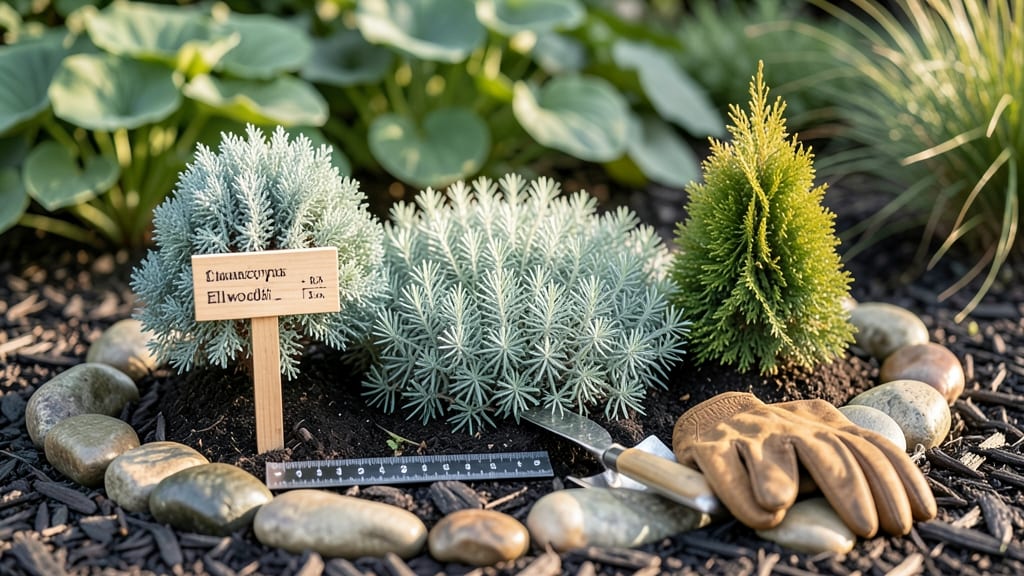
Dwarf conifer height ranges: exact growth charts by cultivar type
Dwarf conifers are the perfect solution for small gardens, urban balconies, or even indoor spaces—but not all cultivars grow the same height. While the term "dwarf" suggests compact sizes, some varieties can reach 6 feet tall over time.
Understanding these height ranges helps you select the right cultivar for your space, whether it's a container garden or a border planting.
Most dwarf conifers mature between 1 to 6 feet, but their growth rates vary. Some, like Picea pungens 'Glauca Globosa', stay under 3 feet, while others, like Juniperus chinensis 'Kaizuka', can stretch toward 6 feet.
Below, I’ve broken down the mature heights of popular cultivars to help you plan your garden layout.
Dwarf Conifer Height Comparison
| Cultivar | Mature Height (ft) | Growth Rate | Best For |
|---|---|---|---|
| Picea pungens 'Glauca Globosa' | 3–4 ft | Slow (1–2 ft/year) | Containers, small gardens |
| Juniperus chinensis 'Kaizuka' | 6 ft | Moderate (2–3 ft/year) | Borders, hedges |
| Thuja occidentalis 'Smaragd' | 3–5 ft | Slow (1 ft/year) | Privacy screens, vertical gardens |
| Chamaecyparis lawsoniana 'Ellwoodii' | 2–3 ft | Slow (1 ft/year) | Rock gardens, containers |
| Juniperus horizontalis 'Blue Rug' | 1–2 ft (spreading) | Very slow (6 in/year) | Ground cover, slopes |
When planning your garden, consider not just height but also width. For example, Juniperus horizontalis 'Blue Rug' spreads 6 feet wide but stays under 2 feet tall, making it ideal for ground cover.
Meanwhile, Thuja occidentalis 'Smaragd' grows upright, perfect for narrow spaces like vertical gardens or hedge rows.
If you’re growing dwarf conifers in containers, choose cultivars that stay under 3 feet tall, like Picea pungens 'Glauca Globosa' or Chamaecyparis lawsoniana 'Ellwoodii'. These varieties thrive in 10–15 gallon pots and can be moved seasonally for seasonal color changes.
For fast-growing options, Juniperus chinensis 'Kaizuka' is a top pick, reaching 6 feet in 10–15 years. However, its aggressive spread means you’ll need to prune it annually to maintain its shape. Always leave 12–18 inches of space around its base for airflow and root expansion.
One common misconception is that all dwarf conifers stay under 3 feet. In reality, some semi-dwarf varieties, like Pinus mugo 'Mops', can reach 5–6 feet with proper care. To keep them compact, prune in late spring and avoid over-fertilizing, which can spur uncontrolled growth.
Pro tip: If you’re unsure about a cultivar’s final size, check the nursery tag or ask the grower for mature height estimates. Many nurseries provide growth charts that predict height at 5, 10, and 20 years, helping you visualize the plant’s future.
For slow-growing cultivars like Chamaecyparis lawsoniana, patience is key. These plants may take 5–10 years to reach their mature height, but their low maintenance makes them worth the wait. Pair them with fast-growing annuals for instant color while you wait for your conifer to fill out.
🌲
How to choose dwarf conifers based on mature height and garden space
Selecting the right dwarf conifer depends on your garden layout and design goals. Whether you need a container specimen, a border accent, or ground cover, understanding height-to-width ratios is key.
For example, Picea pungens 'Glauca Globosa' stays under 3 feet tall but spreads 4 feet wide, making it ideal for urban patios or window boxes.
Meanwhile, Juniperus horizontalis 'Blue Rug' stays low (1 foot tall) but sprawls 6 feet wide, perfect for rock gardens or slope stabilization.
For containers, prioritize cultivars with slow growth rates like Thuja occidentalis 'Smaragd' (3-4 feet tall at maturity). Use 1-gallon pots for 1-2 year old plants and upgrade to 5-gallon containers as they grow.
Always ensure pots have drainage holes to prevent root rot—a common issue with overwatered conifers.
- Space-saving: Fits tight spaces
- Low maintenance: Minimal pruning needed
- Year-round color: Evergreen foliage
- Wildlife-friendly: Shelters birds
- Slow growth: Takes years to mature
- Soil-sensitive: Needs well-draining soil
- Container limits: Roots outgrow pots
- Fungal risks: Overwatering causes rot
When planting in garden beds, space dwarf conifers 3-5 feet apart to allow airflow and prevent crowding stress. For hedges or screens, choose columnar varieties like Chamaecyparis lawsoniana 'Ellwoodii' (6 feet tall but only 2 feet wide).
Always plant in full sun (6+ hours daily) to ensure vibrant foliage color and compact growth.
Pruning tips: Dwarf conifers rarely need heavy pruning, but you can shape them lightly in early spring using sharp, sterilized shears. Avoid cutting into old wood, as it won’t regrow.
For overgrown specimens, focus on removing dead branches at the base to encourage new growth from the center.
Pro tip: Group dwarf conifers with complementary plants like heuchera or sedum to create textural contrast. Their slow growth makes them ideal for long-term garden designs, so plan their placement carefully to avoid future overcrowding.
Remember, mature height isn’t the only factor—consider growth rate and final spread too. For fastest results, opt for 3-5 year old nursery-grown plants that are already established.