
Flowers
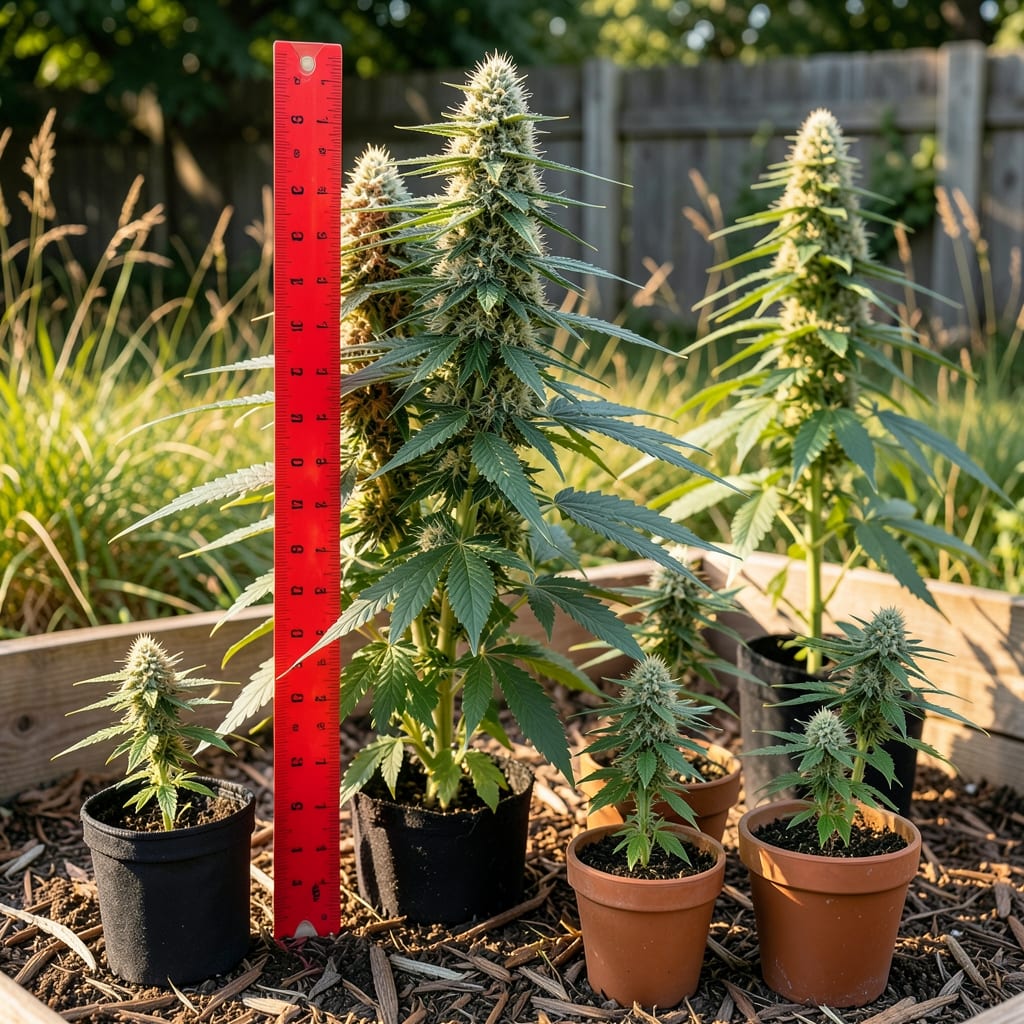
If you're planning your first autoflower cannabis grow, one of the first questions you'll ask is how tall do autoflowers grow—because that tiny seedling could end up being a 5-foot giant or a compact 1-foot wonder. The answer depends on genetics, growing conditions, and a little strategic pruning, but knowing the range upfront helps you choose the right space and setup.
Autoflowers like 🌱 Northern Lights Auto typically stay between 3-5 feet tall, while dwarf varieties like Auto Blueberry max out around 2 feet. That means whether you're growing in a closet or a backyard, you can tailor your approach to fit your space—without sacrificing yield or quality.
But here's the catch: without proper care, even a dwarf strain can stretch unexpectedly. Light leaks, nutrient imbalances, or temperature swings can trigger rapid vertical growth, turning your stealthy plant into a noticeable centerpiece. The good news? With the right techniques, you can control height naturally and keep your grow discreet.
In this guide, I’ll break down exact height expectations by variety, share space-saving tricks to manage growth, and walk you through what to do if your autoflower starts stretching beyond your plans. Let’s get your grow off to the right start—no surprises included.


Autoflower cannabis height ranges by variety: exact measurements and growth patterns
Autoflower cannabis plants are famous for their predictable growth cycles and compact stature compared to photoperiod varieties. But their final height isn't set in stone—it depends on genetics, growing conditions, and how you manage their structure. Most autoflowers fall into three distinct height categories: dwarf (1-2 ft), medium (2-4 ft), or tall (4-6 ft), with some outliers reaching 7 feet under ideal conditions.
For example, Northern Lights Auto typically maxes out at 3-5 feet, making it a great choice for outdoor grows where space is limited. On the other hand, Auto Blueberry stays between 2-3 feet, perfect for closet or balcony grows. Even within the same strain, height can vary by 1-2 feet depending on whether you prune aggressively or let the plant grow naturally.
Genetics play the biggest role in determining height. Autoflower seeds inherit their growth potential from their parent plants, so if you're growing a dwarf strain, you can expect consistent compact sizes. However, environmental factors like light intensity, nutrient levels, and temperature can push a plant to stretch beyond its expected range.
Here’s a quick breakdown of what to expect from popular autoflower varieties, along with their growth timelines and vertical growth rates:
| Variety | Height Range | Growth Timeline | Notes |
|---|---|---|---|
| Northern Lights Auto | 3-5 ft | 60-80 days | Classic autoflower, great for beginners |
| Auto Blueberry | 2-3 ft | 70-90 days | Compact and potent, ideal for small spaces |
| Auto Amnesia Haze | 4-6 ft | 80-100 days | Tall but fast-flowering, needs support |
| Dwarf Blueberry Auto | 1-2 ft | 65-85 days | Perfect for stealth grows or containers |
| Auto Critical Mass | 3-4 ft | 70-90 days | Balanced height, high yield |
Vertical growth rates vary by stage. Autoflowers grow the fastest during the vegetative phase, often adding 1-2 inches per week if conditions are ideal. Once they transition to flowering, growth slows, and the plant focuses on bud development rather than height. This is why pruning early can help control final height without sacrificing yield.
If you're growing outdoors, timing is everything. Planting too early can expose your autoflowers to cold snaps or early frost, stunting growth. Aim to transplant seedlings after the last frost date in your area, typically mid-April to early May in most climates. For indoor grows, you have more control over height by adjusting light schedules and container sizes.
One common misconception is that all autoflowers stay short. While they’re generally shorter than photoperiod plants, some varieties like Auto Critical Mass or Auto Amnesia Haze can reach 6 feet if left unpruned. Always check the breeder’s notes for height expectations, but remember: your growing conditions will influence the final outcome.
For example, growing in a small container (like a 5-gallon bucket) naturally limits root spread, which can reduce height by 1-2 feet compared to growing in the ground. On the flip side, overwatering or nutrient deficiencies can trigger stretching as the plant searches for stability or nutrients.
Pro tip: If you're growing in a small space, consider dwarf or semi-dwarf varieties like Auto Blueberry or Dwarf Blueberry Auto. These stay under 3 feet and are perfect for balconies, patios, or even windowsills with the right setup. For larger spaces, taller varieties like Northern Lights Auto or Auto Critical Mass offer better yields without requiring excessive pruning.
Understanding your autoflower’s height potential upfront helps you plan everything from trellising to light placement. Whether you're aiming for a stealthy grow or a bountiful harvest, knowing the exact height range ensures you’re prepared for success.
Space-saving tricks to control autoflower height without sacrificing yield
If your autoflower is creeping toward the 6-foot mark when you wanted it to stay under 3 feet, don’t panic—there are natural ways to control height without stressing the plant. Techniques like low-stress training (LST) and strategic pruning redirect energy toward bushier growth, not vertical spikes. The key is timing: most height-control methods work best during the vegetative stage, before flowering triggers.
For dwarf varieties like Auto Blueberry, you might only need to top the main stem once to encourage branching. But for taller strains like Northern Lights Auto, combining LST with defoliation can cut height by 30-50% while boosting yield. The trade-off? A slightly longer vegetative phase, but the payoff is a stockier, more manageable plant.
Here’s how I’ve used these tricks in my own grows to keep plants under 4 feet even with tall genetics:
- Wait until the plant has 5-7 nodes (leaves) and is 12-18 inches tall.
- Gently bend the main stem downward and secure it with soft ties (no wire—use fabric strips or plant clips).
- Repeat every 3-5 days to train new branches horizontally. This forces the plant to grow wider, not taller.
- Use sterile scissors to cut just above a node (the bump where leaves grow).
- This triggers 2-4 new side branches from that node, each capable of producing buds.
- Best done when the plant is 18-24 inches tall—earlier topping can delay flowering.
- Remove large fan leaves blocking light from lower buds (but leave small sugar leaves).
- Focus on yellowing or dead leaves—they’re stealing energy from bud development.
- Do this 1-2 weeks before flowering to avoid stressing the plant too early.
- Use smaller pots (3-5 gallons) to restrict root growth, which naturally limits height.
- Avoid oversized containers—they encourage vertical stretching as the plant searches for stability.
- If repotting, do it early (seedling stage) to avoid mid-grow stress.
One mistake I’ve seen beginners make is over-pruning—too many cuts at once can delay flowering or reduce yield. Stick to 1-2 main branches per plant for simplicity, unless you’re going for a super-bushy "FIM" (fluffing, intertwining, and mainlining) setup. For most home growers, LST + topping is enough to keep plants under 4 feet.
Pro tip: If you’re growing outdoors, plant in late summer (August-September) for shorter daylight periods. Autoflowers naturally grow taller in long summer days—cutting back on light exposure can reduce height by up to 20%. Pair this with shade cloth (30-50%) during peak sun hours for even better control.
Remember, the goal isn’t just smaller plants—it’s better bud distribution. A well-trained autoflower might be half as tall but produce 2x the yield of an untrained one. Just keep an eye on the flowering timeline: autoflowers have a fixed 8-10 week lifespan, so every day spent in veg is a day less for bud development.