
Flowers
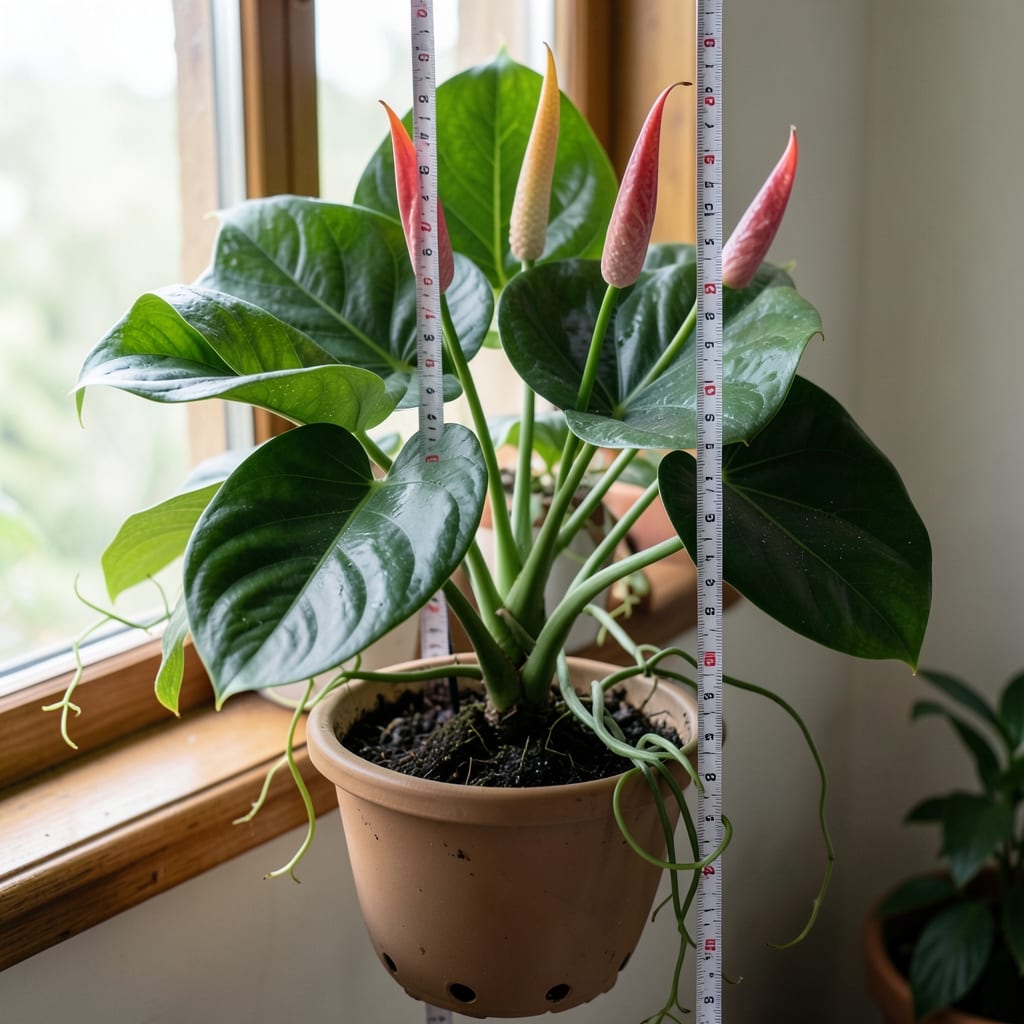
If you're wondering "how tall do anthuriums grow", you're not alone—these stunning 🌸 plants can surprise you with their size range, from tiny tabletop varieties to floor-filling giants, depending on care and variety.
Anthuriums typically reach between 1 and 4 feet at maturity, but some dwarf varieties stay under 12 inches, while standard types can stretch toward 5 feet in ideal conditions. The key to controlling their height lies in understanding their growth habits and a few simple care tweaks.
Whether you're dealing with leggy stems or just want to keep your plant compact, I'll show you how to manage their size through pruning, lighting, and pot selection—so you can enjoy their lush blooms without sacrificing space.
Let’s break down the factors that influence anthurium height and how to keep them thriving at your preferred size, whether that’s a sleek countertop centerpiece or a lush vertical statement piece.

Anthurium height by variety: compact vs. tall-growing species
Anthuriums are incredibly versatile in size, with some varieties staying small enough for windowsills while others grow tall enough to become stunning vertical focal points. The average mature height for most common anthuriums ranges between 2 and 4 feet, but this can vary dramatically depending on the specific variety and growing conditions.
If you're working with limited space, dwarf varieties like Anthurium crystallinum or Anthurium clarinervium are perfect choices, typically reaching only 12 to 24 inches tall. These compact plants thrive in small pots and make excellent desk companions. On the other end of the spectrum, varieties like Anthurium scherzerianum can grow up to 5 feet when given optimal care and conditions.
The key to managing anthurium height lies in selecting the right variety for your space and understanding how environmental factors influence growth. For example, bright indirect light promotes bushier, more compact growth, while low light conditions can lead to leggy, elongated stems. Let’s explore the most popular anthurium varieties and their typical mature heights.
🌱 Anthurium Varieties by Height
| Variety | Mature Height | Growth Habit | Ideal Use |
|---|---|---|---|
| Anthurium crystallinum | 12–24 inches | Compact, bushy | Desk plant, small pots |
| Anthurium clarinervium | 18–24 inches | Trailing, upright | Hanging baskets, shelves |
| Anthurium scherzerianum | 2–4 feet | Upright, bushy | Countertops, floor plants |
| Anthurium andraeanum | 3–5 feet | Tall, spreading | Vertical gardens, large pots |
| Anthurium hookeri | 1–2 feet | Climbing, trailing | Moss poles, hanging displays |
💡 Pro Tip: Always check the specific variety's care requirements—some dwarf varieties may still need staking or support as they mature.
When choosing an anthurium variety, consider not just its height but also its growth habit. Some varieties, like Anthurium hookeri, are natural climbers and will benefit from a moss pole or trellis to guide their growth vertically, which can help save floor space. Others, like Anthurium scherzerianum, grow more upright and bushy, making them ideal for filling vertical gaps in your home decor.
If you're growing anthuriums outdoors in USDA Zones 10-12, they can reach their maximum height potential with consistent warmth and humidity. However, even in these ideal conditions, pruning and proper pot selection play critical roles in controlling height. For example, using a smaller pot can restrict root growth and encourage a more compact plant, while a larger pot with room to grow will allow the plant to reach its natural height.
Another factor to consider is the age of the plant. Young anthuriums typically grow 1 to 2 feet in their first year, with significant height increases in subsequent years. By year three, most varieties will have reached their mature height, though continuous care and pruning can influence how bushy or leggy they appear.
For those with limited space, dwarf varieties are a game-changer, allowing you to enjoy anthuriums on shelves, desks, or even as part of a miniature terrarium. If you're aiming for a bold statement, taller varieties like Anthurium andraeanum will deliver stunning, floor-level blooms that draw the eye. The key is to match the plant’s natural growth tendencies with your available space and aesthetic goals.
Finally, remember that light exposure directly impacts height. Anthuriums grown in low light tend to stretch toward light sources, resulting in tall, leggy stems. To keep your plant compact, place it near a bright, indirect light source, such as an east- or west-facing window. This will encourage shorter, stockier growth and more frequent blooming.
Pruning techniques to control Anthurium growth and size
Pruning is one of the most effective ways to manage anthurium height and encourage a fuller, bushier plant. Whether you're dealing with a leggy Anthurium andraeanum or a compact Anthurium crystallinum, strategic pruning can help you maintain your desired size while promoting healthier growth. The best time to prune is in early spring, just as new growth begins, but you can also trim throughout the year to control height or shape the plant.
Start by identifying overgrown stems or those that are bare and leggy. These are prime candidates for pruning. Use clean, sharp pruning shears to make cuts at a 45-degree angle, about 1/4 inch above a leaf node. This angle helps prevent water from pooling on the cut, reducing the risk of rot. Always sterilize your tools with rubbing alcohol before and after pruning to avoid spreading disease between cuts.
For height control, focus on trimming the longest stems first. If your anthurium is becoming too tall for its space, you can even prune back up to one-third of the plant's height, though avoid cutting more than this in a single session to prevent stress. After pruning, place the cuttings in water to propagate new plants—this is a great way to expand your anthurium collection while controlling the size of your original plant.
🌿 Step-by-Step Pruning Guide for Anthuriums
- Step 1: Inspect your plant for leggy or overgrown stems and dead or yellowing leaves.
- Step 2: Use sterilized pruning shears to cut stems at a 45-degree angle above a leaf node.
- Step 3: Remove spent blooms to redirect energy to new growth.
- Step 4: Trim longest stems first to control height, then shape the plant as needed.
- Step 5: Place cuttings in water to propagate new plants (optional).
- Step 6: Apply balanced fertilizer after pruning to support recovery.
💡 Pro Tip: Prune in the morning to allow wounds to heal before evening moisture sets in.
After pruning, your anthurium may look a bit sparse, but don’t worry—it will bounce back with proper care. Reduce watering slightly for the first week or two to help the plant focus on healing rather than new growth. Once it shows signs of recovery, resume your regular watering and fertilizing schedule, using a balanced 10-10-10 fertilizer every 4-6 weeks to encourage lush, healthy regrowth.
If you're growing anthuriums for their aesthetic appeal, pruning can also help shape them into bushier, more compact forms. For example, pinching back the tips of young stems encourages branching, which can turn a tall, skinny plant into a full, rounded bush. This technique works especially well for dwarf varieties that you want to keep small and manageable.
For climbing varieties like Anthurium hookeri, pruning is equally important. Regularly trim back overlong vines to prevent them from becoming tangled or weak. Pair pruning with a moss pole or trellis to guide their growth vertically, which can make them ideal for hanging baskets or vertical gardens without taking up excessive floor space.
Finally, remember that pruning frequency depends on your plant’s growth rate and your desired size. If you're growing anthuriums in small pots, they’ll naturally stay more compact and may only need light pruning once or twice a year. Larger pots or outdoor conditions, however, may require more frequent pruning to keep the plant from becoming unruly. With the right approach, you can enjoy healthy, well-shaped anthuriums that fit perfectly into your space—whether that’s a cozy windowsill or a grand indoor garden.