
Size
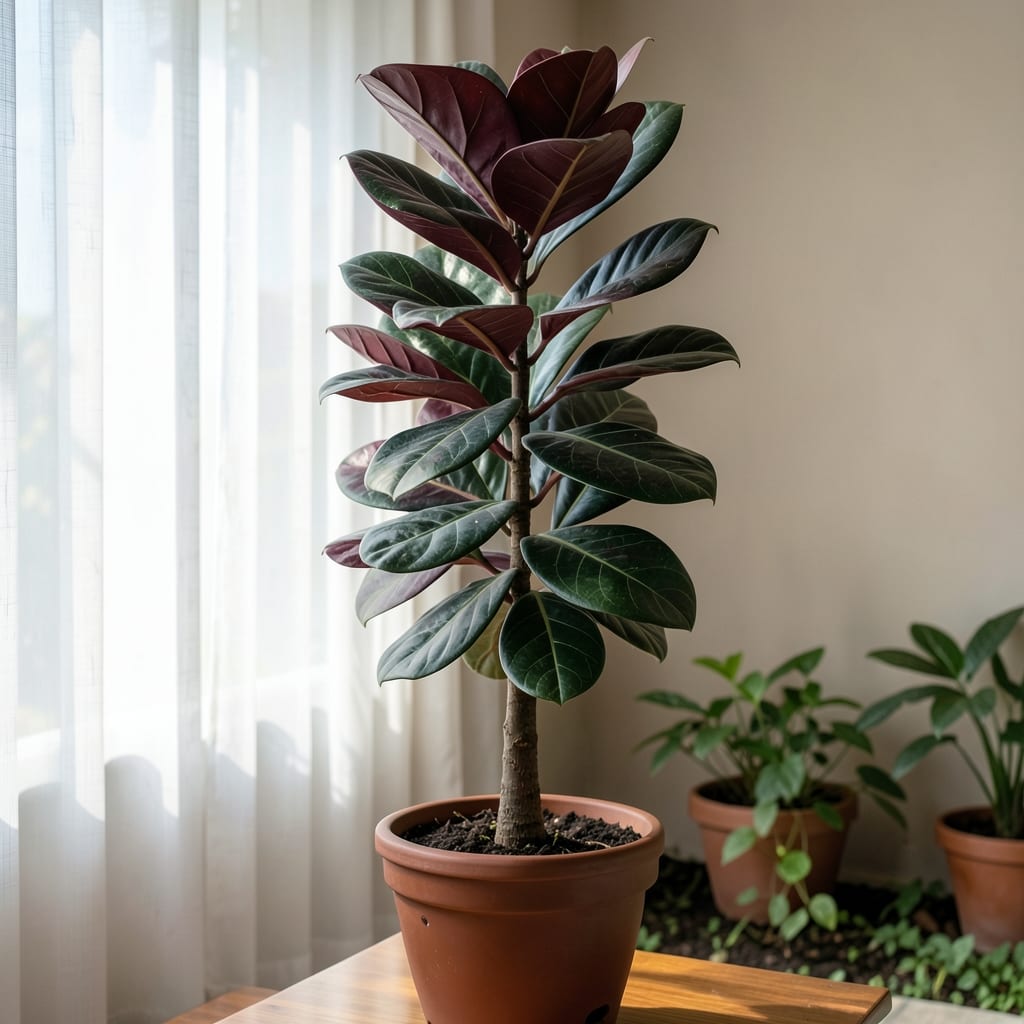
Ever wondered how tall your rubber plant 🌿 could grow if you just let it? The answer might surprise you—these plants can stretch from a modest 3-foot houseplant to a towering 10-foot indoor statement piece, all depending on how you care for them.
Rubber plants (Ficus elastica) are famous for their dramatic height potential, but most people never see their full growth range. Whether you're dreaming of a lush, ceiling-high jungle or prefer a compact desk companion, understanding the factors that influence their height is the key to getting the look you want.
Light exposure, pruning habits, and even the size of your pot play huge roles in controlling how tall your rubber plant grows. With the right care, you can encourage bushier growth or let it climb toward the sky—it's all about making a few simple adjustments.
Let’s break down exactly what determines your rubber plant’s height and how to shape it to fit your space perfectly. Ready to transform your plant from a small accent to a stunning centerpiece?

Rubber plant growth limits: indoor vs outdoor height differences explained
Rubber plants (Ficus elastica) are famous for their dramatic height range—from a 3-foot desk plant to a towering 10-foot indoor statement piece. But their growth potential depends entirely on where you grow them. Indoor plants typically max out at 6-10 feet with proper care, while outdoor or greenhouse varieties can reach even greater heights under ideal conditions.
The key difference lies in light exposure, temperature consistency, and space constraints. Indoors, growth slows due to limited light, while outdoors, they stretch toward sunlight with fewer restrictions. Even the same variety—like the popular Black Prince or Burgundy—will grow differently based on these factors.
Let’s break down the height potential by growing environment, including growth rates and how to maximize (or control) their size.
| Growing Environment | Max Height | Growth Rate (Annual) | Key Factors |
|---|---|---|---|
| Indoor (Bright Light) | 6–10 ft | 1–2 ft/year | Light, pot size, pruning |
| Indoor (Low Light) | 3–5 ft | 6–12 in/year | Stunted growth, leggy stems |
| Greenhouse/Outdoor (Temperate) | 10–15 ft | 2–3 ft/year | Sunlight, humidity, soil |
| Outdoor (Tropical Climates) | Up to 20 ft | 3–4 ft/year | No winter dormancy, year-round growth |
Outdoor rubber plants in USDA Zone 10+ (like Florida or Hawaii) can grow aggressively, reaching 20 feet or more without pruning. In contrast, indoor plants in low-light offices may only grow 6–12 inches per year, staying small but leggy. The Burgundy variety, for example, thrives outdoors but indoors often stays under 6 feet unless pruned regularly.
Light is the #1 factor. Rubber plants need bright, indirect light to grow tall and sturdy. Without enough light, they stretch toward windows, creating bare stems and weak branches. Place yours within 3–5 feet of an east or west window for optimal growth.
Temperature also plays a role. Indoors, consistent 65–80°F temperatures encourage steady growth, while outdoor plants in cooler climates may slow down in winter. If you live in USDA Zone 9 or below, bring potted rubber plants inside before temperatures drop below 50°F to prevent stunted growth.
Pot size matters too. A cramped pot restricts root growth, slowing height increases. Upgrade to a 1–2 inch larger pot every 2–3 years to support taller growth. Just ensure the pot has drainage holes to avoid root rot.
Humidity is another secret weapon. Rubber plants love 50–70% humidity—indoor air (often 30–40%) makes them grow slower. Use a pebble tray or humidifier near your plant to boost growth by up to 30%.
Finally, pruning can control height. Pinch back new growth in spring to encourage bushier growth, or cut stems just above a leaf node to redirect energy. With the right care, your rubber plant can stay a compact 3-footer or become a 10-foot jungle statement piece—your choice!
5 Key factors that control how tall your rubber plant grows
Your rubber plant's height isn't set in stone—it's shaped by five critical factors you can control. By understanding these, you can coax your Ficus elastica to stay compact or grow into a towering statement piece. Let's explore how each factor influences growth direction and speed.
First, light exposure is the #1 growth regulator. Rubber plants crave bright indirect light to grow strong and bushy. Place yours within 3-5 feet of an east or west window to encourage balanced growth. Too little light? Your plant will stretch leggy and tall as it reaches for sunlight.
Here’s how these factors directly impact your rubber plant’s height potential:
Let’s dive deeper into pruning, the most effective tool for controlling height. By cutting back 1/3 of the stem just above a leaf node, you’ll trigger new growth from that point, creating a fuller, bushier plant. This technique works best in spring or early summer when your rubber plant is most active.
For outdoor varieties or greenhouse rubber plants, temperature and humidity become additional height influencers. Ideal conditions (70-80°F and 50-60% humidity) can push growth rates to 1-2 feet per year. In dry indoor air, growth slows, keeping your plant more manageable in height.
Pro tip: Combine pruning with propagation. Those cuttings you remove can root in water and become new plants—turning height control into a propagation opportunity! Just place cuttings in water until roots form (about 2-4 weeks).
Remember, your rubber plant’s height is entirely in your hands. With the right balance of light, pruning, and care, you can shape it to fit your space perfectly—whether that’s a 3-foot desk buddy or a 10-foot living room centerpiece. 🌿