
Flowers
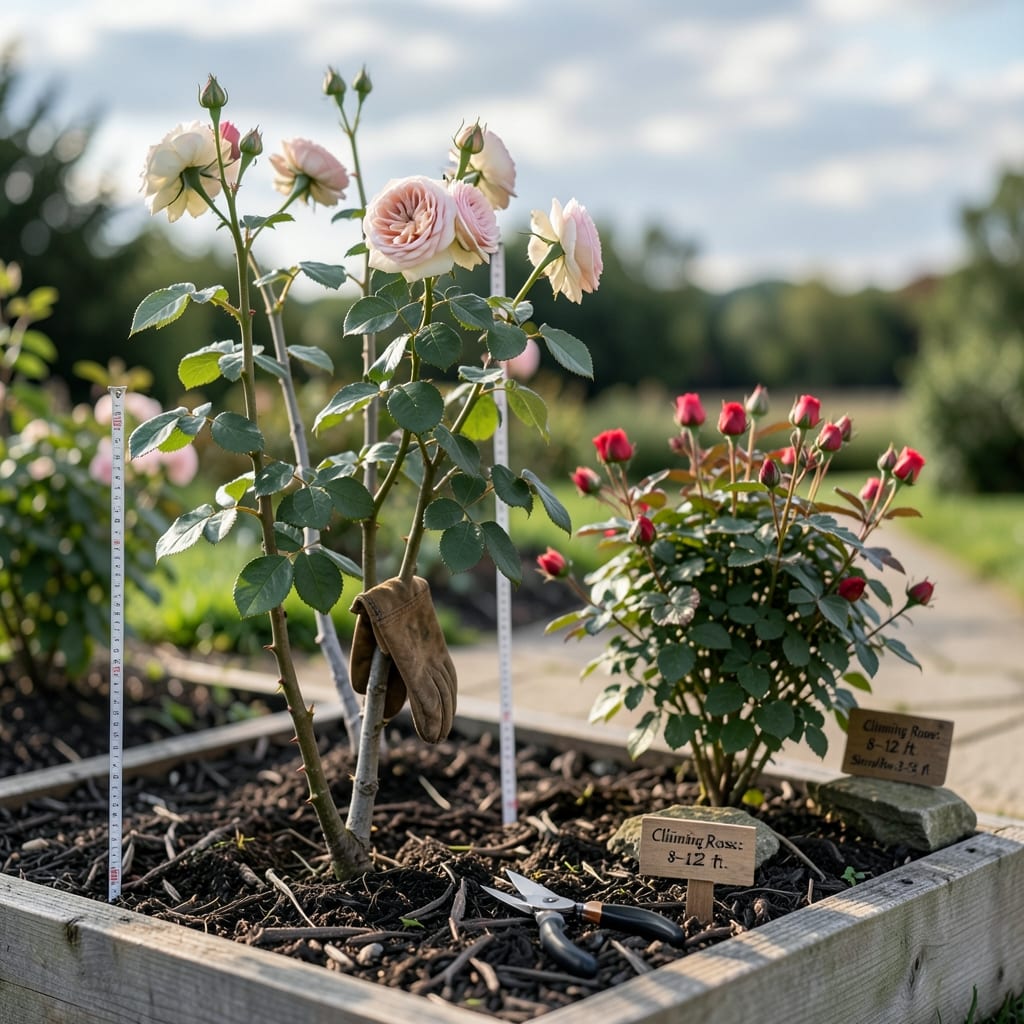
Rose varieties and their maximum height by type
Roses aren't one-size-fits-all when it comes to height. The variety you choose determines whether your roses will stay low and bushy or climb like a jungle gym. Understanding these differences helps you plan your garden layout and choose roses that fit your space perfectly.
From delicate dwarf roses perfect for containers to towering climbing roses that need trellises, each type has its own growth potential. Even within categories, heights can vary by 5-10 feet—so knowing your options is key to avoiding overgrowth headaches or underwhelming displays.
Here's a quick look at the major rose categories and their typical mature heights. Remember, these are maximum heights with ideal care—your roses might stay shorter in cooler climates or with regular pruning.
| Rose Type | Mature Height Range | Growth Habit | Best For |
|---|---|---|---|
| Dwarf Roses | 1-3 ft | Compact, bushy | Containers, small gardens, borders |
| Semi-Dwarf Roses | 3-5 ft | Bushy, upright | Foundation planting, shrub borders |
| Standard Roses | 4-6 ft | Tall, single-stemmed | Focal points, entryways |
| Hybrid Tea Roses | 3-5 ft | Bushy, upright | Cut flowers, garden beds |
| Floribunda Roses | 2-4 ft | Bushy, multi-blooming | Mass planting, borders |
| Climbing Roses | 6-25 ft | Long canes, vigorous | Arbors, trellises, fences |
| Shrub Roses | 3-6 ft | Multi-stemmed, bushy | Naturalized areas, hedges |
| Miniature Roses | 6 in - 2 ft | Tiny, bushy | Rock gardens, fairy gardens |
Climbing roses often get the most attention for their dramatic heights, but don't overlook shrub roses like 'Knock Out' varieties that can reach 5-6 feet while producing non-stop blooms. These are excellent for low-maintenance gardens because they thrive with minimal pruning.
If you're working with limited space, dwarf roses and miniature roses are perfect solutions. Varieties like 'Fairy' or 'Tom Thumb' stay under 2 feet tall, making them ideal for container gardening or window boxes. Just ensure they get enough sunlight—even small roses need 6+ hours of direct sun daily.
For those dreaming of a romantic garden, climbing roses are unbeatable. Some varieties like 'New Dawn' or 'Blaze' can grow 15-25 feet when given proper support. These need strong trellises, arbors, or fences to channel their growth upward. Without support, they'll sprawl and become unruly.
Even within a single category, heights can vary significantly. For example, the hybrid tea category includes both 3-foot varieties like 'Double Delight' and 5-foot giants like 'Mister Lincoln.' Always check the specific cultivar's description when selecting roses for your garden.
Remember that these heights represent mature plants—typically after 2-3 growing seasons. Young roses grow more slowly, often reaching only 1-2 feet in their first year. Patience pays off as they establish strong root systems before their canes take off vertically.
Your local
Climate-Zone height charts: how temperature affects rose growth
Your roses' height isn't just about their variety—your climate zone plays a huge role in how tall they'll grow. Roses in USDA Zone 10 can reach their full potential, while those in Zone 4 may stay shorter due to colder winters. Understanding these variations helps you set realistic expectations and adjust your pruning schedule accordingly.
Warmer climates like Zones 8-11 allow roses to grow more vigorously, often reaching their maximum heights faster. In contrast, roses in Zones 3-6 may struggle to reach full height without extra care, like winter protection or delayed pruning. Let's explore how each zone affects rose growth and what you can do to optimize their height.
| USDA Zone | Climate Type | Height Adjustment | Winter Care Tips |
|---|---|---|---|
| 3-4 | Cold Continental | -10% to -20% shorter | Mound soil around base, use winter mulch |
| 5-6 | Humid Continental | -5% to -15% shorter | Light mulch, delay spring pruning |
| 7 | Humid Subtropical | Standard height | Minimal winter care |
| 8 | Mediterranean | +5% to +10% taller | No winter care needed |
| 9-10 | Tropical | +10% to +20% taller | Prune lightly year-round |
| 11 | Desert | +15% to +25% taller | Shade cloth in summer |
In Zones 3-4, where winters are harsh, roses may only reach 70-80% of their listed height without extra protection. For example, a 6-foot climbing rose might only grow to 4-5 feet without winter mulching and careful pruning. Use burlap wraps or rose cones to protect canes from freezing temperatures.
Gardeners in Zones 8-11 often see roses grow taller than expected because the mild winters allow them to focus energy on upward growth. A 5-foot hybrid tea rose might reach 6 feet in these zones. However, watch for heat stress in Zone 11—roses may grow rapidly but produce fewer blooms if temperatures exceed 95°F.
Your local microclimate also matters. Roses planted in sunny, sheltered spots grow taller than those in windy or shaded areas. For example, a 3-foot floribunda might reach 4 feet on a south-facing wall but stay at 2.5 feet in a north-facing corner. Adjust your expectations based on your garden's specific conditions.
To compensate for climate limitations, consider delayed pruning in colder zones. Wait until late spring (after last frost) to prune, giving roses more time to establish before winter. In warmer zones, light pruning throughout the year keeps growth manageable while encouraging bushier, healthier plants.
For extreme climates, choose hardy varieties like 'Dr. Huey' (Zone 3) or 'Iceberg' (Zone 4) that naturally stay shorter in cold regions. These varieties are bred to thrive in challenging conditions while still producing abundant blooms.