
Size
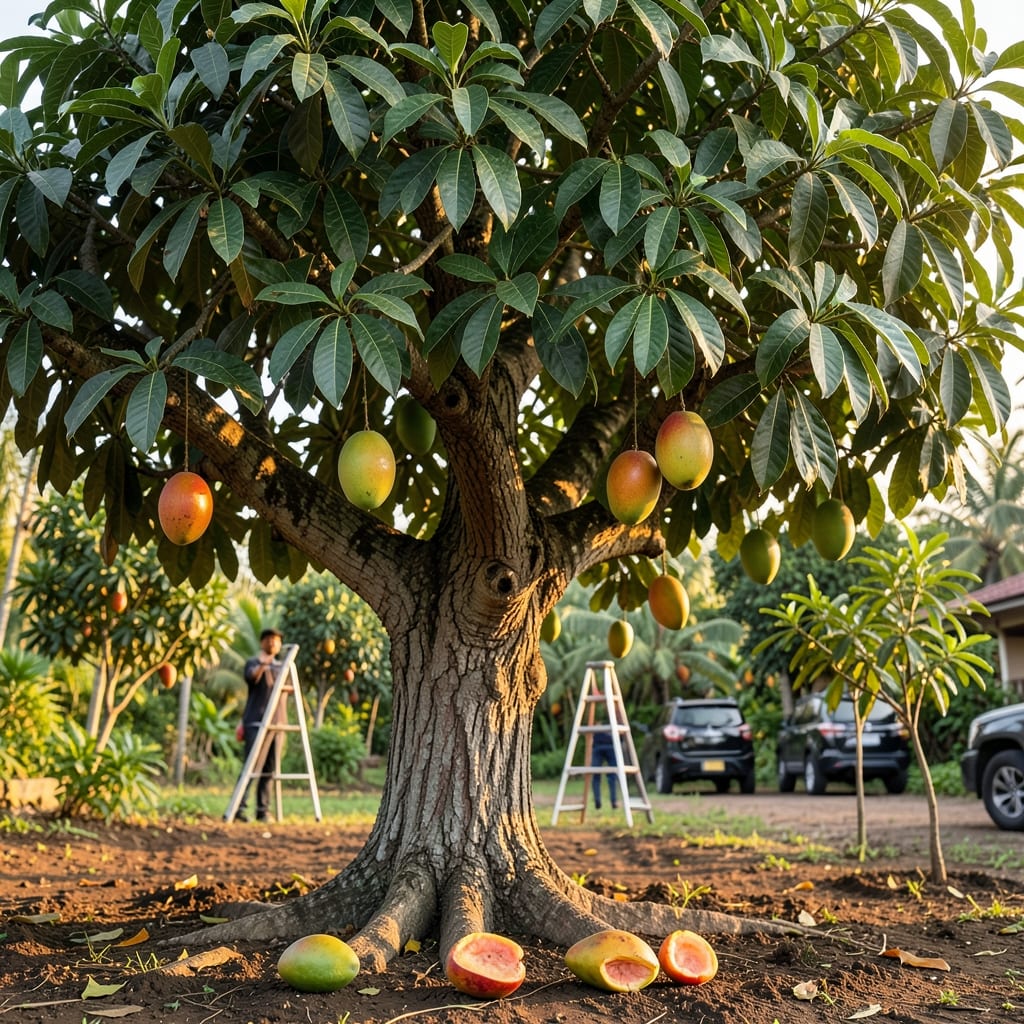
If you’ve ever wondered just how tall that dreamy 🥭 mango tree could grow in your backyard, the answer might surprise you. Some varieties stretch toward the sky like natural skyscrapers, reaching heights of 100 feet—taller than a 3-story building—while others stay compact enough for even small gardens. But what determines whether your mango tree becomes a towering giant or a manageable shrub?
The truth is, your mango tree’s height depends on more than just its variety—climate, soil quality, and even how you prune it play huge roles. In tropical zones like USDA 10-11, these trees thrive with minimal intervention, but in cooler areas, growth slows dramatically. Whether you’re planning for a backyard oasis or a container garden, understanding these factors is the key to managing your tree’s size without sacrificing those sweet, juicy fruits.
Let’s break down what you can expect from different mango varieties, how fast they grow year by year, and the simple pruning tricks that can keep your tree at your desired height. You’ll also discover how to accelerate growth naturally—no shortcuts needed—so you can enjoy homegrown mangoes sooner than you think. Ready to turn your tropical vision into reality?
From dwarf varieties that fit neatly in pots to standard trees that dominate landscapes, we’ll cover everything you need to know to make an informed choice. Whether you’re a seasoned gardener or just starting out, this guide will help you grow the perfect mango tree—no matter how much space (or sky) you’ve got to work with.


Mature height of mango trees by variety: from dwarf to giant
Mango trees are tropical showstoppers, but their mature height can vary dramatically depending on the variety you choose. Standard varieties like 'Keitt' and 'Kent' can soar to 60–100 feet, while dwarf varieties like 'Carrie' and 'Ice Cream' stay manageable at 10–20 feet. The right choice depends on your space, climate, and how much maintenance you're willing to tackle.
For backyard gardeners with limited space, dwarf mango trees are a game-changer. These varieties are grafted onto compact rootstocks, allowing you to enjoy homegrown mangoes without sacrificing your patio or driveway. Even in USDA Zones 10–11, where mangoes thrive, dwarf trees fit neatly into containers or small yards.
If you're in a tropical or subtropical climate and have plenty of room, standard varieties will reward you with massive canopies and abundant fruit. Just be prepared for regular pruning and potential power line conflicts as these trees mature. The trade-off? A shade-giving giant that can produce hundreds of pounds of fruit per year.
Here’s the breakdown of how tall different mango varieties can grow, along with their ideal growing conditions and space requirements:
| Variety | Mature Height | Growth Habit | Best For | Space Needs |
|---|---|---|---|---|
| 'Carrie' (Dwarf) | 10–15 ft | Compact, rounded | Containers, small yards | 6–10 ft diameter |
| 'Ice Cream' (Dwarf) | 12–18 ft | Upright, bushy | Urban gardens, patios | 8–12 ft diameter |
| 'Keitt' (Standard) | 60–80 ft | Tall, spreading | Large estates, rural areas | 30–50 ft diameter |
| 'Kent' (Standard) | 50–70 ft | Vigorous, wide canopy | Tropical farms, orchards | 25–40 ft diameter |
| 'Haden' (Semi-Dwarf) | 25–35 ft | Medium height, dense | Suburban yards, community gardens | 15–20 ft diameter |
When selecting a variety, consider your local climate and available space. For example, 'Carrie' is perfect for container gardening in Zone 11, while 'Keitt' thrives in humid tropical regions with ample room to spread. Semi-dwarf varieties like 'Haden' strike a balance, offering manageable height with high fruit production.
Pro tip: If you’re growing mangoes in cooler climates (Zone 9 or below), opt for dwarf or semi-dwarf varieties and plant them in protected microclimates, like near a south-facing wall or in a large container that can be moved indoors during winter. This strategy can extend your growing season and protect young trees from cold snaps.
Remember, even dwarf mango trees will need pruning to maintain shape and encourage fruit production. Regular pruning also improves air circulation, reducing the risk of fungal diseases like anthracnose. Start pruning when your tree is 2–3 years old, focusing on removing dead or crossing branches first.
For those with limited space but big dreams, dwarf mango trees are the way to go. They’re ideal for balconies, courtyards, or even large pots on patios. Just ensure your container is at least 18 inches in diameter and has drainage holes to prevent root rot. With the right care, you can enjoy homegrown mangoes without sacrificing your outdoor living space.
If you’re planting a standard mango tree, give it plenty of room to grow. These trees develop wide, sprawling canopies, so plant them at least 40–50 feet from structures, fences, or other trees. Pruning is essential to control height and shape, but even with pruning, expect your tree to reach storybook proportions over time.
🌳
Factors that control mango tree height: pruning, climate, and soil secrets
Your mango tree’s height isn’t set in stone—it’s shaped by a mix of natural factors and your own gardening choices. While some varieties naturally reach 100 feet, others can be kept under 10 feet with the right care. The key is understanding how pruning techniques, climate conditions, and soil quality interact to either let your tree stretch toward the sky or keep it manageable for your space.
Let’s start with pruning, the most direct way to control height. Mango trees naturally grow in two main shapes: the central leader (a single trunk with branches) or the open-center (multiple trunks with a flat canopy). Pruning isn’t just about cutting branches—it’s about guiding growth. For example, if you want a dwarf mango tree, you’ll prune aggressively in early spring, removing 1/3 of new growth to encourage bushier, slower growth. In contrast, leaving a tree unpruned lets it grow tall and wild, perfect for large properties.
Climate plays a huge role too. In USDA zones 10-11, where mango trees thrive naturally, they grow 3-5 feet per year when young and up to 2 feet per year as mature trees. But in cooler zones like 9 or below, growth slows dramatically—sometimes by 50%—because cold snaps stunt root development. If you’re in a marginal zone, choose cold-hardy varieties like 'Cogshall' or 'Julie' and protect young trees with frost cloth during winter.
Soil quality is another silent growth regulator. Mango trees crave well-draining, slightly acidic soil (pH 5.0-7.0). Poor drainage or heavy clay soil can stunt growth by causing root rot, while nutrient-rich, sandy loam fuels rapid expansion. Before planting, amend your soil with compost and perlite to create the ideal mix. A simple soil test can reveal hidden issues—like low potassium—that slow height gains.
Here’s the secret weapon most gardeners overlook: light exposure. Mango trees need 8+ hours of direct sunlight daily to reach their full height potential. In shady spots, growth slows, and fruit production suffers. If your tree isn’t getting enough light, consider relocating it or supplementing with grow lights during winter months in cooler climates. Even a few hours less sunlight can reduce annual height gains by up to 2 feet.
Height Control Cheat Sheet
- 🌿 Prune in early spring to limit height by 30-50%.
- ☀️ Full sun = faster growth; shade slows height gains.
- 🌡️ Cold climates reduce growth by 50%—choose hardy varieties.
- 🪴 Well-draining soil = stronger roots = taller growth.
- ✂️ Open-center pruning keeps trees bushy and shorter.
If you’re growing mangoes in containers, height control becomes even easier—and more critical. Dwarf varieties like 'Carrie' stay under 10 feet when pruned regularly, but even standard trees can be kept under 15 feet with annual pruning. Just remember: container-grown trees need larger pots (20+ gallons) and frequent watering to support their root systems. Without proper care, even dwarf varieties can outgrow their containers in 3-5 years, leading to stunted growth and poor fruit production.
For those of us with limited space, the good news is that you don’t need to sacrifice fruit quality for size. With the right pruning schedule, soil prep, and climate adjustments, you can enjoy homegrown mangoes—whether your tree is a towering giant or a backyard bush. Start with the variety that fits your space, then fine-tune with these tips to get the perfect-sized tree for your dreams—no matter how much (or little) room you’ve got.