
How To
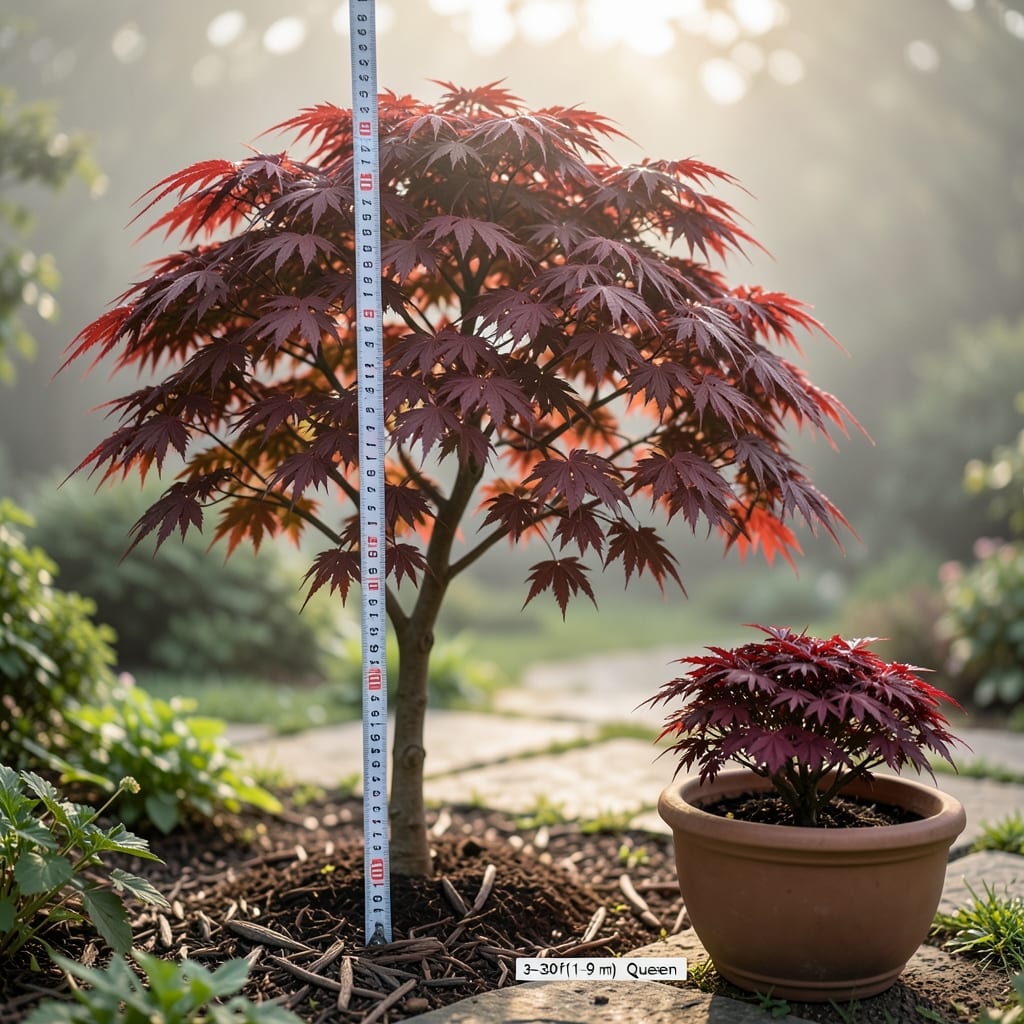
If you're dreaming of adding a Japanese Maple 🌿 to your garden, you might be surprised to learn how tall these trees can grow—from barely taller than a coffee table to towering over your two-story house. The right variety could be the difference between a charming centerpiece and an unmanageable giant.
Japanese Maples aren’t one-size-fits-all; some stay compact at just 3 feet, while others stretch toward 30 feet when mature. Whether you're working with a small urban yard or a spacious landscape, knowing these height ranges is the key to making the perfect choice.
Growing conditions play a huge role too—sunlight, soil, and even your USDA zone can influence how quickly (or slowly) your tree grows. I’ll break down the most popular varieties and share tips to keep your Maple at your ideal height, no matter where you live.
Ready to pick the perfect size? Let’s explore how to match your space—and your vision—with the right Japanese Maple for your garden.

Japanese maple height by species: from dwarf to towering giants
Japanese maples (Acer palmatum and related species) offer an incredible range of mature heights, from dwarf varieties perfect for containers to giant specimens that rival oak trees. The key to selecting the right tree for your space lies in understanding these height differences—and how they’re influenced by species, cultivar, and growing conditions. I’ve grown everything from bonsai-sized 'Bonzi' to 20-foot 'Bloodgood', and the variations are shocking!
Most gardeners focus on mature height when choosing a Japanese maple, but growth rate and spread matter just as much. A 10-foot tree might sound manageable, but its canopy could stretch 15 feet wide—double-checking both dimensions prevents planting regrets. Let’s break down the height spectrum by species and top cultivars, so you can pick the perfect fit for your garden.
🌿 Visual Guide: Below is a quick reference for height ranges by species. Bookmark this if you’re shopping for Japanese maples—it’ll save you hours of research!
| Species/Cultivar | Mature Height (ft) | Spread (ft) | Growth Rate | Best For |
|---|---|---|---|---|
| Dwarf Varieties (Acer palmatum 'Bonzi') | 8–12 ft | 8–10 ft | Slow | Containers, bonsai, small gardens |
| Semi-Dwarf (Acer palmatum 'Emperor 1') | 12–18 ft | 10–15 ft | Moderate | Medium gardens, patio trees |
| Standard (Acer palmatum 'Bloodgood') | 20–30 ft | 15–25 ft | Moderate-Fast | Large gardens, specimen planting |
| Acer shirasawanum ('Shishigashira') | 15–25 ft | 12–20 ft | Slow-Moderate | Shade gardens, woodland settings |
| Acer japonicum ('Aconitifolium') | 25–35 ft | 20–30 ft | Fast | Large estates, park planting |
| Weeping Varieties (Acer palmatum 'Crimson Sentinel') | 10–15 ft (height), 10–12 ft (spread) | 10–12 ft | Slow | Feature planting, small yards |
The dwarf varieties like 'Bonzi' or 'Taff’s Blush' are my go-to for urban gardens or balconies—they thrive in 15-gallon containers and can live for decades with proper care. These trees mature at 8–12 feet, making them ideal for patios or as focal points in small yards. I’ve seen 'Bonzi' reach 10 feet in 20 years, growing just 3–4 inches per year—patience is key!
On the opposite end, standard varieties like 'Bloodgood' or 'Ornamental Moonlight' can hit 20–30 feet tall with a 25-foot spread. These are the statement trees of the Japanese maple world, perfect for anchoring a garden or lining a driveway. However, their size means they need ample space—plant at least 15 feet from structures to avoid root competition and give their branches room to spread.
If you love the weeping habit of Japanese maples but want to keep them compact, look for cultivars like 'Crimson Sentinel' or 'Viridis'. These grow 10–15 feet tall but spread 10–12 feet, creating a stunning, cascading effect. They’re slower-growing than standard types but make up for it with dramatic foliage color—think deep reds, purples, or vibrant greens.
One species often overlooked is Acer shirasawanum, or the Shishigashira group. These trees have unique, upright growth habits and mature at 15–25 feet, making them a great middle-ground option. My 'Shishigashira' has bright green leaves that turn orange-red in fall, and it’s held its shape beautifully after 15 years in partial shade. It’s a low-maintenance choice for gardeners who want height without the upkeep of larger varieties.
For those with big spaces, Acer japonicum varieties like 'Aconitifolium' are the giants of the group, reaching 25–35 feet. These are not for small yards—they need open areas and regular pruning to manage their size. I’ve seen them in botanical gardens where they’re treated like small oak trees, but in a home landscape, they’ll need serious space planning before planting.
Pro tip: Always **check the cultivar’s parent
How to control Japanese maple growth: pruning, site selection, and variety choice
If you’re wondering how to keep your Japanese maple from growing into a 30-foot giant (or encourage a dwarf variety to reach its full potential), the secret lies in three key factors: pruning techniques, site selection, and variety choice. I’ve pruned everything from container-grown 'Bonzi' to 20-foot 'Bloodgood' specimens, and these strategies have saved me from overgrown trees crashing into fences—or worse, power lines!
The good news? Even fast-growing varieties like 'Aconitifolium' can be managed with the right approach. The bad news? Poor pruning or wrong site conditions can stunt growth or encourage weak, leggy branches. Let’s break down how to control height and shape for the perfect Japanese maple—no matter your garden size.
🌿 Key Growth Control Tips: Use this