
Size
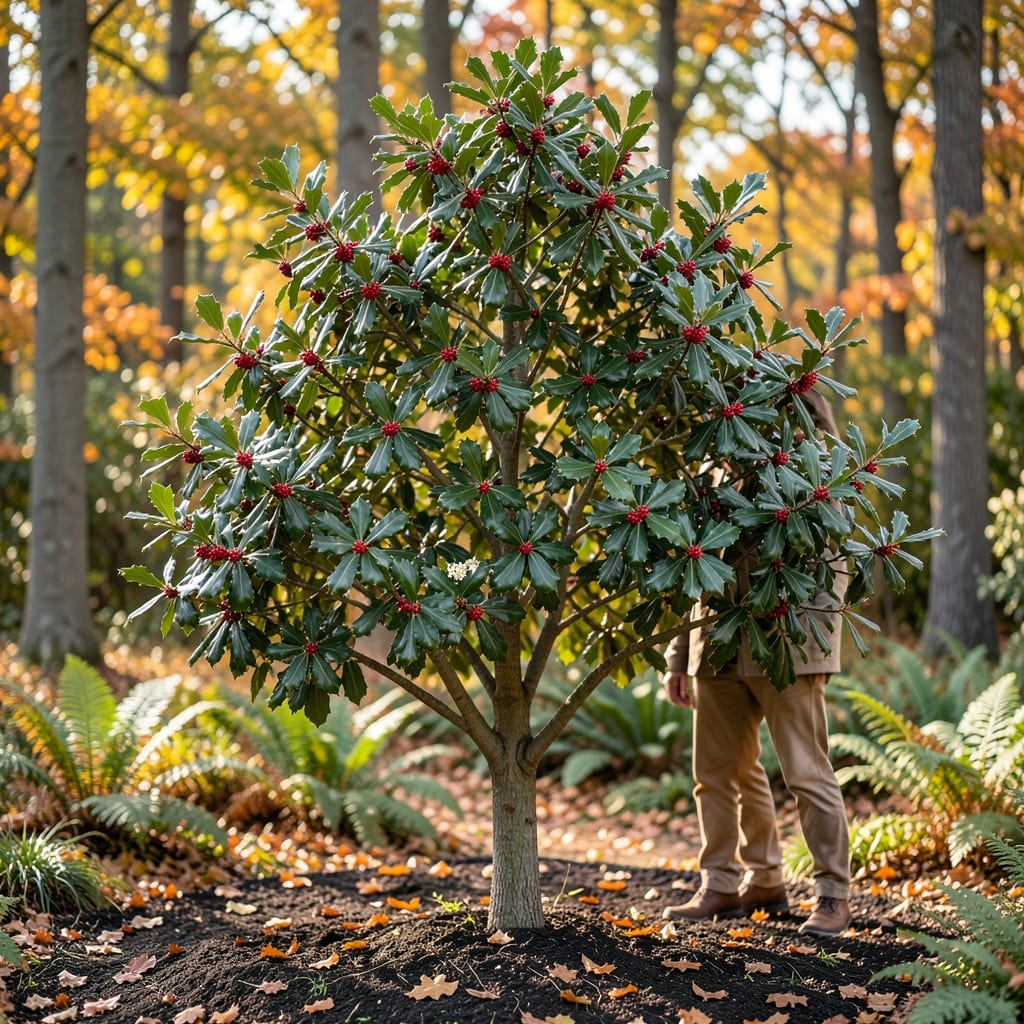
If you're dreaming of a Holly Tree 🌲 that adds drama and structure to your yard, you might be surprised by just how tall these evergreens can grow—some varieties stretch taller than a two-story house! Understanding the mature height range of holly trees is the first step to choosing the right variety for your space, whether you want a compact accent plant or a towering landscape centerpiece.
Holly trees aren’t one-size-fits-all; their height can vary dramatically depending on the species and cultivar. Some stay modest at 8-12 feet, perfect for smaller gardens, while others reach 40 feet or more, making them statement pieces in large landscapes. The key to picking the right one lies in knowing how each type grows over time and what conditions help them thrive.
But here’s the thing: even the tallest holly trees can be managed with the right care. Whether you’re dealing with a fast-growing American Holly or a slower-growing English Holly, I’ll break down how height develops over the years and share practical tips to control their size—so you can enjoy their beauty without sacrificing your yard’s layout.
Ready to find out which holly fits your space? Let’s dive into the details so you can plant with confidence and avoid any future pruning regrets.


Holly tree height by variety: from dwarf to towering giants
When choosing a holly tree, the first question I always ask is: How tall will this grow in my yard? The answer depends entirely on the variety, and the differences are dramatic. Some holly trees stay compact enough for small gardens, while others grow into towering evergreens that dominate the landscape. To help you visualize, I’ve broken down the most popular holly varieties by their mature height ranges, growth habits, and ideal spacing needs.
The key to selecting the right holly lies in understanding these three categories: dwarf varieties (8–12 ft), semi-dwarf varieties (12–20 ft), and standard varieties (20–40 ft). Each serves a different purpose in your garden, from hedges to focal points. Let’s explore the specifics so you can pick the perfect fit for your space.
🌲
| Variety | Mature Height | Growth Rate | Best For |
|---|---|---|---|
| Dwarf English Holly ('Blue Prince') | 8–12 ft | Slow (6–12 in/year) | Small gardens, hedges, containers |
| Semi-Dwarf American Holly ('Sky Pencil') | 12–15 ft | Moderate (12–18 in/year) | Privacy screens, mixed borders |
| Standard English Holly ('Ilex aquifolium') | 20–30 ft | Moderate (12–24 in/year) | Landscape focal points, large yards |
| Tall American Holly ('Southern Magnolia Holly') | 30–40 ft | Fast (18–24 in/year) | Woodland gardens, large estates |
| Blue Holly ('Ilex × 'Blue Girl') | 10–15 ft | Slow (6–12 in/year) | Color accents, small landscapes |
For example, the 'Blue Prince' holly is a top pick for small spaces because it maxes out at just 8–12 feet, making it ideal for hedges or container gardening. On the other hand, the 'Southern Magnolia Holly' can reach 40 feet, so it’s best reserved for spacious properties or as a woodland specimen. Always check the spacing recommendations—planting a 30-foot holly too close to your house will leave you with pruning regrets later!
Another factor to consider is the growth rate. Fast-growing varieties like the American Holly can add 18–24 inches per year, while slower growers like the English Holly might only gain 6–12 inches annually. If you’re impatient (like me!), faster growers will give you quicker results, but slower varieties often have denser foliage and better berry production.
🌿
Pro tip: When planting holly trees, always leave at least 3–5 feet of clearance from structures like fences or houses, even for dwarf varieties. Holly trees have a habit of spreading wider than they grow tall, and their sharp spines can make overcrowding a nightmare. I once tried to plant a 'Sky Pencil' too close to my patio—now I know better!
If you’re torn between varieties, consider your long-term goals. Do you want a holly for holiday berries, year-round structure, or both? Some varieties, like the American Holly, produce vibrant red berries that birds adore, while others prioritize glossy foliage. Matching the holly’s purpose to your garden’s needs will ensure you’re happy with your choice for decades.
Finally, remember that soil and sunlight play a role in height. Holly trees grown in rich, well-draining soil with partial shade tend to grow more slowly but develop thicker trunks. In full sun, they may grow taller but with sparser foliage. Always test your soil and mimic the holly’s natural habitat as closely as possible.
✂️
Holly tree height by variety: from dwarf to towering giants
When choosing a holly tree, the first question I always ask is: how tall will this grow? The answer depends entirely on the variety, as holly trees range from compact shrubs to towering giants. For example, the Blue Holly ('Nellie R. Stevens') stays between 15-25 feet, while the American Holly ('Ilex opaca') can soar up to 40 feet or more in ideal conditions. Understanding these differences helps you select the perfect holly for your landscape—whether you need a privacy screen or a focal point.
Dwarf varieties like 'Sky Pencil' or 'Blue Prince' are perfect for small gardens or container growing, typically reaching only 8-12 feet at maturity. These varieties grow slowly, making them ideal for urban yards or patios where space is limited. On the other hand, standard varieties like 'Burford Holly' or 'Winter Red' can reach 20-30 feet, requiring careful planning for their long-term placement.
Here’s the key takeaway: Holly tree height isn’t just about the variety—it’s also about growing conditions. A holly planted in full sun with rich soil will grow faster and taller than one in partial shade or poor soil. For instance, the 'Dwarf Burford' might only hit 10 feet in shade, while the same variety in full sun could reach 15 feet. Always check the specific cultivar’s growth habits before planting.
| Variety | Mature Height | Growth Rate | Ideal Spacing |
|---|---|---|---|
| American Holly ('Ilex opaca') | 20-40 ft | Moderate (12-18 in/year) | 20-30 ft from structures |
| English Holly ('Ilex aquifolium') | 15-25 ft | Slow (6-12 in/year) | 15-20 ft from structures |
| Blue Holly ('Nellie R. Stevens') | 15-25 ft | Moderate (10-15 in/year) | 15-20 ft from structures |
| Dwarf Burford Holly | 8-12 ft | Slow (3-6 in/year) | 8-10 ft from structures |
| 'Sky Pencil' Holly | 8-12 ft | Very Slow (1-3 in/year) | 6-8 ft from structures |
If you’re working with limited space, consider columnar holly varieties like 'Green Spire' or 'Skyway', which grow in narrow, upright forms and stay under 15 feet. These are fantastic for tight yards or as privacy hedges along property lines. Just remember: even dwarf varieties need room to spread, so always account for their width at maturity, which can be nearly as wide as they are tall.
One mistake I see often is planting holly trees too close to buildings or power lines. Always check local regulations for minimum clearance requirements, especially for taller varieties. For example, a 30-foot holly planted too close to a house might require heavy pruning later, which can stress the tree and reduce berry production. Plan ahead by spacing your holly at least half its mature height away from structures.
For those who love the look of holly but want a smaller option, container-growing is a great solution. Varieties like 'Dwarf Burford' or 'Blue Prince' thrive in large pots and can be kept pruned to 6-8 feet for years. Just ensure the container has drainage holes and use a well-draining potting mix to prevent root rot.