
Size
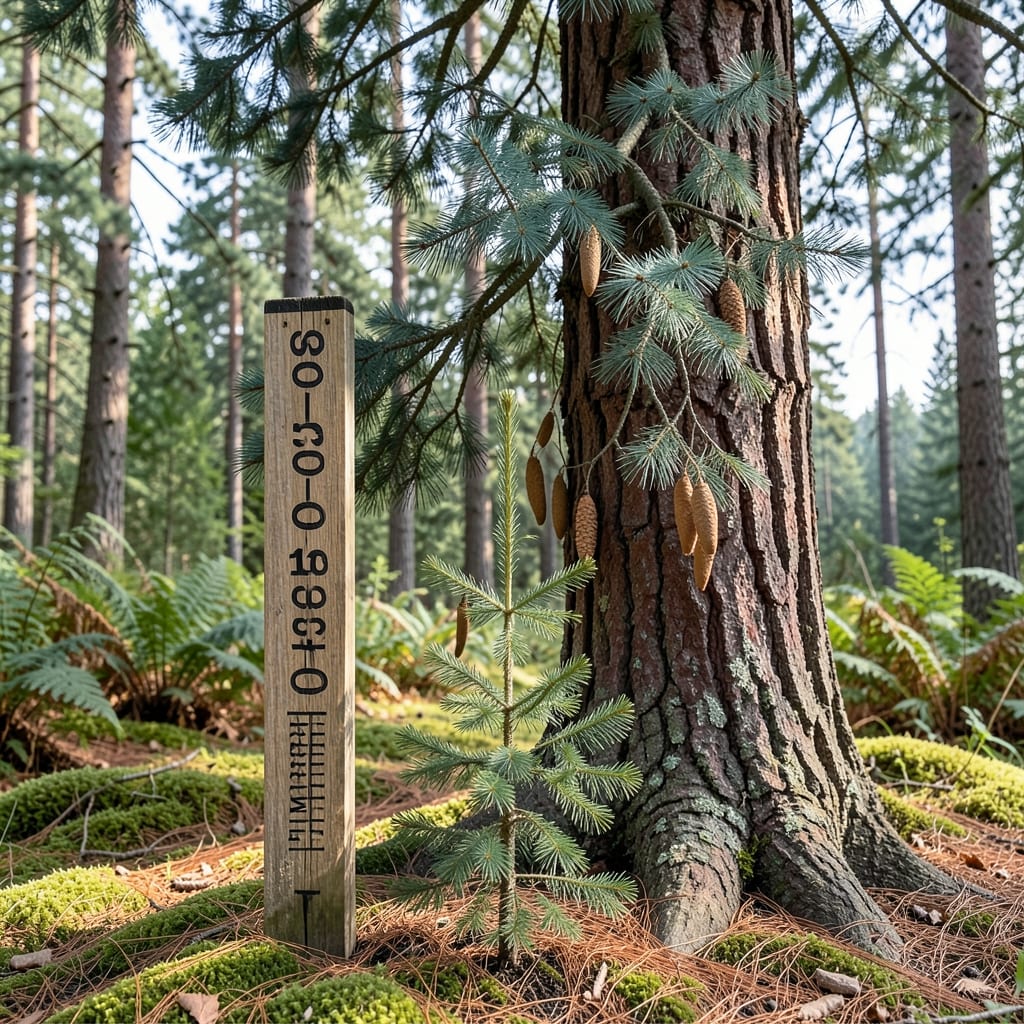
If you’ve ever wondered how tall can Douglas fir grow, the answer might leave you in awe—these coastal giants 🌲 can stretch to heights that rival skyscrapers, reaching up to 300 feet in ideal conditions. Imagine a tree taller than a 20-story building, standing proudly in your backyard or along a forest edge, its needles whispering stories of the Pacific Northwest.
But here’s the catch: not every Douglas fir will hit that record-breaking mark. Growth depends on where you live, the soil quality, and even how much rain your region gets. Coastal areas with mild winters and rich soils give these trees the perfect conditions to shoot skyward, while inland climates might cap their height at a more modest 100-150 feet. The difference between a stunted tree and a towering giant often comes down to these factors.
For gardeners dreaming of a 300-foot Douglas fir, I’ll break down what’s realistic—and what’s not. Spoiler: unless you’ve got acres of space and a climate that mimics the Pacific Northwest, your backyard tree might stay a little shorter. But don’t worry, there are ways to encourage healthy growth, even in smaller spaces. Let’s explore how to give your Douglas fir the best shot at reaching its full potential.
Whether you’re planning a landscape project or just curious about these majestic trees, understanding their growth habits is key. You’ll learn how to spot the signs of a thriving Douglas fir, what to avoid when planting, and even how to compare it to other towering conifers. Ready to dive in?

Maximum height of Douglas fir trees: record-breaking giants in the wild
The Douglas fir (Pseudotsuga menziesii) holds the title for one of North America’s tallest trees, with some specimens stretching to 300 feet or more—that’s taller than a 20-story building! The current record holder, a 326-foot specimen in Washington’s Hoh Rain Forest, stands as a testament to this species’ vertical potential. In ideal conditions, Douglas firs can grow 3-5 feet per year during their prime decades, reaching maturity between 50-100 years.
These giants thrive in the Pacific Northwest’s coastal regions, where mild winters, high humidity, and nutrient-rich soils create perfect growing conditions. Inland climates, however, often limit their height to 100-150 feet due to drier air and harsher winters. The difference between coastal and inland growth highlights how climate and soil quality directly impact a Douglas fir’s potential height.
🌲
| Growth Stage | Height Range | Time to Reach | Ideal Conditions |
|---|---|---|---|
| Seedling (Year 1) | 2-5 ft | 1 year | Moist, well-drained soil |
| Juvenile (Years 5-10) | 10-20 ft | 5-10 years | Partial shade, high humidity |
| Mature (Years 50-100) | 150-300 ft | 50-100 years | Coastal climate, deep soil |
| Record Holder | 326 ft | 100+ years | Hoh Rain Forest, WA |
While 300-foot Douglas firs are rare outside their native habitat, even smaller specimens can make a dramatic statement in landscapes. For example, a 100-foot tree in your backyard would still tower over most homes, creating a stunning focal point. The key to encouraging tall growth lies in replicating their natural conditions as closely as possible.
One fascinating fact is that Douglas firs grow faster in height than in diameter, which is why they develop that iconic tapered, conical shape. This vertical growth strategy allows them to compete for sunlight in dense forests. If you’re planting one, prioritize deep, well-draining soil and protect it from winter desiccation—a common issue in inland areas.
🌳
For comparison, the coast Douglas fir subspecies often outgrows the Rocky Mountain Douglas fir, which typically maxes out around 150 feet. This subspecies difference shows how genetics and environment work together to shape a tree’s destiny. If you’re in a region with similar climate conditions to the Pacific Northwest, your Douglas fir has a much better chance of reaching impressive heights.
But how do you know if your local climate is right for a towering Douglas fir? The answer lies in understanding three critical factors: rainfall, temperature, and soil composition. Let’s dive into what makes these giants grow—and how you can optimize conditions for your own tree.
Factors that influence Douglas fir growth height: climate, soil, and genetics
When it comes to Douglas fir height, climate plays the starring role. Coastal regions like the Pacific Northwest provide the perfect recipe: mild winters, high humidity, and abundant rainfall. These conditions allow Douglas firs to grow 3-5 feet per year during their prime decades, pushing them toward their 300-foot potential. In contrast, inland areas with drier air and colder winters often cap growth at 100-150 feet. The Rocky Mountain subspecies, for example, rarely exceeds 150 feet due to these harsher conditions.
🌧️
| Factor | Coastal Climate | Inland Climate | Impact on Height |
|---|---|---|---|
| Annual Rainfall | 60-120 inches | 10-30 inches | Supports rapid growth; prevents drought stress |
| Winter Temperatures | 30-45°F | Below 0°F | Mild winters reduce winter dieback |
| Soil Acidity (pH) | 4.5-6.0 | 5.0-7.0 | Acidic soil enhances nutrient uptake |
| Humidity Levels | 80-90% | 30-50% | High humidity reduces needle loss |
Soil composition is another game-changer. Douglas firs thrive in acidic, well-draining soils with a pH between 4.5-6.0. Sandy loam or loamy soils rich in organic matter provide the ideal foundation for rapid vertical growth. In compacted or alkaline soils, roots struggle to expand, stunting height. I’ve seen gardeners in urban areas amend their soil with peat moss or pine bark to mimic the acidic conditions of their native habitat.
🪴
Genetics also play a role, particularly when comparing coast Douglas firs to their Rocky Mountain cousins. The coastal variety is hardwired for height, while the mountain subspecies prioritizes disease resistance over vertical growth. If you’re planting a Douglas fir in a non-native region, choose a locally adapted cultivar—like 'Glauca'—which may grow slower but is better suited to your climate. For maximum height, stick to coastal subspecies if your area mimics their native conditions.
Even with perfect conditions, pruning practices can influence height. Over-pruning young trees can reduce vertical growth by limiting energy to the main trunk. Instead, focus on removing lower branches to encourage a single, straight leader—the tree’s primary growth axis. This technique helps maintain the tapered shape that defines mature Douglas firs.
🌳
For gardeners outside the Pacific Northwest, replicating these conditions can be challenging. However, with consistent moisture, acidic soil amendments, and protection from winter winds, you can still coax a 100-foot specimen from your backyard. The key is patience—these trees take decades to reach their full height, but the payoff is a living monument that will outlive generations.