
How To
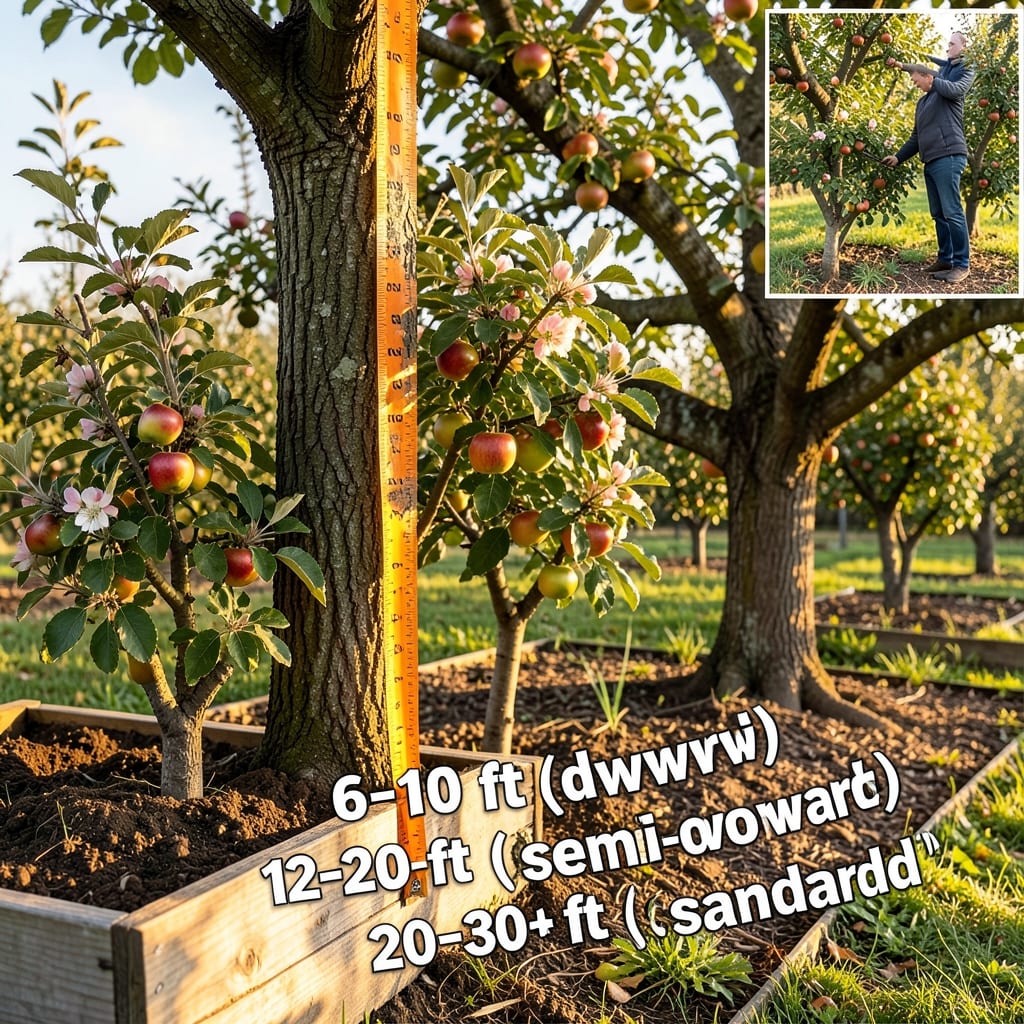
How tall can an apple tree grow? The answer might surprise you—some varieties stretch toward the sky like towering sentinels, while others stay compact enough for even the smallest backyard. If you've ever dreamed of growing your own 🍎 but worried about space, this is the key detail you need.
Picture this: a 40-foot giant shading your entire property versus a neatly pruned dwarf tree that fits perfectly in a container. The difference isn't just about height—it affects everything from your harvest size to how much time you'll spend pruning. Whether you're a city gardener with limited space or a rural homesteader with acres to spare, choosing the right apple tree size makes all the difference.
In this guide, I'll break down the exact height ranges for dwarf, semi-dwarf, and full-size apple trees, plus the surprising factors that control their growth. You'll discover which varieties thrive in tight spaces (like 'Honeycrisp' on dwarf rootstock) and which need room to reach their full potential—so you can pick the perfect match for your garden.
Ready to turn your apple-growing dreams into reality? Let's explore how to select, care for, and maximize your tree's height—without sacrificing fruit quality or space efficiency.


Apple tree height variations: dwarf to standard to giant sizes explained
Apple trees come in a stunning range of sizes, from compact dwarfs that fit in containers to towering giants reaching over 40 feet. The size you choose isn't just about aesthetics—it directly impacts your harvest yield, maintenance effort, and even which apple varieties you can grow. Let's break down the four main height categories and what makes each unique.
At the smallest end, dwarf apple trees typically mature between 6 to 12 feet tall, making them perfect for urban gardens or patios. These are usually grafted onto dwarfing rootstock like M.9 or B.9, which severely restrict root growth and thus overall height. On the opposite end, standard apple trees can soar to 20 to 30 feet, requiring spacious properties and professional pruning to manage.
Semi-dwarf trees strike a balance at 12 to 16 feet, while full-size trees can exceed 40 feet in ideal conditions. The rootstock plays the biggest role here—think of it as the tree's genetic "height controller." For example, a 'Honeycrisp' apple grafted onto M.9 rootstock will stay small, while the same variety on MM.111 rootstock will grow much taller.
One fascinating exception is columnar apple trees, which grow only 6 to 10 feet tall but produce fruit along their entire length like a vertical fence. Varieties like 'Wijcik' or 'Red River' are perfect for narrow spaces or trellises. These trees are grafted onto specialized rootstock that restricts width while encouraging height—ideal for small-space gardening.
Your choice of height also affects fruit production timing. Dwarf trees often bear fruit 1–2 years after planting, while standard trees may take 4–6 years to produce meaningful harvests. This delay is worth considering if you're eager to enjoy homegrown 'Granny Smith' or 'Fuji' apples sooner rather than later.
Don't overlook the pruning impact on height. Even dwarf trees can grow taller if not pruned properly, while aggressive pruning of standard trees can reduce their height by 30–50%. The key is understanding your tree's natural growth habit and adjusting pruning techniques accordingly. For example, open-center pruning works well for dwarf trees, while central leader pruning suits standard varieties.
When selecting a tree, consider your local climate zone. In colder regions (USDA Zones 3–5), full-size trees thrive, while warmer zones (Zones 7–9) often see better results with dwarf or semi-dwarf varieties due to their lower chilling requirements. Always check the specific variety's chilling hour needs to ensure successful fruiting.
Finally, remember that container-growing limits even dwarf trees. A 5-gallon pot might keep a dwarf tree under 8 feet, while a 15-gallon container allows closer to its full 12-foot potential. Root-bound trees grow slower and produce smaller fruit, so plan your container size carefully if you're growing in pots.
Choosing the right height isn't just about fitting your tree into your space—it's about creating the perfect conditions for healthy growth and abundant harvests. With so many options, there's truly an apple tree size for every gardener, from city balconies to sprawling rural properties. 🌳
Best apple tree sizes for your space: small yards vs. large properties
Choosing the right apple tree size depends entirely on your space. A 6-foot dwarf tree fits snugly in a container on a patio, while a 25-foot standard tree needs a full backyard—or a rural orchard. The key is matching your tree’s mature height to your property’s layout and your long-term care goals.
For urban gardens or balconies, dwarf varieties like 'Eve' or 'Patriot' stay under 8 feet and thrive in 5-gallon containers. These compact trees produce full-sized apples but require regular pruning to maintain shape. Meanwhile, semi-dwarf trees (12–18 feet) bridge the gap, offering more fruit volume for small to medium yards.
If you have ample yard space, standard or full-size trees (20–40 feet) like 'Granny Smith' or 'Fuji' deliver heavier harvests with minimal effort. However, their spreading canopies demand 12–20 feet of clearance and may require professional pruning every few years to keep them manageable.
🌱 Apple Tree Size Guide by Space
Even if you love full-size trees, you can train them to stay smaller with espalier techniques or annual pruning. For example, a 'Liberty' apple tree on a semi-dwarf rootstock might reach 15 feet, but with structured pruning, you can keep it under 10 feet while still enjoying abundant fruit.
For container gardening, prioritize dwarf or columnar varieties like 'Columnar Apple' (which grows just 8–12 feet tall but stays 3 feet wide). These are perfect for apartment balconies or small urban plots, as long as you repot every 2–3 years to accommodate root growth.
Remember: Bigger isn’t always better. A smaller tree means easier harvesting, less pruning, and fewer disease risks from crowded branches. Plus, you’ll taste your apples sooner—dwarf trees often bear fruit in 2–3 years, while standard trees can take 5–7 years.