
Trees
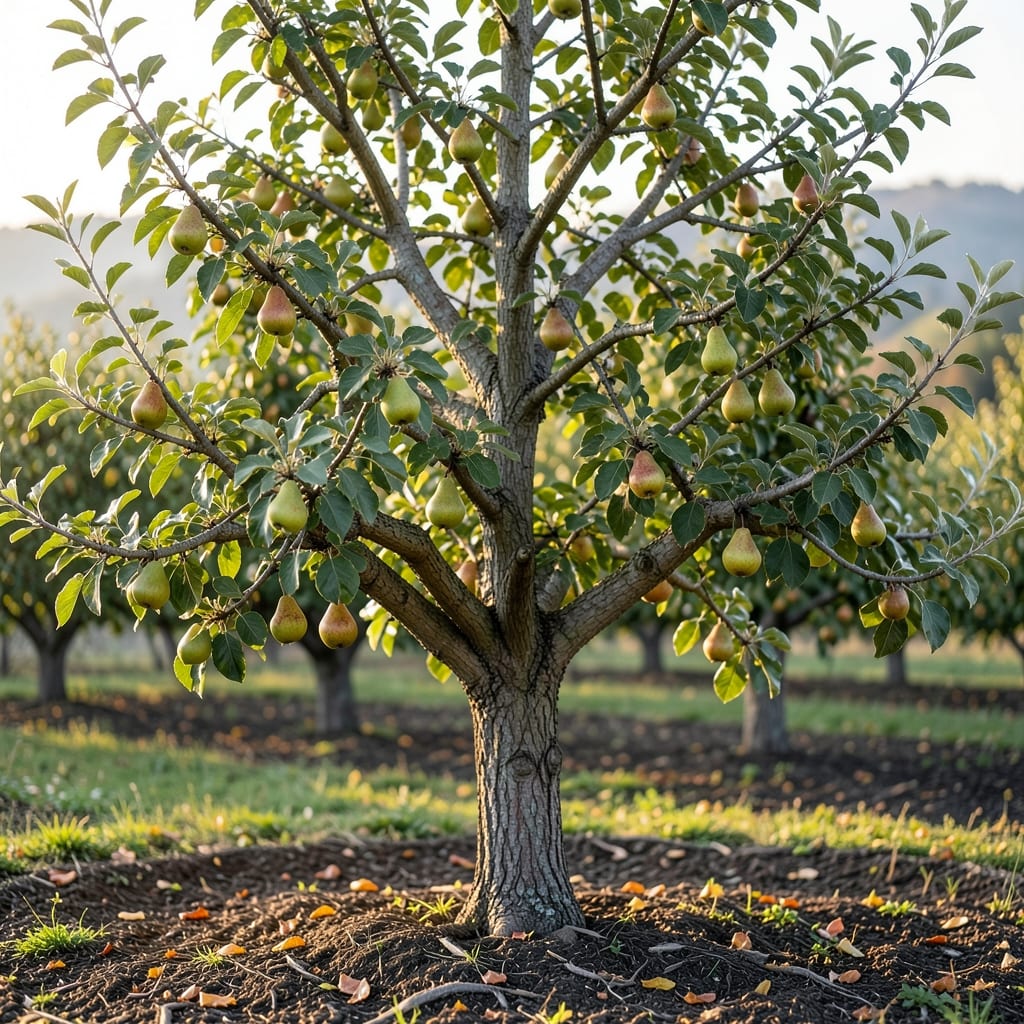
If you’ve ever wondered how tall a pear tree can grow and whether it will outgrow your space, the good news is you have more control than you think. A single pear tree can reach heights of 25 to 50 feet—taller than most two-story homes—if left unchecked, but with the right variety and pruning, you can keep it compact without sacrificing fruit.
The key lies in choosing the right type of pear tree for your garden. Dwarf varieties stay between 12 to 20 feet, while semi-dwarf trees top out around 15 to 25 feet. Even standard trees can be managed with strategic pruning to fit smaller spaces, making them perfect for urban gardens or backyards with limited room.
But how do you keep a pear tree from growing too tall? It starts with understanding its growth habits and using techniques like structural pruning, espalier training, or root restriction. These methods not only control height but also encourage healthier fruit production, so you get the best of both worlds: a manageable tree and a bountiful harvest.
Whether you’re a first-time gardener or a seasoned green thumb, this guide will walk you through everything you need to know—from selecting the right variety to mastering pruning techniques. Let’s make room for that pear tree in your life, no matter how small your space!


Natural height variations: how tall different pear tree varieties grow
Pear trees are famous for their dramatic height potential—some varieties can tower over 50 feet if left unmanaged. But don’t let that intimidate you! The good news is that you can choose from dwarf, semi-dwarf, or standard varieties, each with distinct growth patterns tailored to your space. For example, a dwarf pear tree might stay between 12 to 20 feet, while a standard tree can reach 25 to 50 feet without intervention.
Understanding these height variations is the first step to planning your garden. If you’re working with limited space, dwarf varieties like 'Hood' or 'Seckel' are excellent choices, as they mature at a manageable 12 to 15 feet. Meanwhile, semi-dwarf trees like 'Bartlett' offer a balance, typically growing 15 to 25 feet tall. These distinctions aren’t just about aesthetics—they also impact fruit production, root spread, and long-term maintenance.
Here’s what you need to know: dwarf trees grow slower and require less space, while standard trees produce larger fruit but need more room to thrive. The key is matching your tree’s mature size to your garden layout. For instance, a 6-foot-wide backyard could comfortably fit a dwarf pear tree, whereas a 20-foot-wide space might accommodate a semi-dwarf or even a pruned standard tree.
🌱 Pear Tree Varieties by Mature Height
| Variety Type | Mature Height | Best For | Growth Rate |
|---|---|---|---|
| Dwarf (e.g., 'Hood', 'Seckel') | 12–20 ft | Small gardens, containers | Slow (1–2 ft/year) |
| Semi-Dwarf (e.g., 'Bartlett', 'Anjou') | 15–25 ft | Backyards, urban spaces | Moderate (2–3 ft/year) |
| Standard (e.g., 'Bosc', 'Comice') | 25–50 ft | Large properties, orchards | Fast (3–5 ft/year) |
Note: Heights can vary based on pruning, soil quality, and climate.
Choosing the right variety isn’t just about height—it’s also about fruit production and climate suitability. For instance, 'Hood' pears are popular in cooler climates because they ripen early, while 'Bartlett' thrives in warmer regions. If you’re in USDA Zone 6a or higher, you’ll have plenty of options, but always check the specific variety’s hardiness zone to avoid disappointment.
Another critical factor is rootstock. Dwarf trees are often grafted onto semi-dwarf or standard rootstocks, which can influence their final size. For example, a 'Seckel' pear grafted onto Quince A rootstock will stay shorter than one on Ohio 29 rootstock. Always ask your nursery about rootstock details to make an informed decision.
Let’s talk about growth rates, because even the smallest trees need time to mature. A dwarf pear tree might take 3 to 5 years to bear fruit, while a standard tree could take 5 to 7 years. Patience is key—don’t expect immediate rewards, but the wait is worth it for a tree that fits your space and produces delicious fruit for decades.
If you’re still unsure about which variety to choose, consider your long-term goals. Are you looking for a tree that fits in a container on a patio? A dwarf variety is your best bet. Planning to grow a tree that can be pruned into a small orchard-style setup? A semi-dwarf might be ideal. And if you have ample space and want the largest fruit, a standard tree could be the way to go.
One final tip: always plant your pear tree in full sun—at least 6 hours of direct sunlight daily. This ensures optimal growth and fruit production, regardless of the variety. Pair that with well-draining soil and regular watering, and you’re setting your tree up for success from day one.
Now that you understand the height variations, you’re ready to pick the perfect pear tree for your garden. Next, we’ll dive into space-saving pruning techniques to keep even the tallest trees manageable—so stay tuned!
Space-saving pruning techniques to control pear tree height
Pruning isn't just about keeping your pear tree from growing too tall—it's about shaping its future. With the right techniques, you can transform a 25-foot monster into a manageable 8-foot beauty while boosting fruit production. The key is understanding when and how to prune, because cutting at the wrong time or in the wrong way can actually stimulate unwanted growth.
Start with structural pruning in late winter or early spring, before buds swell. This is when you remove dead, diseased, or crossing branches to create an open center. Aim to keep the lowest branches 4 to 6 feet off the ground—this prevents them from becoming a tripping hazard while still allowing sunlight to reach the lower trunk. For dwarf varieties, you can go even lower, around 3 to 4 feet, to make harvesting easier.
Here's my step-by-step guide to keeping your pear tree in check:
🪴 Step-by-Step Pruning Guide
- Step 1: Remove dead/diseased branches first using clean, sharp pruners
- Step 2: Thin out crowded branches to improve airflow and sunlight penetration
- Step 3: Cut back water sprouts (vertical shoots) to 1/3 their length
- Step 4: Shape the tree by heading back (cutting just above a bud) on vigorous shoots
- Step 5: For espalier training, spread branches horizontally along a trellis or fence
Pro Tip: Always make cuts at a 45-degree angle just above a bud or branch collar
For espalier training, which is perfect for small spaces, you'll want to create a flat, two-dimensional shape against a wall or fence. This technique forces the tree to grow horizontally rather than vertically, keeping it under 8 feet tall while maximizing fruit production. Start training young trees by gently bending branches and securing them with soft ties. Over time, the tree will adapt to this new growth pattern.
Seasonal timing matters too. Summer pruning should be minimal—just remove sucker growth and water sprouts to maintain shape. Avoid heavy pruning in summer as it can stimulate new growth that won't harden off before winter. Winter pruning, done in dormant season, is when you can do the most structural work without stressing the tree.
Don't forget about root pruning if you're growing in containers or limited spaces. Carefully trim circumferential roots (roots that wrap around the trunk) to prevent girdling and encourage a shallower, more compact root system. This technique works wonders for container-grown pear trees, keeping them from becoming top-heavy and unstable.
With consistent pruning, you can keep even standard pear trees under 12 feet tall in most backyards. The secret is patience and regular maintenance—don't expect miracles overnight, but with each pruning session, you'll see your tree become more manageable and productive. Plus, a well-pruned tree is easier to harvest and less prone to disease.
Ready to put these techniques into action? Grab your pruners and get started—your future 8-foot-tall pear tree is waiting!