
Size
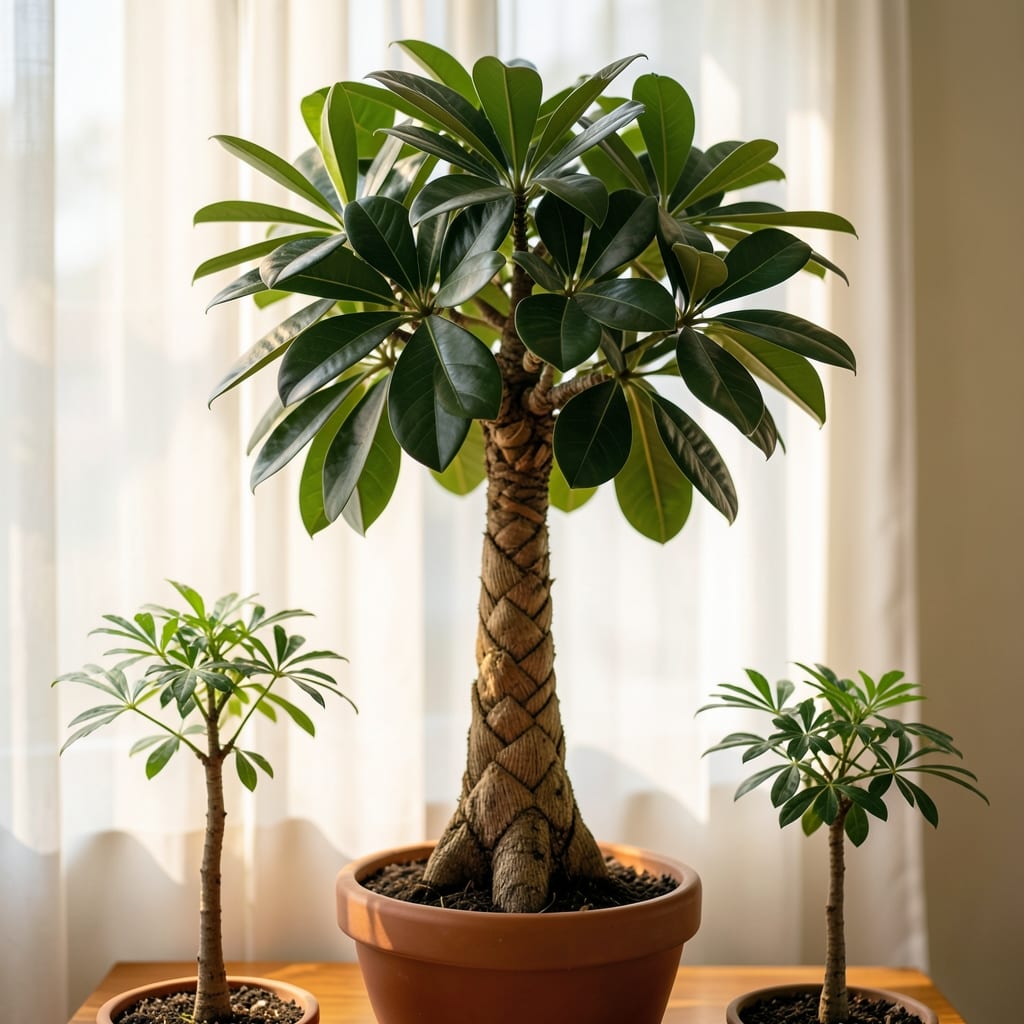
Wondering how tall can a money tree grow indoors—and whether it’ll one day tower over your living room like a jungle giant? The answer depends on more than just luck. A 💴 Money Tree (Pachira aquatica) can stretch anywhere from 3 to 10 feet indoors, but its final height is shaped by variety, care, and a few strategic tricks that most plant owners overlook.
If you’re dreaming of a ceiling-high statement plant, you’re not alone—many growers assume their money tree will naturally reach its full potential. But without the right conditions, even the hardiest varieties can stay stubbornly short. The key lies in understanding your plant’s growth habits and how simple adjustments—like light exposure or pruning—can either encourage sky-high growth or keep it compact for smaller spaces.
Let’s break down what influences your money tree’s height, from the standard varieties that grow tallest to the dwarf types perfect for apartments. You’ll also discover how to train your plant for maximum height (or rein it in) using proven care techniques that work—no guesswork required.
Ready to turn your money tree into the centerpiece of your home? Whether you’re working with a 3-foot dwarf or a 10-foot giant-in-the-making, these insights will help you grow the perfect size for your space—without sacrificing health or style.

Money tree height limits by variety: how tall each type can grow indoors
Your money tree’s indoor height potential starts with its variety. The standard Pachira aquatica can reach an impressive 6 to 10 feet indoors with ideal care, while braided varieties often max out at 5 to 8 feet due to their slower growth rate. Even the dwarf types—like the popular ‘Money Tree Mini’—can still surprise you by growing 3 to 6 feet if given enough space and nutrients.
Choosing the right variety isn’t just about aesthetics—it’s about matching your space. A 10-foot money tree will need a ceiling-height pot and regular pruning to prevent it from becoming top-heavy. Meanwhile, a 3-foot dwarf is perfect for small apartments or office desks. The key is understanding how each type grows and what conditions encourage (or limit) its height.
Here’s how the most common money tree varieties compare in terms of indoor height:
| Variety | Indoor Height Range | Growth Rate | Care Notes |
|---|---|---|---|
| Standard Pachira aquatica | 6–10 ft | Moderate (1–2 ft/year) | Needs large pots; prune to encourage bushiness |
| Braided Money Tree | 5–8 ft | Slow (6–12 in/year) | Requires support for braiding; less vigorous |
| Dwarf Varieties (e.g., ‘Money Tree Mini’) | 3–6 ft | Slow to moderate | Ideal for small spaces; prune early to control height |
| Variegated Money Tree | 4–7 ft | Moderate (similar to standard) | Needs bright indirect light to maintain variegation |
If you’re eyeing a 10-foot money tree, the standard variety is your best bet—but be prepared for regular pruning to maintain its shape. Braided types, while stunning, grow slower, so they’re better suited for those who want a 5-foot statement plant without the upkeep. Dwarf varieties are the low-maintenance champions for small spaces, but they can still stretch taller than expected if given the right care.
One common misconception is that money trees grow like bonsai trees—compact and controlled by default. In reality, they’re fast-growing shrubs that need guidance to stay small. Without proper care, even a dwarf variety can reach 6 feet in just a few years. The secret? Pot size and pruning frequency play huge roles in controlling height.
For example, keeping your money tree in a smaller pot (even if it’s not root-bound) can slow its vertical growth by 30–50%. This is because the plant focuses energy on filling the pot rather than shooting upward. Conversely, a large pot with fresh soil encourages rapid growth—sometimes too much for indoor spaces. Understanding this balance is the first step to growing the perfect-sized money tree for your home.
Let’s say you’ve got a 3-foot dwarf money tree that’s suddenly shooting up toward your ceiling. Don’t panic—this is often a sign it’s outgrown its pot or getting too much fertilizer. The fix? Repot into a slightly larger container and adjust your feeding schedule. If left unchecked, that same plant could easily double in height within a year.
Another factor that surprises new growers is how light exposure affects height. Money trees grown in low-light conditions tend to stretch toward any available light, creating leggy, weak stems that can’t support their own weight. This is why many indoor money trees max out at 4–5 feet even when their variety could grow taller. The solution? Place your plant near a bright, indirect light source (like an east or north-facing window) to encourage compact, sturdy growth.
Finally, don’t underestimate the power of seasonal growth cycles. Money trees grow fastest in spring and summer, when they can add up to 2 feet in a single season with
5 Proven care tricks to maximize (or control) your money tree’s height
If you’re aiming for a 10-foot money tree or just want to keep your plant at a manageable 3 feet, the right care tricks make all the difference. One of the biggest mistakes growers make is assuming their money tree will naturally stay small—without strategic pruning or light adjustments, even dwarf varieties can shoot up unexpectedly. The good news? With a few targeted techniques, you can either encourage rapid vertical growth or keep your plant compact for years.
First, let’s tackle the light exposure hack that most growers overlook. Money trees thrive in bright, indirect light, but too little light triggers etiolation—where stems stretch painfully thin as they reach for sunlight. To maximize height, place your plant near an east or north-facing window where it gets 4–6 hours of indirect light daily. If your space is dim, supplement with a grow light for 6–8 hours a day. This ensures your money tree grows taller and stronger rather than leggy and weak.
Here are 5 proven care tricks to control or maximize your money tree’s height:
-
1. Prune for Height
To encourage upward growth, pinch back the top set of leaves when your money tree reaches 12–18 inches tall. This triggers lateral buds to grow, creating a fuller base while allowing the main stem to elongate. For taller growth, prune just above a leaf node to redirect energy upward. -
2. Use the Right Pot Size
A smaller pot (even if not root-bound) slows vertical growth by 30–50%, while a large pot with fresh soil fuels rapid height gains. For compact growth, keep your money tree in a pot that’s only 2–3 inches wider than its root ball. To encourage height, upgrade to a 12–14 inch pot every 1–2 years. -
3. Fertilize Strategically
Over-fertilizing leads to soft, weak stems that can’t support height. Use a balanced 10-10-10 fertilizer every 4–6 weeks in spring and summer, but skip feeding in fall and winter. For taller growth, add a slow-release fertilizer to the soil when repotting. -
4. Support for Stability
Money trees over 4 feet tall need support to avoid toppling. Use a bamboo stake or trellis tied gently to the main stem. For braided varieties, weave the stems around the support as they grow to maintain the aesthetic braid while keeping the plant upright. -
5. Adjust Humidity
Low humidity causes crispy leaf edges and stunted growth. Group your money tree with other plants or use a pebble tray with water to maintain 40–60% humidity. Higher humidity encourages faster, healthier growth, especially in dry winter months when indoor air is parched.
Let’s say you’ve got a 3-foot money tree that’s suddenly growing too fast—maybe it’s time to prune the top to slow its upward momentum. Conversely, if your plant is stunted at 2 feet after a year, it’s likely root-bound or not getting enough light. The solution? Repot into a slightly larger container and move it to a brighter spot. With these tricks, you can train your money tree to grow exactly how you want—whether that’s a ceiling-high giant or a compact desk companion.
One final tip: Rotate your money tree every few weeks to ensure even growth. Plants lean toward light sources, so rotating prevents lopsided height and keeps your tree growing straight and sturdy. Whether you’re chasing a 10-foot tower or a 3-foot shrub, these care tricks will help you achieve the perfect height for your space.
Ready to put these tricks into action? Start with light and pruning—these two factors alone can double your money tree’s height potential in just a year. 🌱