
Trees
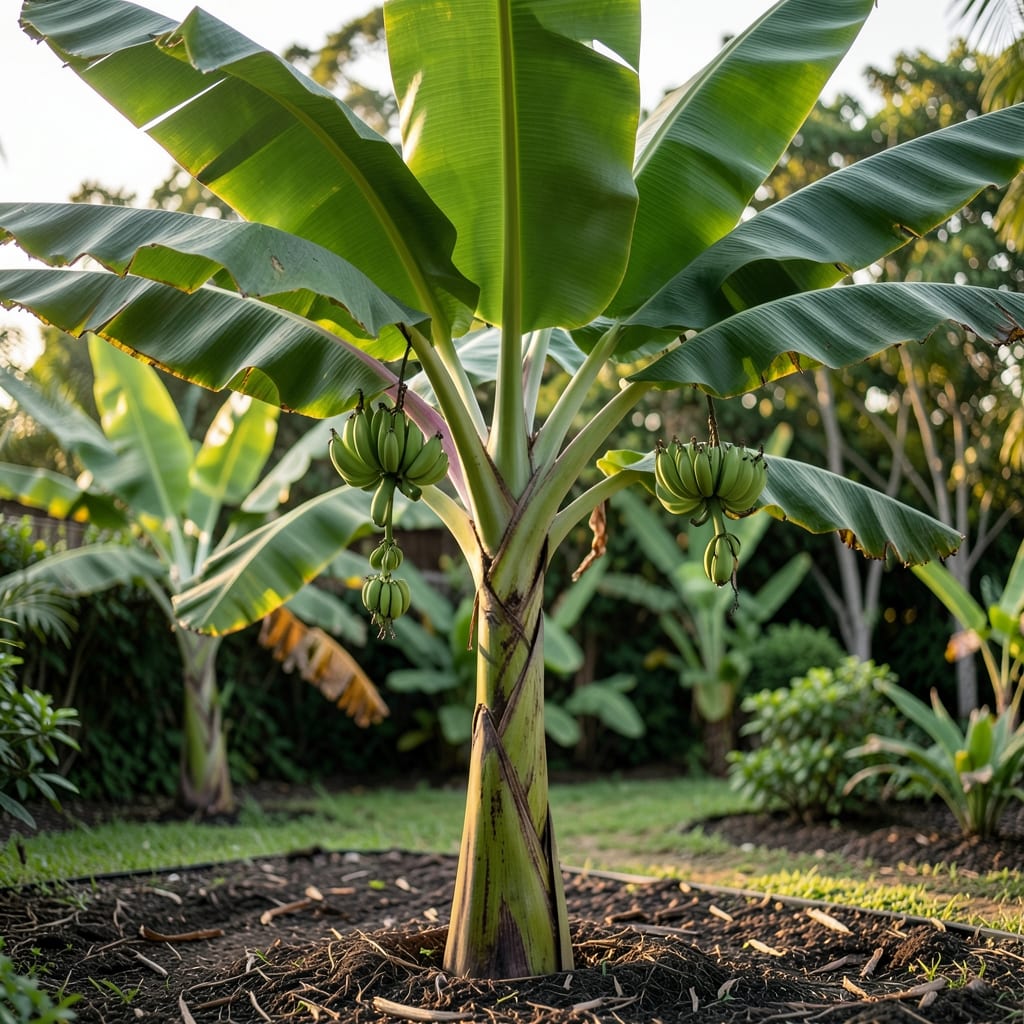
If you've ever wondered how tall banana tree grow—whether you're dreaming of a towering tropical giant or a compact patio plant—you're in for a surprise. The answer isn't one-size-fits-all; some varieties barely reach your shoulders, while others stretch taller than a two-story house. 🍌 Whether you're a backyard gardener or a container enthusiast, understanding these differences is the key to choosing the perfect plant for your space.
Banana trees fall into three main height categories: dwarf varieties that stay under 10 feet, medium-height types reaching 10-20 feet, and towering giants that can soar past 30 feet. But here's the twist: their growth isn't just about genetics—climate, care, and even your local frost zone play a huge role in how tall (or short) your banana tree becomes.
What most people don't realize is that banana trees don't grow indefinitely in the same way other plants do. Their height is tied to their life cycle, with dramatic growth spurts during specific stages. In this guide, I'll break down exactly how these tropical beauties reach their mature heights—and how you can influence their growth to fit your space and goals.
Ready to discover which banana tree varieties will thrive in your garden or balcony? Let's explore the fascinating world of banana tree heights, from the smallest dwarf cultivars to the sky-scraping giants, and the secrets to nurturing them to their full potential.

Banana tree height by variety: from dwarf to giant cultivars
If you're dreaming of a banana tree in your yard, the first question is almost always: how tall will it grow? The answer varies wildly—some varieties stay small enough for containers, while others become towering tropical giants. The Dwarf Cavendish, for example, tops out at just 8-12 feet, making it perfect for patios, while the Gros Michel can reach 25-30 feet, rivaling palm trees in height. Choosing the right variety isn't just about aesthetics; it also affects fruit production, care needs, and even your home's structural compatibility.
Banana trees aren't true trees—they're giant herbaceous plants with no woody stems. This means they grow rapidly in height during their vegetative stage (the first 9-12 months) before flowering. Some varieties, like the 'Ice Cream' banana, grow 15-20 feet tall but produce edible fruit along the stem, while others like the 'Red Dacca' focus on height (20+ feet) with dramatic red fruits. Your climate and care will influence how close your plant gets to its maximum potential height.
Here’s the key takeaway: height isn’t fixed—it’s a range. A 'Lady Finger' banana (12-18 feet) might stay shorter in a container garden than in the ground, while a 'Musa acuminata' hybrid could stretch taller with ideal conditions. Let’s break down the most popular varieties by height category so you can pick the perfect fit for your space and goals.
Notice how dwarf varieties like the Dwarf Cavendish are ideal for small spaces or container gardening, while giant types need room to stretch. The 'Ice Cream' banana is a fan favorite because you can harvest edible fruit along its stem before it flowers, adding a fun twist to its 15-20 foot height. If you're in a USDA Zone 10-12, you can grow almost any variety outdoors year-round, but in cooler zones, dwarf or semi-dwarf types are your best bet for potted growing.
One common
Banana tree growth stages: how height develops over time
Understanding how banana trees grow in height is all about recognizing their distinct growth stages. Unlike many plants, banana trees follow a predictable cycle where each stage dramatically impacts their final height. For example, a Dwarf Cavendish may only reach 10 feet, while a Gros Michel can soar to 30 feet—all because of these stages. Let’s break down how height unfolds from seedling to fruiting.
The first stage is the seedling phase, where your banana tree starts as a tiny shoot. During this time, growth is slow but foundational, with the plant focusing on developing a sturdy pseudostem. In optimal conditions, you’ll see 3-6 feet of growth in the first year, but this varies wildly based on variety and care. This is also when choosing the right container size matters—too small, and you’ll stunt future height.
- Height gain: 3-6 ft (potted) or 6-10 ft (in-ground)
- Focus: Root and pseudostem development
- Care tip: Keep soil moist and fertilize lightly with balanced NPK (6-6-6)
- Height gain: 10-20 ft (rapid vertical growth)
- Focus: Leaf production and stem elongation
- Care tip: Increase fertilizer to 10-10-10 and ensure full sun exposure
- Height gain: Minimal (focus shifts to flower spike)
- Focus: Development of the inflorescence (flower cluster)
- Care tip: Reduce water slightly to encourage flowering
- Height gain: None (plant matures)
- Focus: Fruit production and eventual decline
- Care tip: Harvest fruit promptly to avoid overburdening the plant
The vegetative stage is where the magic happens for height. This is when your banana tree enters its most rapid growth phase, shooting up 10-20 feet in just a year if conditions are ideal. During this time, you’ll notice large, dramatic leaf unfurling—each new leaf can add several feet to the plant’s height. This stage is also when you’ll see the biggest differences between dwarf and giant varieties, as their genetic potential kicks in.
Once your banana tree reaches the flowering stage, height growth slows dramatically. Instead of vertical expansion, energy shifts to developing the flower spike, which can weigh up to 100 pounds in large varieties. This is a critical moment—if your plant isn’t getting enough nutrients or support, the spike may break under its own weight, halting future growth entirely. Prune dead leaves to redirect energy to the flower.
The final stage, fruiting, is where your banana tree reaches its mature height. After producing fruit, the plant’s energy depletes, and it begins to decline. This is a natural part of the cycle—banana trees are monocarpic, meaning they produce fruit once before dying. However, they often send up suckers (pups) from the base, which can be transplanted to start the cycle over again. These suckers will grow into new trees, repeating the height progression based on their variety.
Here’s the key takeaway: height is determined by variety and care during the vegetative stage. If you’re growing a dwarf variety like ‘Dwarf Red’, you’ll never see it exceed 10 feet, but a ‘Grand Nain’ will keep growing until it hits 20-25 feet. Pay attention to these stages, and you’ll know exactly how tall your banana tree will become—and when to expect its stunning tropical height. 🌳