
Plants
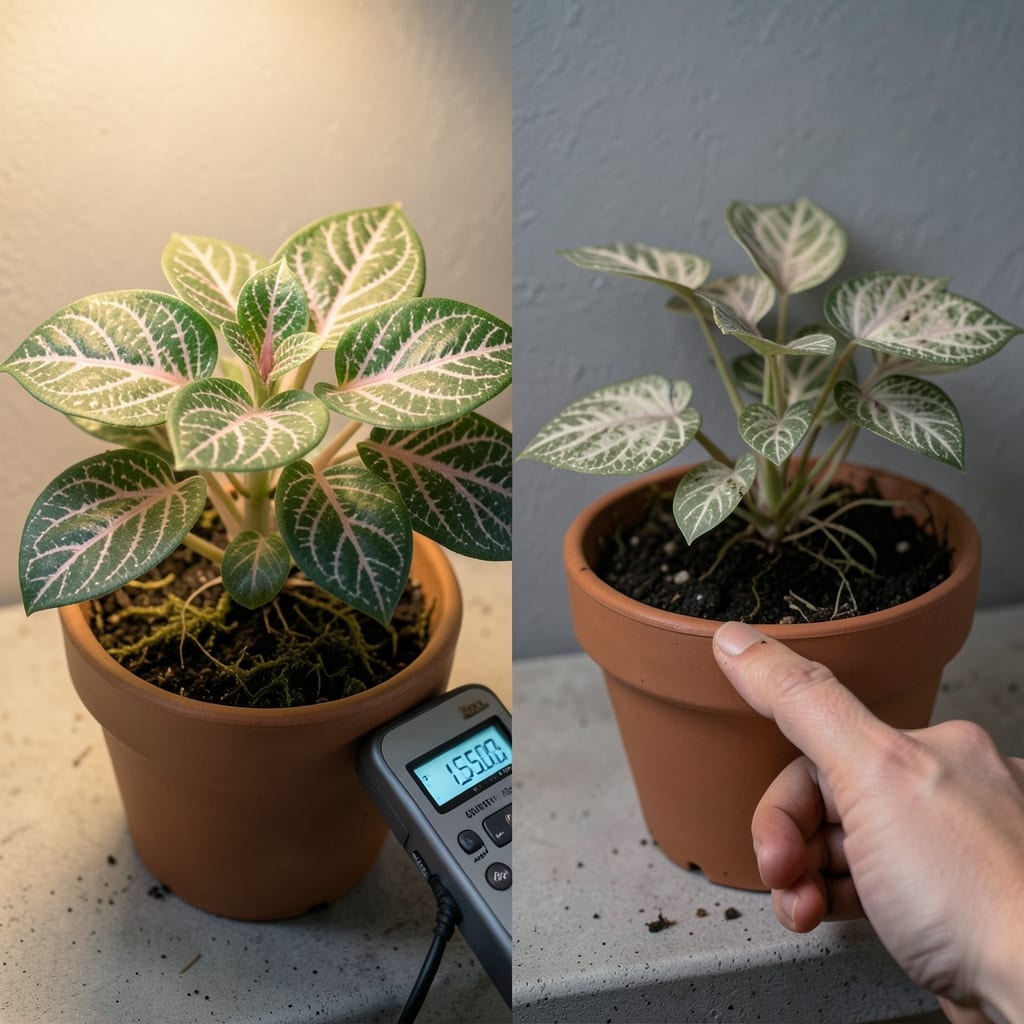
Ideal light requirements for nerve plant growth: medium to bright indirect sunlight explained
Your nerve plant (Fittonia) thrives in medium to bright indirect sunlight, mimicking its natural tropical habitat. This delicate plant needs 4-6 hours of filtered light daily to maintain its stunning veined foliage patterns. Too little light dulls its colors, while too much causes leaf burn and crispy edges.
Think of it like dappled forest light—bright but never harsh. South-facing windows are risky unless you use sheer curtains to diffuse intensity. North-facing windows provide gentle, consistent light, perfect for maintaining those vibrant pink, white, or purple veins.
Here's how light intensity affects your plant:
| Light Level | Characteristics | Effect on Nerve Plant |
|---|---|---|
| Low Light (<30%) | North-facing windows, shaded rooms | Leggy growth, pale veins, weak stems |
| Medium Light (30-50%) | East/west windows, 2-3 feet from south window | Healthy growth, vibrant colors, compact size |
| Bright Indirect (50-70%) | Sheer curtain-filtered south window | Optimal foliage intensity, fastest growth |
| Direct Sun (>70%) | Unfiltered south/west sun | Brown leaf tips, crispy edges, bleached veins |
Watch for these light stress signs—they're your plant's way of communicating! Yellowing leaves often mean too much direct sun, while stretched-out stems signal insufficient light. The key is finding that sweet spot where your nerve plant's veins remain bold and colorful.
Pro tip: Rotate your plant quarter-turn weekly to ensure even light exposure. This prevents lopsided growth and helps maintain those show-stopping patterns. Your nerve plant will reward you with lush, vibrant foliage that makes any space pop!
For maximum color intensity, place your plant near an east-facing window during morning hours when sunlight is naturally softer. This mimics the dappled light conditions of its South American rainforest origins.
Remember that artificial lighting works too! A 12-inch grow light placed 12-18 inches above your plant provides consistent bright indirect light when natural options are limited. Just ensure it's on for 12-14 hours daily to match daylight cycles.
If you notice bleached or pale veins, move your plant slightly closer to the light source. Conversely, if you see brown crispy edges, it's time to create more shade with a light-colored curtain or sheer fabric.
Your nerve plant's foliage patterns are its most striking feature, and proper lighting is what makes them truly shine. With the right balance, you'll enjoy that tropical beauty year-round, even in less-than-ideal lighting conditions.
How to test and adjust light conditions for your nerve plant at home
Assessing your nerve plant’s light exposure is the first step to creating the perfect growing environment. Start by observing its current location—is it near a window, or tucked in a corner? East-facing windows provide the ideal bright indirect light, while north-facing windows offer gentler conditions. Use a simple shadow test: if your plant’s leaves cast a sharp shadow, it’s getting too much direct sun.
Place your nerve plant about 2-3 feet from an east-facing window for optimal results. If your home lacks natural light, consider a grow light with a 12-hour daily cycle to mimic natural conditions. Fluorescent or LED grow lights work best for delicate foliage like Fittonia’s.
South-facing windows can be tricky—they offer intense light that may scorch your nerve plant’s delicate leaves. If you must place it there, use a sheer curtain to filter the light. Alternatively, move it 6-8 feet away from the window to reduce direct exposure while maintaining brightness.
For homes with limited natural light, LED grow lights are a game-changer. Position them 6-12 inches above your plant and keep them on for 12-14 hours daily. This mimics the tropical conditions Fittonia thrives in. Avoid placing grow lights too close, as this can cause leaf burn or stunted growth.
If your nerve plant starts showing signs of light stress—like yellowing leaves or brown tips—adjust its position immediately. A west-facing window can work, but avoid placing it in the path of late-afternoon sun, which is the harshest. Instead, opt for a spot where it receives dappled sunlight or filtered light.
Remember, consistency is key. Nerve plants are sensitive to sudden changes in light, so introduce adjustments gradually. If you notice your plant’s pink or white veins fading, it’s a clear sign it needs more light. With the right setup, your Fittonia will reward you with bold, vibrant foliage that’s the envy of every plant lover! 🌿✨