
Light Requirements
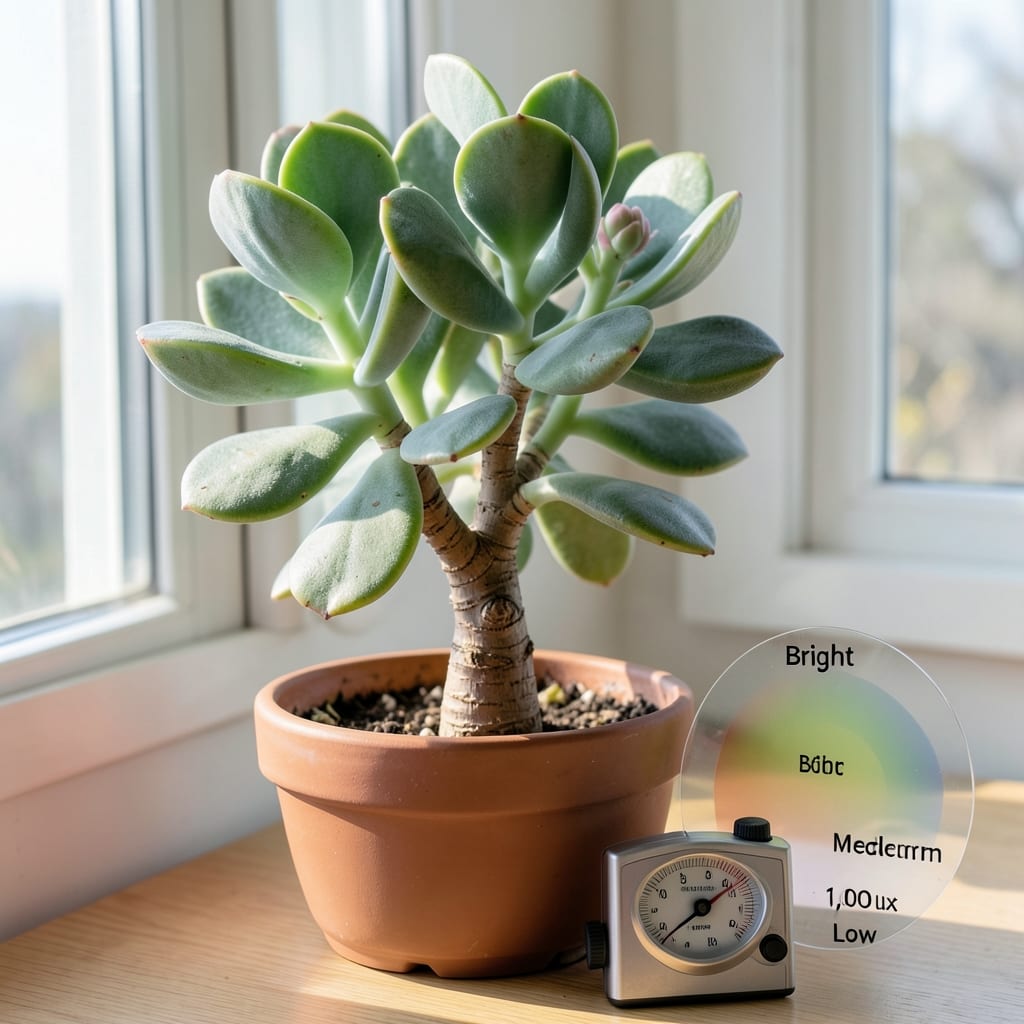
If your Jade Plant 🌿 is stretching toward the light like a sleepy cat reaching for the sun, you’re not alone—how much light does a Jade Plant require is the #1 question that separates thriving succulents from sad, leggy ones.
Jade Plants are sun-worshippers, but they’re not fans of scorching midday rays. The sweet spot? 4 to 6 hours of bright, indirect light daily, mimicking their natural habitat in South Africa’s rocky cliffs. Too little, and they’ll stretch painfully; too much, and those plump leaves might crisp like overcooked bacon.
Don’t stress if your home lacks natural light—we’ll cover artificial solutions too. Whether you’re dealing with a gloomy apartment or a sun-drenched patio, I’ll show you how to spot the signs of light trouble and adjust care so your Jade Plant stays healthy, compact, and happy year-round.
Ready to fix those stretched stems and bring back that lush, bushy growth? Let’s dive into the exact lighting setup your Jade Plant craves—no guesswork, just results.

Jade Plant light requirements: ideal hours and sunlight types for growth
Your Jade Plant (Crassula ovata) needs 4 to 6 hours of bright, indirect light daily to thrive. This succulent mimics its South African desert habitat by thriving in morning sun with afternoon shade, avoiding the harsh midday rays that can scorch its leaves. Think of it as a sunbathing succulent that prefers a gentle glow over intense heat.
In nature, Jade Plants grow on rocky cliffs where sunlight filters through, creating a dappled light effect. Replicating this at home means placing your plant near an east- or west-facing window, where it gets soft, diffused sunlight for most of the day. South-facing windows work too, but you’ll need to move it back 3 feet to prevent leaf burn.
The ideal light spectrum for Jade Plants falls between 5,000 to 10,000 lux—about the brightness of a cloudy day outside. If your home lacks natural light, don’t panic. We’ll cover artificial grow lights later, but first, let’s break down the exact light needs in a way that’s easy to apply.
| Light Condition | Daily Hours | Best Placement | Leaf Health |
|---|---|---|---|
| Bright Indirect Light | 4–6 hours | East/west window, 1–3 ft away | Thick, glossy, green |
| Partial Sun | 2–4 hours direct sun | South window, 3+ ft back | Slight red tint, firm leaves |
| Low Light | <2 hours | North window or room corner | Leggy, pale, stretched |
| Full Sun | >6 hours direct | Outdoor summer (shade cloth) | Brown edges, crispy leaves |
Seasonal changes dramatically affect your Jade Plant’s light needs. In summer, when the sun is intense, reduce direct sunlight to 2–3 hours by moving it away from windows or using a sheer curtain. In winter, when days are shorter, supplement with a grow light for 12–14 hours total to prevent dormancy.
Pro tip: Rotate your Jade Plant quarter-turn every 2 weeks to ensure even growth. Succulents grow toward the light, so one side can become lopsided or stretched if left in the same spot. This simple habit keeps your plant compact and symmetrical.
If you’re unsure whether your space meets the 4–6 hour bright light requirement, try this test: Hold your hand near the plant. If you can’t read a book comfortably, the light is too dim. If the leaves feel warm to the touch, it’s too much direct sun. Adjust placement until you find that sweet spot.
Outdoor growers can place Jade Plants in partial shade gardens or rocky, well-draining areas where they mimic their natural habitat. Just remember: morning sun is safest, while afternoon sun can cause sunburn on tender new growth.
Now that you know the ideal light conditions, let’s tackle the next challenge: spotting when your Jade Plant isn’t getting enough—or too much—light. We’ll cover the tell-tale signs and how to fix them next.
Jade Plant light requirements: ideal hours and sunlight types for growth
Jade Plants (Crassula ovata) are sun-loving succulents, but they’re not fans of intense midday heat. In their native South African habitats, they bask in bright, dappled sunlight—think rocky cliffs where light filters through. Replicating this at home means 4 to 6 hours of bright, indirect light daily, with a tolerance for 2–3 hours of morning direct sun if your climate isn’t scorching.
The key is balance: too little light leads to leggy, stretched growth (a sign of "etiolation"), while too much causes leaf scorch or yellowing. Think of it like Goldilocks—not too dim, not too harsh, but just right. For indoor growers, this often means positioning your plant 1–3 feet from an east- or west-facing window, where sunlight is gentler than south-facing exposures.
🌱 Pro Tip: If your Jade Plant starts leaning toward the light, it’s begging for more exposure. Rotate it quarter-turns weekly to encourage even growth and prevent lopsided stems.
| Light Requirement | Ideal Conditions | Seasonal Adjustments |
|---|---|---|
| Daily Light Hours | 4–6 hours of bright indirect light | Winter: Reduce to 3–4 hours (shorter days) |
| Direct Sun Tolerance | 2–3 hours max (morning sun only) | Summer: Filter light with sheer curtains if leaves look pale |
| Best Window Placement | East or west-facing (avoid south) | Outdoor: Partial shade in peak summer heat |
| Artificial Light Backup | LED grow lights (6–8 inches above plant) | Winter: 12–14 hours/day to compensate for short days |
Seasonal shifts demand flexibility. In summer, when sunlight is intense, move your Jade Plant further from the window or use a sheer curtain to diffuse harsh rays. Conversely, winter’s shorter days mean you might need to supplement with grow lights (more on this in Section 3) to maintain those 4–6 hours of light. Even a basic LED bulb (like a 6500K daylight spectrum) can work—just keep it 6–12 inches above the plant for 6–8 hours daily.
Outdoor Jade Plants thrive in partial sun—morning sun + afternoon shade is ideal. If you’re growing yours outside in zones 9–11, protect it from afternoon heat (1 PM–4 PM) to prevent sunburn. A lightweight shade cloth (30–50% coverage) works wonders during peak summer months.
💡 Remember: A happy Jade Plant has thick, glossy leaves and compact growth. If yours looks stretched or pale, it’s time to tweak its light setup—whether that means moving it closer to a window or adding a grow light. Next, we’ll decode the tell-tale signs your plant is crying out for light (or too much of it).