
Companion Plants
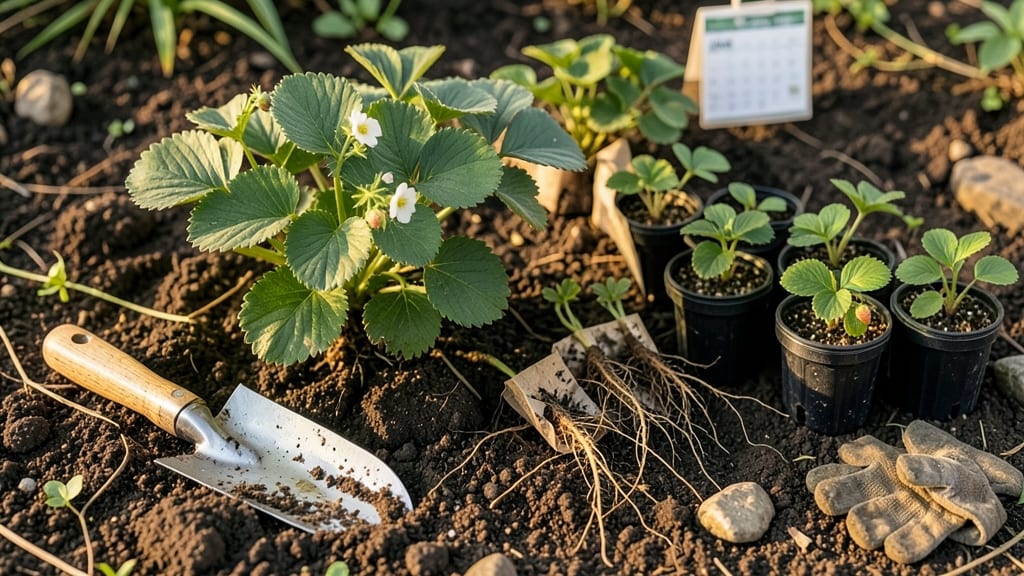
Knowing when to plant strawberries in Zone 6 can make the difference between a bountiful harvest and wasted effort. With just a few weeks of perfect timing, you'll go from bare soil to juicy 🍓 berries ready for picking by summer.
Zone 6 gardeners face unique challenges - late frosts can still linger into April, while summer heat arrives early. The key is planting at the right moment when soil temperatures reach 40°F+ and frost risk drops below 10%.
I'll show you exactly which weeks work best for both spring and fall plantings.
Whether you're growing June-bearing varieties for that one big harvest or everbearing types for extended production, timing matters. We'll cover how to adjust for your specific microclimate, whether you're in the cooler 6a subzone or warmer 6b areas.
Get ready to transform your garden into a strawberry paradise with these precise planting windows that guarantee zero-frost risk harvests. Let's dive into the exact weeks that work for your Zone 6 climate.
Zone 6 strawberry planting timeline: exact weeks by variety type
Timing your strawberry planting in Zone 6 is all about avoiding late frosts while giving plants enough time to establish roots before summer heat. The last average frost date in most of Zone 6 falls around April 15, but microclimates can shift this by 1-2 weeks.
For June-bearing varieties, aim for planting in early April—this ensures fruit ripens just as summer arrives.
Everbearing and day-neutral varieties are more flexible, tolerating late spring plantings into early May. However, if you're planting in fall, focus on August 1-15 to allow roots to establish before winter dormancy. Fall-planted berries often produce a small harvest the following spring and a full crop the next summer.
Soil temperature is critical—strawberries need 45°F+ soil to germinate. Use a soil thermometer to confirm readiness, especially in cooler Zone 6a areas. If temperatures linger below 45°F, wait until mid-April or use row covers for protection.
| Variety Type | Best Planting Window | Soil Temp Requirement | Harvest Time | Zone 6 Notes |
|---|---|---|---|---|
| June-Bearing | Early April (Zone 6a) / Late March (Zone 6b) | 45°F+ | June-July | Plant 4-6 weeks before last frost; mulch heavily to protect roots. |
| Everbearing | Early April or Early May | 45°F+ | June-September (two harvests) | More frost-tolerant; can handle late spring plantings. |
| Day-Neutral | Early April or August 1-15 | 45°F+ | June-October (continuous) | Ideal for fall planting; produces fruit all season. |
For Zone 6a (colder microclimates), delay planting until mid-April to account for later frosts. Check your local USDA frost map or use a frost calendar for your specific county—some areas like Chicago or Pittsburgh may need to wait until April 22 or later.
If you're planting bare-root strawberries, soak roots in water for 1-2 hours before transplanting to revive them. This is especially important for fall plantings, where roots need time to establish before winter. Use well-draining soil mixed with compost to give plants a strong start.
Pro tip: Mark your planting dates on a garden calendar and note the number of days to harvest (typically 60-70 days for June-bearing). This helps you plan for staggered plantings to extend your harvest window.
For example, plant half your June-bearing strawberries in early April and the other half in mid-April for a 2-week harvest extension.
Mulching with straw or pine needles after planting helps regulate soil temperature and retain moisture. In Zone 6, mulch also protects shallow roots from freeze-thaw cycles in early spring. Apply 2-3 inches of mulch, keeping it 2 inches away from plant crowns to prevent rot.
Remember, everbearing and day-neutral varieties can handle late spring plantings better than June-bearing types. If you miss the ideal window, consider container growing—pots can be moved to a protected location if frost threatens. Just ensure containers have drainage holes to prevent root rot.
Finally, avoid planting strawberries in heavy clay soil or low-lying areas where cold air pools. Instead, choose a slightly elevated, sunny spot with 6+ hours of sunlight daily. This simple adjustment can mean the difference between a thriving patch and a failed crop.
How to adjust planting for early vs. late harvests in Zone 6
Zone 6 gardeners can stretch their strawberry harvest season by strategically timing plantings—whether you want berries in early June or late August. The key lies in understanding how variety types and microclimates interact with your last frost date.
For example, planting everbearing varieties in late July can yield a small fall crop, while June-bearing types planted in early April give the longest summer harvest.
Your local frost dates (not just the USDA average) dictate success. In Zone 6a, the last frost typically hits April 15, but some years it lingers until May 1. Use a frost calendar from your local Cooperative Extension office to fine-tune timing.
For Zone 6b, where last frosts average April 1, you can plant 2-3 weeks earlier than 6a gardeners without risk.
Here’s how to adjust for early vs. late harvests using simple techniques that work in my Zone 6 garden every year:
- Plant June-bearing varieties in early April (as soon as soil reaches 40°F).
- Use black plastic mulch to warm soil 2-3 weeks earlier than bare ground.
- Choose day-neutral varieties like 'Albion' for continuous harvests through summer.
- Plant everbearing varieties (e.g., 'Ozark Beauty') in late July for a small fall crop.
- Use row covers after planting to protect from early frosts in September.
- Select cold-hardy varieties like 'Seascape' that tolerate light frosts on mature fruit.
Staggered planting is my secret weapon for extended harvests. For June-bearing types, divide plants into two groups: plant the first batch in early April and the second in mid-April. This ensures berries ripen over 3-4 weeks instead of all at once. In my garden, this method doubles the harvest window compared to a single planting.
Row covers (floating fabric tunnels) are a game-changer for late-season protection. I drape them over everbearing beds in early September to shield berries from 28°F frosts, which can still occur in Zone 6. Remove covers during the day to prevent overheating—strawberries need full sun to ripen. For June-bearing varieties, use covers only at night after the first frost warning appears.
Cold frames offer another layer of control. By planting everbearing strawberries in August, I’ve harvested berries in late October—long after most Zone 6 gardens have given up. The frame traps heat during the day and insulates at night. Just ensure ventilation to prevent fungal diseases like gray mold. A simple wooden frame with plexiglass (or even a repurposed greenhouse panel) works perfectly.
Remember, soil temperature matters more than air temperature. Use a soil thermometer to confirm 40°F for spring planting and 60°F for fall plantings. If your soil is too cold, roots won’t establish, and plants may rot or wilt during heatwaves.
In my experience, fall plantings often outperform spring ones because the cool soil reduces stress on young roots.