
Planting
Timing your grass seed planting in Massachusetts wrong could mean months of waiting for a lush lawn—or worse, throwing money away on seeds that never sprout. The 5b-7a zones here have specific windows where soil temperatures and rainfall align perfectly for fast germination.
Most gardeners know spring and fall are ideal, but did you know coastal areas like Cape Cod can plant 2-3 weeks earlier than inland spots? I’ll break down the exact months for each zone, plus how to tell when your soil is ready—no guesswork involved.
Whether you’re seeding a new lawn or repairing bare patches, fast germination starts with the right timing. You’ll learn how to prep your soil, avoid common mistakes, and even adjust for late frosts that can derail your plans.
Let’s get your 🌱 grass seed growing thick and green in record time—no more waiting around for results.
Best months to plant grass seed in Massachusetts by hardiness zone (USDA 5b-6b)
Massachusetts’ variable climate means timing is everything for grass seed success. The optimal window is early spring to early fall, when soil temperatures stay above 50°F (10°C) for consistent germination.
Most of the state falls in USDA zones 5b-6b, but coastal areas (like Cape Cod) can be slightly milder, while inland regions (like the Berkshires) experience earlier frosts.
Spring planting starts 4-6 weeks after the last frost date—typically mid-April to early May—while fall planting should happen 6-8 weeks before the first frost, usually mid-September to early October. Planting outside these windows risks poor germination or seedling loss from extreme temperatures.
Here’s a zone-specific breakdown of the best months for planting in Massachusetts, including soil temperature thresholds and frost-free periods to guide your schedule:
For coastal regions like Cape Cod and the South Shore, you can push fall planting into early November thanks to milder temperatures. However, inland areas like the Pioneer Valley or Worcester should avoid planting after mid-October to prevent frost damage.
If you’re overseeding an existing lawn, late summer to early fall (August–September) is ideal. This allows new seedlings to establish roots before winter while competing less with mature grass for nutrients. Just be sure to choose a drought-tolerant variety like fine fescue if your area experiences dry spells.
Pro tip: Use a soil thermometer to confirm temperatures before planting. Grass seed won’t germinate below 50°F (10°C), even if the air feels warm. Waiting for the right conditions saves time and money in the long run.
🌱
How to prepare your Massachusetts lawn for fast grass seed germination
Preparing your lawn properly is the secret to fast germination and a thick, healthy grass cover in Massachusetts. The clay-heavy soils and variable spring frosts here demand extra attention—skip this step, and your seed could struggle.
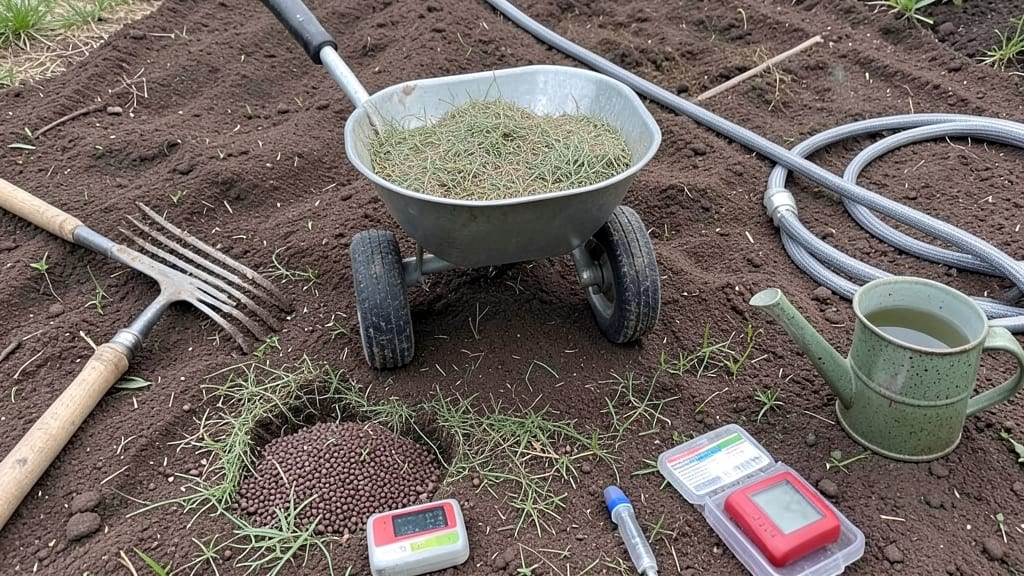
Start by testing your soil pH (ideal range: 6.0-7.0) using a simple kit from your local garden center.
If your soil is too acidic or compacted, amend it with compost or lime (follow package instructions). For clay-heavy areas, mix in sand or peat moss to improve drainage.
This is especially critical in western MA, where clay dominates. Work the amendments into the top 2-3 inches of soil using a rake or tiller.