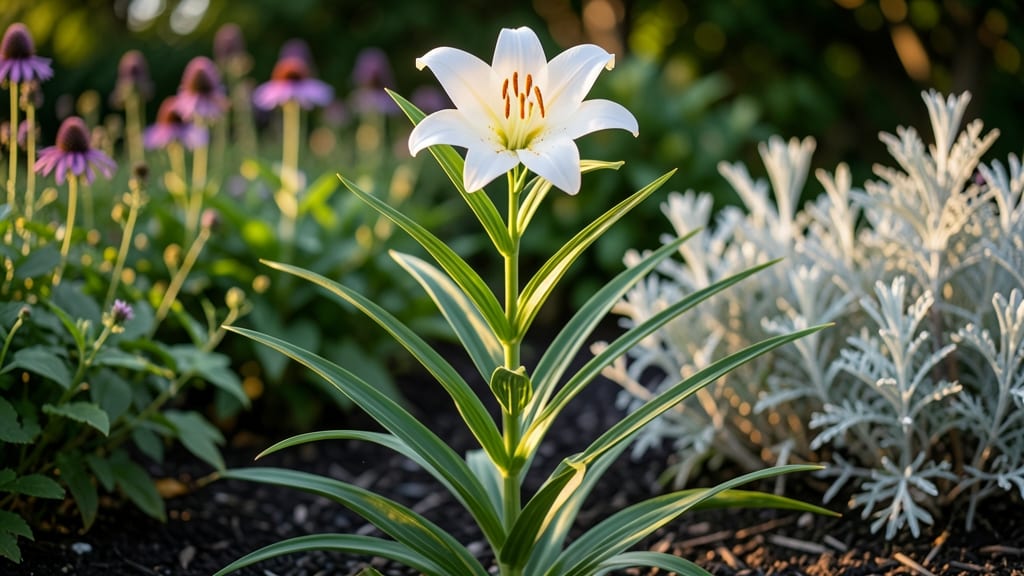
Wondering how tall do lily plants grow before they become the showstopper of your garden? The answer might surprise you—these elegant 🌸 beauties can range from compact 2-foot dwarfs to towering 6-foot giants, depending on the variety and growing conditions.
If you're planning your garden layout or choosing containers, knowing these height variations is key. Some lilies, like the delicate Asiatic types, stay on the shorter side, while others, such as the majestic Oriental lilies, reach heights that rival a basketball hoop.
The right placement can make all the difference in creating a stunning visual impact.
But here’s the thing: height isn’t just about the variety. Factors like sunlight, soil quality, and even your local climate play a role in how tall your lilies will grow.
Whether you're a beginner or a seasoned gardener, understanding these nuances will help you nurture lilies that thrive—and reach their full potential.
Let’s dive into the specifics so you can pick the perfect lilies for your space, whether you’re dreaming of a dramatic border or a cozy container display.
You’ll learn which varieties fit where, how to encourage healthy growth, and even how to troubleshoot if your lilies aren’t hitting their expected height.
Dwarf
2-3 ft
Container friendly
Semi-Dwarf
3-4 ft
Most popular
Standard
4-6 ft
Full orchard size
Lily plant height by variety: from dwarf to towering giants
When planning your garden's vertical drama, knowing how tall lilies grow helps you choose the perfect varieties for your space. Some lilies stay compact enough for containers, while others reach 8 feet or taller, making them ideal for bordering tall shrubs or fences.
The height of lily plants varies dramatically by type—Asiatic lilies often max out at 3-4 feet, while Martagon lilies can stretch toward the sky at 5-6 feet.
For container gardens or small spaces, dwarf lilies like Lilium candidum (Madonna lily) or Lilium martagon varieties stay between 2-3 feet tall. These are perfect for window boxes or patio pots. Meanwhile, Trumpet lilies and Oriental hybrids often reach 4-6 feet, demanding more space and support.
Let’s explore the full height spectrum so you can pick lilies that match your garden vision.
🌸
| Variety |
Average Height (ft) |
Growth Habit |
Best For |
| Asiatic Lilies |
3-4 ft |
Upright, bushy |
Cut flowers, borders |
| Oriental Lilies |
4-6 ft |
Tall, sturdy stems |
Backyard gardens, focal points |
| Trumpet Lilies |
4-7 ft |
Tall, dramatic |
Woodland gardens, tall borders |
| Martagon Lilies |
5-6 ft |
Graceful, arching |
Shady borders, cottage gardens |
| Daylilies (Hemerocallis) |
2-3 ft |
Clumping, low-maintenance |
Perennial beds, containers |
| Candidum Lilies |
2-3 ft |
Compact, fragrant |
Rock gardens, small spaces |
| Stargazer Lilies |
4-5 ft |
Bold, fragrant |
Cut flower arrangements |
| Turk's Cap Lilies |
1-2 ft |
Dwarf, unique blooms |
Container gardens, borders |
| Peruvian Lilies |
6-8 ft |
Tallest lilies, delicate |
How lily growth stages affect final height (with visual timeline)
Understanding how lilies grow from tiny bulbs to towering stems helps you predict their final height and plan your garden layout accordingly. Most lilies follow a predictable growth pattern, but their mature height depends heavily on when you plant them and how they develop through each stage.
Lily growth unfolds in four key stages: bulb planting, sprouting, stem elongation, and blooming. Each stage contributes to the plant's height, with the most dramatic growth occurring during stem elongation—typically between May and July in most USDA zones 6-9.
For example, a Trumpet lily planted in spring may only reach 6 inches by June but can surge to 6 feet by August.
The planting depth and timing also influence height. Bulbs planted too shallow may produce shorter stems, while deeper planting encourages stronger root systems that support taller growth. In cooler climates, lilies planted in early spring often bloom earlier and reach full height faster than those planted in late spring.
🌱 Key Takeaway: Height Progression by Stage
Stage 1:
Bulb Planting
Height: 0-1 in
Timeframe: April-May
Stage 2:
Sprouting
Height: 2-6 in
Timeframe: May-June
Stage 3:
Stem Elongation
Height: 1-4 ft
Timeframe: June-July
Stage 4:
Blooming
Height: 3-6+ ft
Timeframe: July-August
Pro Tip: Measure your lilies at the stem elongation stage to estimate their final height. Multiply the current height by 3-5 for a rough prediction!
Climate plays a surprising role in height. Lilies in warmer zones (8-10) often grow taller and faster due to longer growing seasons, while those in cooler zones (3-6) may take an extra month to reach full height.
For instance, an Oriental lily in Zone 9 might hit 5 feet by July, while the same variety in Zone 5 may only reach 4 feet by August.
You can also estimate final height early in the season by observing leaf size and stem thickness. Thicker stems and larger leaves typically indicate a taller mature plant. For example, if your Asiatic lily has 3-inch leaves by June, it’s likely to reach 4-5 feet at maturity.
Finally, remember that pruning practices can influence height. Pinching back early shoots encourages bushier growth with slightly shorter stems, while leaving stems unpruned allows them to grow taller. If you’re aiming for dramatic vertical impact, avoid pruning and provide full sun and well-draining soil to maximize height potential.
★★★★★4.5(14 reviews)
|