
Size
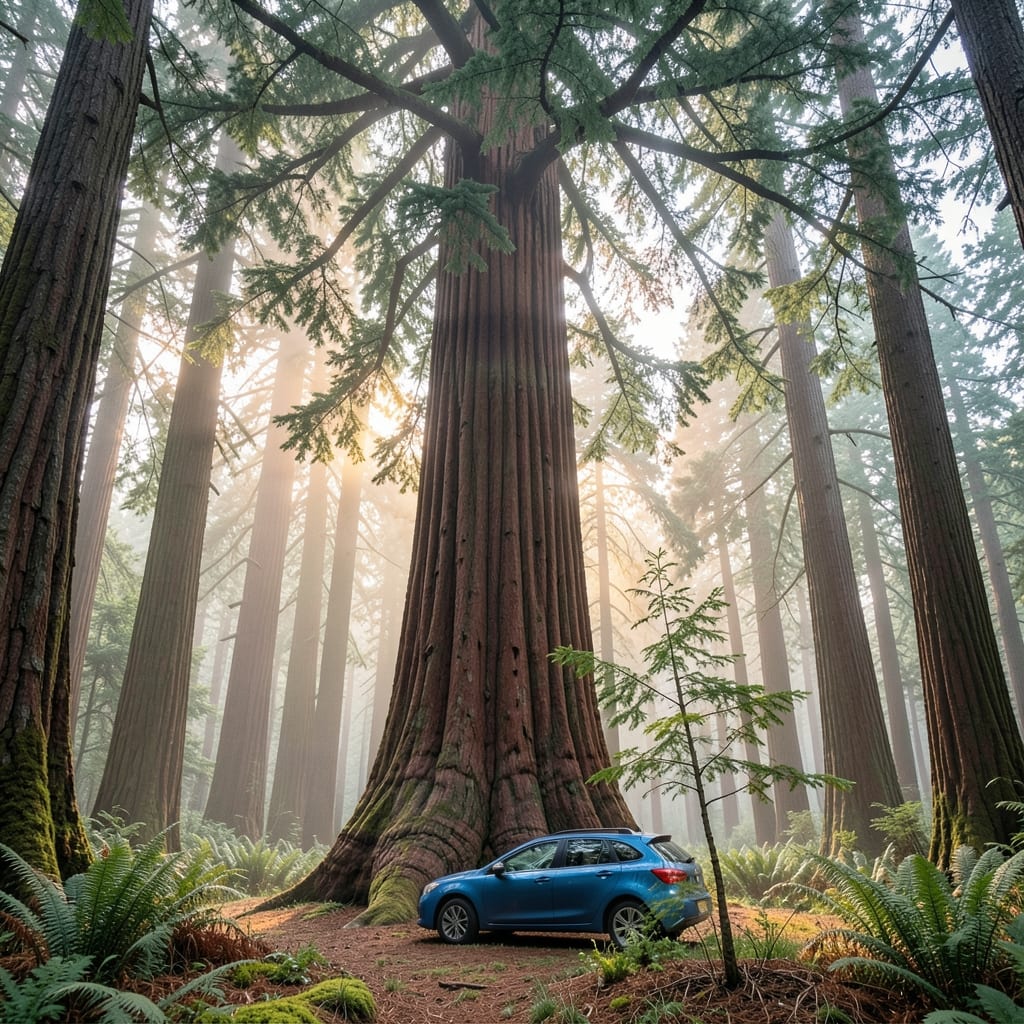
If you’ve ever gazed up at a Redwood Tree 🌲 and wondered just how tall these ancient giants can grow, you’re not alone. The answer might surprise you—these towering trees can reach heights that defy imagination, stretching toward the sky like nature’s skyscrapers.
Standing taller than a 30-story building, redwoods aren’t just the tallest trees on Earth—they’re also some of the oldest living organisms. But what makes them grow so massive? From their ideal climate conditions in Coastal California to their deep root systems and genetic adaptations, these trees have mastered the art of vertical growth.
In this guide, I’ll break down the science behind their record-breaking heights, including how they reach their maximum potential and what limits their growth. Whether you’re dreaming of planting one in your landscape or simply fascinated by their sheer size, you’ll discover the secrets behind these natural wonders.
Let’s dive into the world of redwoods and explore how they become the towering giants we know today.


Redwood tree height records: the tallest trees on Earth and their measurements
Redwoods hold the title of the tallest trees on Earth, with two species vying for the crown: the coast redwood (Sequoia sempervirens) and the giant sequoia (Sequoiadendron giganteum). While both are giants, the coast redwood claims the record for height, while giant sequoias dominate in volume. The tallest known redwood, a coast redwood named Hyperion, stands at a staggering 380 feet (115.8 meters), discovered in 2006 in California's Redwood National Park.
Hyperion isn’t just the tallest—it’s also one of the most elusive. Its exact location is kept secret to protect it from human disturbance and vandalism. Scientists use laser rangefinders and drones to measure these giants without climbing, ensuring their safety while gathering precise data. These measurements reveal that redwoods can grow 3-4 feet per year under ideal conditions, making them the fastest-growing trees in terms of height.
But Hyperion isn’t alone in its grandeur. The second-tallest redwood, Helios, reaches 379.7 feet, while Icarus follows closely at 379.5 feet. These trees aren’t just tall—they’re ancient, with some exceeding 2,000 years old. Their sheer size makes them a marvel of nature, but their growth isn’t just about height—it’s also about resilience and adaptation to their environment.
Here’s how these record-breaking heights compare to other iconic structures and trees:
| Tree/Structure | Height (Feet) | Notes |
|---|---|---|
| Hyperion (Coast Redwood) | 380 | Tallest tree on Earth |
| Helios (Coast Redwood) | 379.7 | Second-tallest known |
| Icarus (Coast Redwood) | 379.5 | Third-tallest known |
| General Sherman (Giant Sequoia) | 275 | Largest by volume |
| Burj Khalifa (Dubai) | 2,722 | Tallest man-made structure (feet) |
| Statue of Liberty | 305 | Height including pedestal |
While giant sequoias like General Sherman may not reach the same heights as coast redwoods, they make up for it in width and volume. General Sherman, located in California’s Sequoia National Park, has a volume of 52,508 cubic feet, enough to fill two basketball courts. This comparison highlights how redwoods excel in different dimensions—whether it’s height, age, or sheer mass.
Scientists measure these trees using advanced technology like laser rangefinders, drones equipped with LiDAR (Light Detection and Ranging), and even climbing spikes for precise trunk measurements. These methods ensure accuracy while minimizing physical impact on the trees. For example, a single coast redwood can have a trunk diameter of 20 feet or more, requiring careful techniques to measure without damaging the bark.
The coast redwood’s dominance in height isn’t just about genetics—it’s also about their ideal growing conditions. Located along California’s foggy coast, these trees thrive in high humidity and abundant rainfall, which fuels their rapid vertical growth. In contrast, giant sequoias grow in the Sierra Nevada mountains, where cooler temperatures and deep, well-drained soils support their massive girth rather than height.
If you’ve ever wondered how these trees could possibly grow so tall, the answer lies in their perfectly adapted biology and the unique environment of their native habitats. But what exactly enables them to reach such staggering heights? Let’s explore the environmental and biological factors that turn redwoods into nature’s skyscrapers.
What makes redwood trees grow so tall: environmental and biological factors
Redwood trees achieve their record-breaking heights thanks to a perfect storm of environmental conditions and biological adaptations. Their native habitats along Coastal California provide the ideal mix of foggy air, abundant rainfall, and deep, nutrient-rich soil. These factors create an ecosystem where redwoods can thrive without competition, allowing them to focus their energy on vertical growth rather than spreading outward.
The coastal fog is a game-changer for redwoods. Acting like a natural air conditioner, it keeps temperatures mild and provides a steady supply of moisture even during dry spells. This foggy climate allows redwoods to grow 3-4 feet per year in their youth, a rate that slows as they mature but still contributes to their towering stature over centuries.
- 🌲 Deep Root Systems: Redwood roots extend 100+ feet deep, accessing water and nutrients far below the surface, even during droughts.
- 💧 High Humidity: Coastal fog provides constant moisture, reducing water stress and supporting rapid growth.
- ☀️ Indirect Sunlight: They thrive in partial shade, avoiding the stress of harsh midday sun that stunts other trees.
- 🌿 Lack of Competition: Native habitats have minimal underbrush, allowing redwoods to dominate their space without competing for resources.
- 🧬 Genetic Adaptations: Their thick, fire-resistant bark and tall, slender trunks reduce damage from storms and pests.
Biologically, redwoods have evolved to maximize vertical growth while minimizing energy waste. Their tall, slender trunks reduce wind resistance, allowing them to grow straighter and taller without toppling. Additionally, their fire-resistant bark protects them from wildfires, a common threat in their native habitat. This adaptation ensures that even if a fire damages the lower branches, the tree can regenerate from its fire-resistant core.
Another key factor is their efficient water transport system. Redwoods have wide, porous xylem (the tree’s water-conducting tissue) that allows them to transport water from their deep roots to the highest branches without losing excessive moisture. This system is so effective that redwoods can grow in areas where other trees would struggle to survive.
When it comes to soil conditions, redwoods prefer well-draining, acidic soil with a pH between 5.5 and 7.0. Their roots thrive in deep, loose soil that allows for oxygen exchange and nutrient absorption. In their natural habitat, redwoods often grow in valleys and riverbanks, where the soil is rich in organic matter from fallen leaves and debris.
While these factors contribute to their height, redwoods also benefit from a lack of competition in their native ecosystems. Unlike forests with dense underbrush, redwood groves often have open canopies that allow sunlight to reach the forest floor. This reduces competition for light, enabling redwoods to focus their energy on growing upward rather than outward.
Understanding these factors can help gardeners and landscapers create optimal growing conditions for redwoods, even in non-native environments. However, it’s important to note that replicating their natural habitat is nearly impossible outside of Coastal California. Still, with the right care, redwoods can grow to impressive heights—just not quite as tall as their wild counterparts.