
Light Requirements
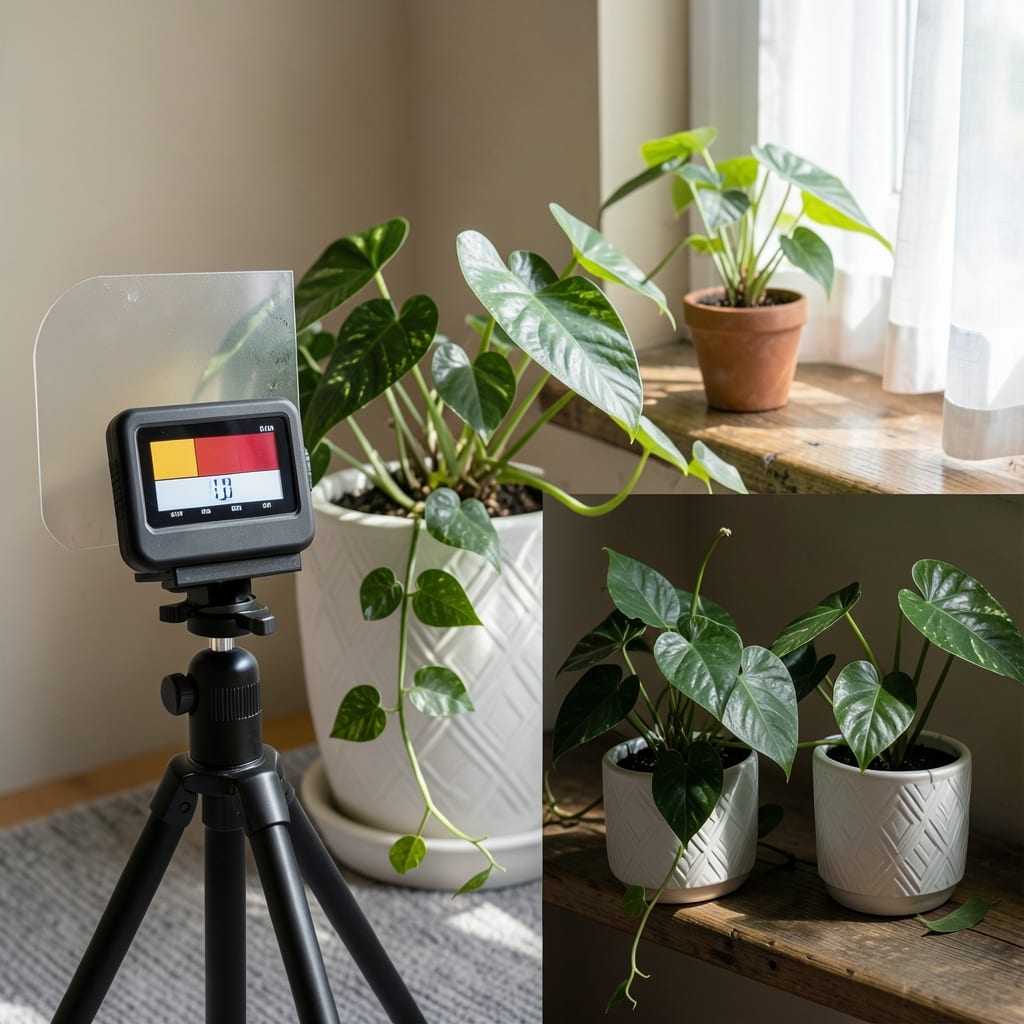
Ideal light requirements for arrowhead plants: bright, indirect sunlight explained
Arrowhead plants (Syngonium podophyllum) thrive in bright, indirect sunlight—a balance that mimics their natural understory habitat. Too little light causes leggy growth and pale leaves, while too much direct sun leads to leaf scorch and crispy edges. Understanding their light spectrum needs (4000-5000 lux) helps prevent common mistakes that stunt growth.
The key is filtering sunlight through sheer curtains or placing your plant 2-3 feet from an east-facing window. West or south windows can work too, but only if you use a light diffuser or move the plant back 4-5 feet. Artificial grow lights (LED or fluorescent) are great alternatives for low-light offices or winter months when natural light dims.
Young arrowhead plants need slightly more gentle light than mature ones. Their juvenile leaves are more sensitive to intense rays, so start them in medium indirect light before gradually increasing exposure. Mature plants can tolerate brighter conditions, but never harsh afternoon sun.
Here’s how to match your arrowhead’s light needs to your home’s setup:
| Light Condition | Description | Best For |
|---|---|---|
| Low Light (100-500 lux) | North-facing windows, dim corners | Juvenile plants, winter survival |
| Medium Light (500-1000 lux) | East/west windows, 3-5 ft away | Daily care, balanced growth |
| Bright Indirect (1000-2000 lux) | South window with sheer curtain, grow lights | Mature plants, vibrant foliage |
| Direct Sun (2000+ lux) | South window without filter, midday sun | Avoid—causes leaf burn |
For indoor grow lights, use full-spectrum LEDs 6-8 inches above the plant for 12-14 hours daily. Brands like Sylvania Gro-Lux or VIPARSPECTRA are top picks for arrowheads. Rotate the plant quarter-turn weekly to ensure even light exposure and prevent one-sided growth (a common issue in offices).
Seasonal adjustments are crucial. In summer, increase airflow near your plant to counteract heat stress from indirect light. In winter, supplement with grow lights if natural light drops below 500 lux. A simple light meter (under $20) helps track conditions accurately.
Pro tip: If your arrowhead’s leaves darken or develop brown tips, it’s a sign of too much light. Move it farther from the window or add a light filter. Conversely, pale, stretched leaves mean it’s time to increase light exposure gradually.
Arrowhead plants are highly adaptable, but consistency is key. Aim for 4-6 hours of bright indirect light daily and watch your plant reward you with lush, arrow-shaped foliage and vigorous growth. The right light setup transforms a struggling plant into a showstopper in any room.
Signs your arrowhead plant has too much or too little light (and how to fix it)
Your arrowhead plant’s leaves tell a visual story about its light conditions. Yellowing leaves or stretched stems often signal insufficient light, while brown patches or crispy edges scream too much direct sun. Recognizing these light-related symptoms early helps you adjust care before damage becomes permanent.
Start by checking the color and texture of your arrowhead’s foliage. Pale, thin leaves mean it’s craving more bright indirect light. These leaves often appear washed out and may develop longer spaces between nodes (a sign of etiolation). On the flip side, dark brown or white patches on leaves indicate sunburn from harsh rays.
Here’s how to diagnose and fix common light issues:
✅ Too Little Light
- Symptoms: Leggy growth, small leaves
- Fix: Move to east-facing window or use grow lights
- Prevent: Rotate plant weekly for even light
❌ Too Much Light
- Symptoms: Brown tips, crispy edges
- Fix: Add sheer curtain or move 3-4 feet back
- Prevent: Avoid south/west windows without filters
Another red flag is leaf drop. If your arrowhead sheds leaves suddenly, it’s often reacting to temperature swings near a sunny window. Keep it 2-3 feet from glass to stabilize conditions. For office environments, place your plant 6 feet from fluorescent lights—closer distances can cause light stress over time.
Seasonal changes also affect light tolerance. In summer, arrowheads may thrive in brighter indirect light, but by fall, you’ll need to reduce exposure as sunlight weakens. Use a light meter to track levels—aim for 1000-2000 lux for mature plants. If you notice new growth slowing, it’s time to increase light gradually.
Remember, arrowheads are forgiving but need consistent conditions. If you spot multiple symptoms (like yellow + brown leaves), check for overwatering or pests too. A healthy arrowhead should have deep green, glossy leaves with no discoloration. Adjust lighting first—it’s often the simplest fix for a revitalized plant.
With these fixes, your arrowhead will bounce back in weeks. The key is observation + quick action—don’t let light stress turn into a long-term problem! 🌿